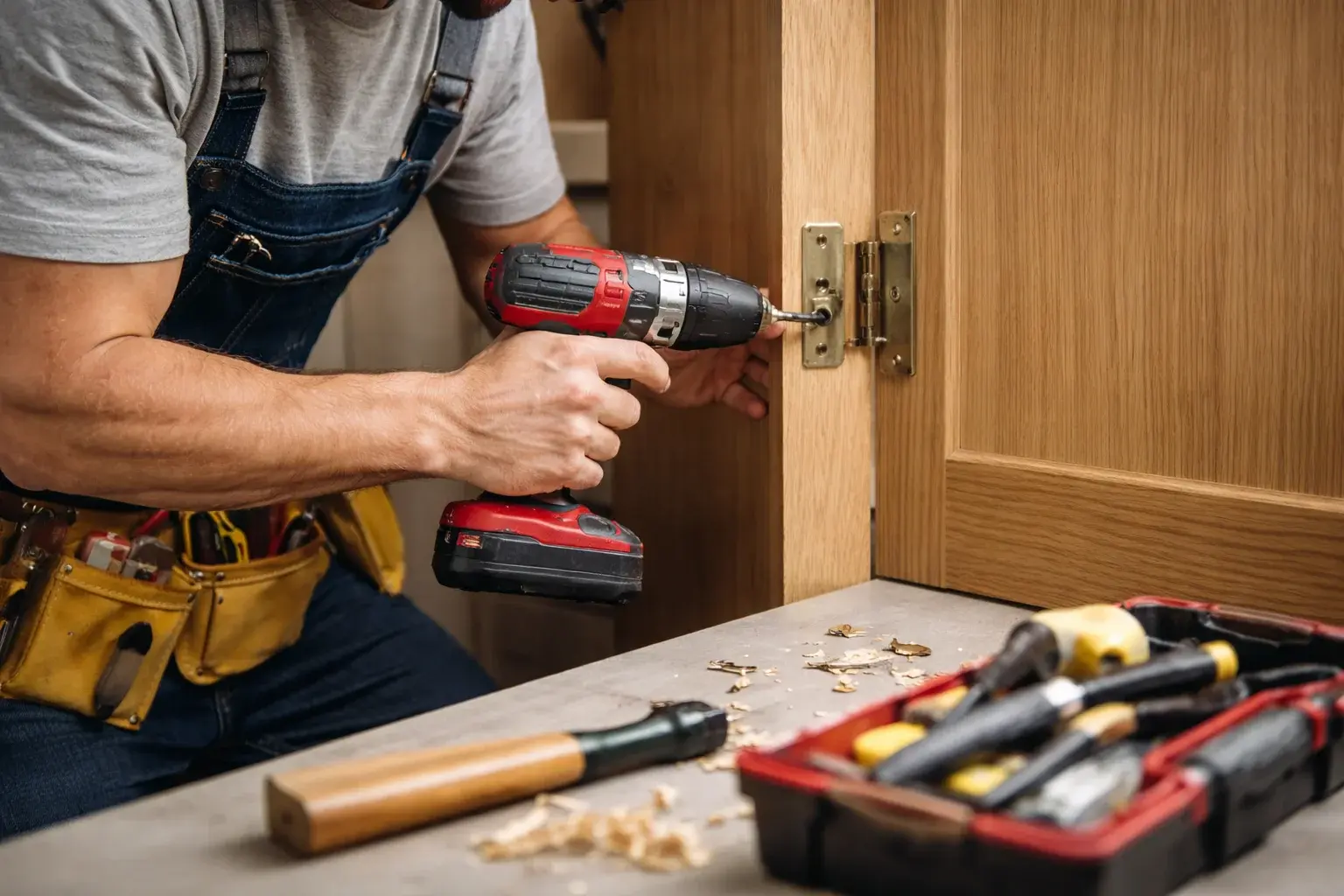
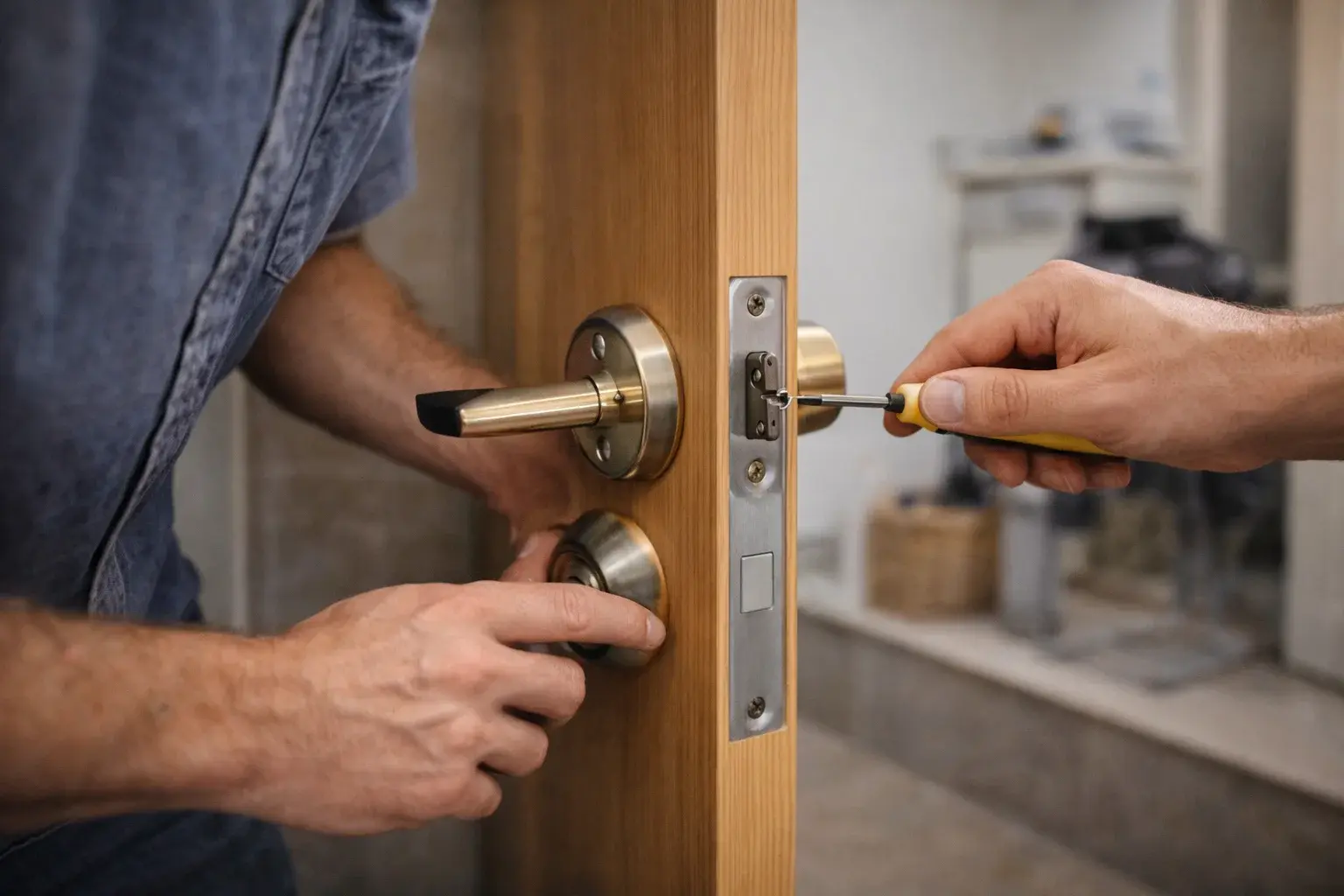
door closer installation and repair can be appropriate when the door sags, rubs, sticks or has uneven gaps around the opening. Check the closer model against the ordinary door, mounting support and manufacturer limits before fitting or adjustment.
Signs: the latch, handle, hinge or ordinary running hardware no longer lines up or operates normally or the door closes poorly despite an otherwise sound visible opening. Causes: local damage to an accessible component rather than an assumed structural defect or loose fixings, minor alignment drift or ordinary timber movement.
Show the arm’s path and surrounding trim or walls. The door must have the clearances required by the selected arrangement. Moving the arm to avoid an obstruction without following the maker’s instructions can create a different problem rather than a suitable fit.
The last part of the closing movement should be checked with the ordinary latch and frame. Increasing force is not a substitute for correcting an incompatible or misaligned latch. Any separate hinge or hardware repair needs agreement before extending the closer task.
Do not force the closer arm or alter adjustments beyond its instructions. Report a return of uncontrolled closing for review. Limits: Ordinary non-rated surface-mounted mechanical units only. No fire, smoke or egress certification, powered systems, structural reinforcement or specialist mechanisms.