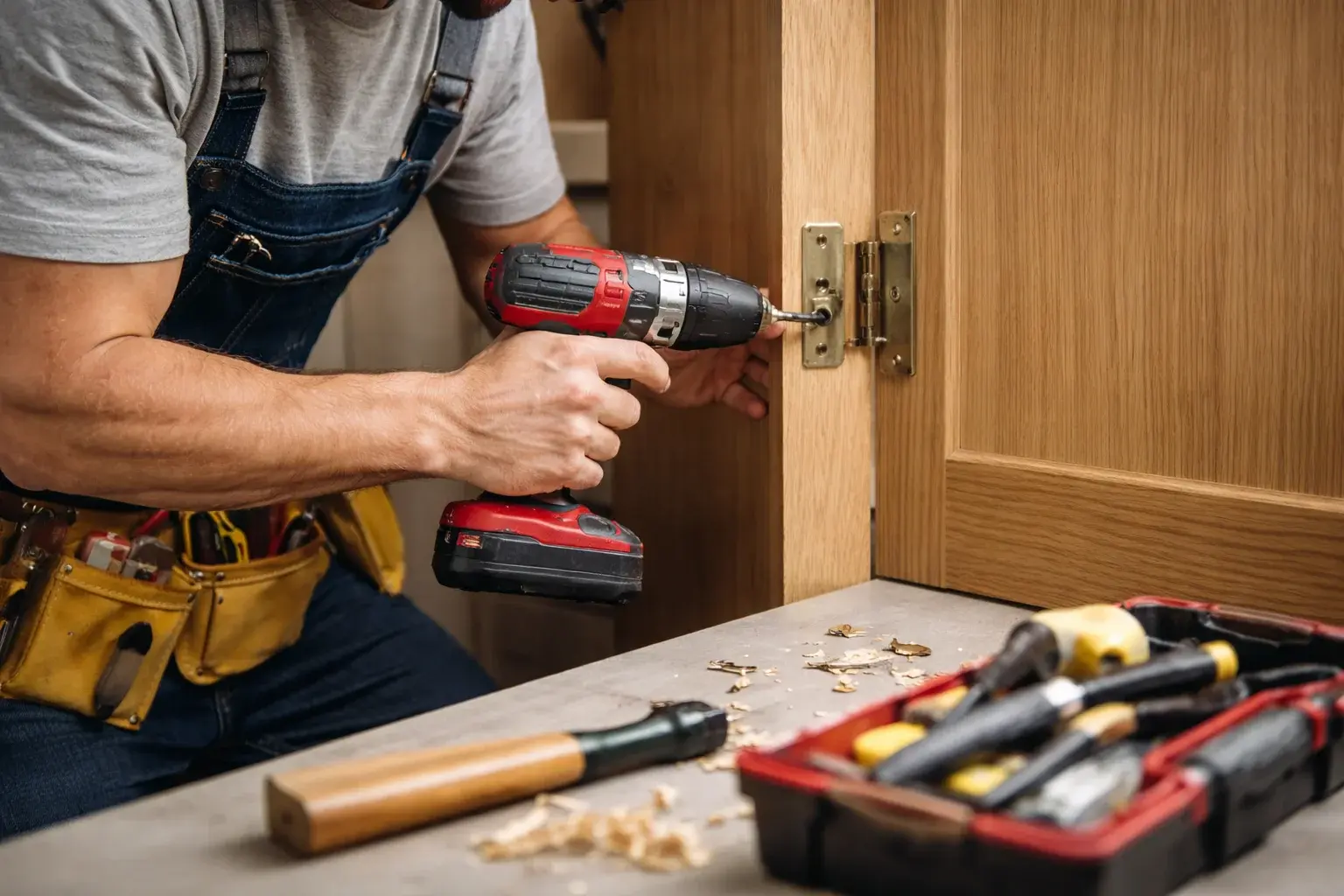
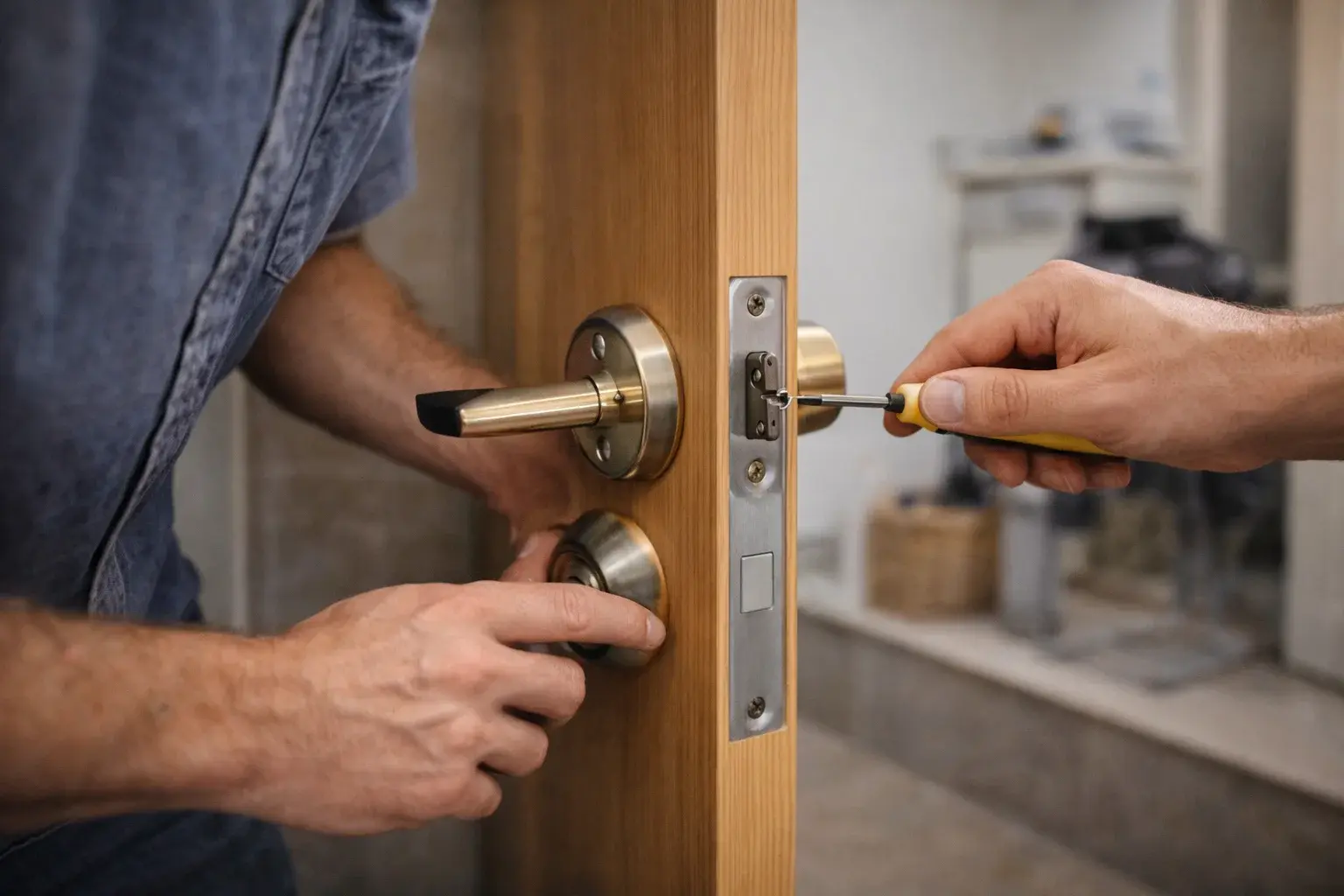
A practical door closer installation and repair decision starts with the affected item, its condition and the surrounding materials. Install a suitable ordinary supplied surface closer, make permitted adjustments or replace an unsuitable leaking unit within the agreed scope.
Signs: the door closes poorly despite an otherwise sound visible opening or the door sags, rubs, sticks or has uneven gaps around the opening. Causes: normal wear in hinges, latches or compatible mechanical hardware or local damage to an accessible component rather than an assumed structural defect.
Keep the instructions available for fitting and handover. Opening range, mounting method and adjustment limits remain product-specific. No compliance certification, fire-door inspection or guarantee of access performance is included in an ordinary mechanical closer installation or repair.
Adjustment options vary by model. A suitable closer can be checked within its permitted range, but stiffness may also relate to hinges, alignment or seals. The enquiry should describe the movement rather than assume turning an adjustment screw is the complete repair.
Do not force the closer arm or alter adjustments beyond its instructions. Report a return of uncontrolled closing for review. Limits: Ordinary non-rated surface-mounted mechanical units only. No fire, smoke or egress certification, powered systems, structural reinforcement or specialist mechanisms.