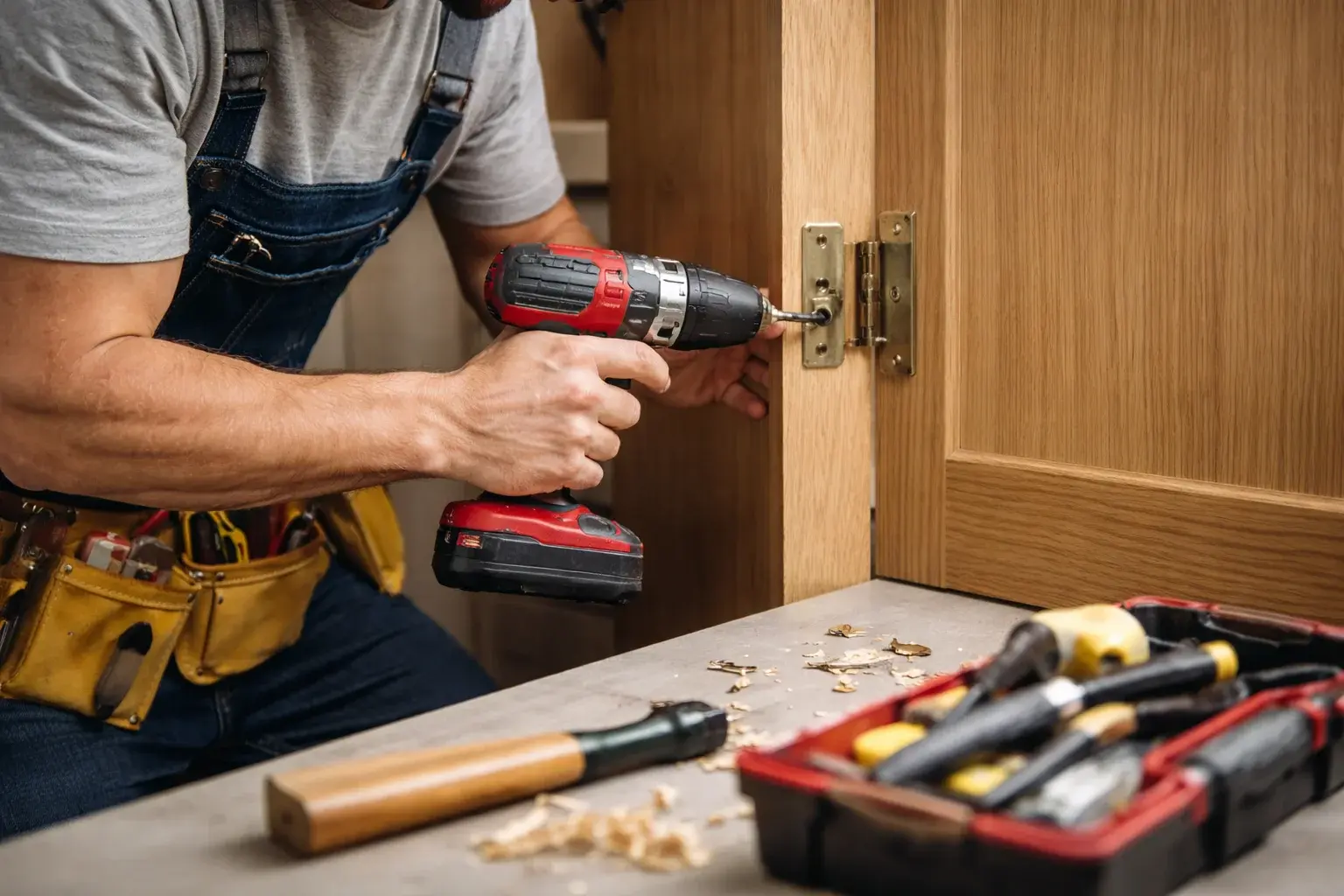
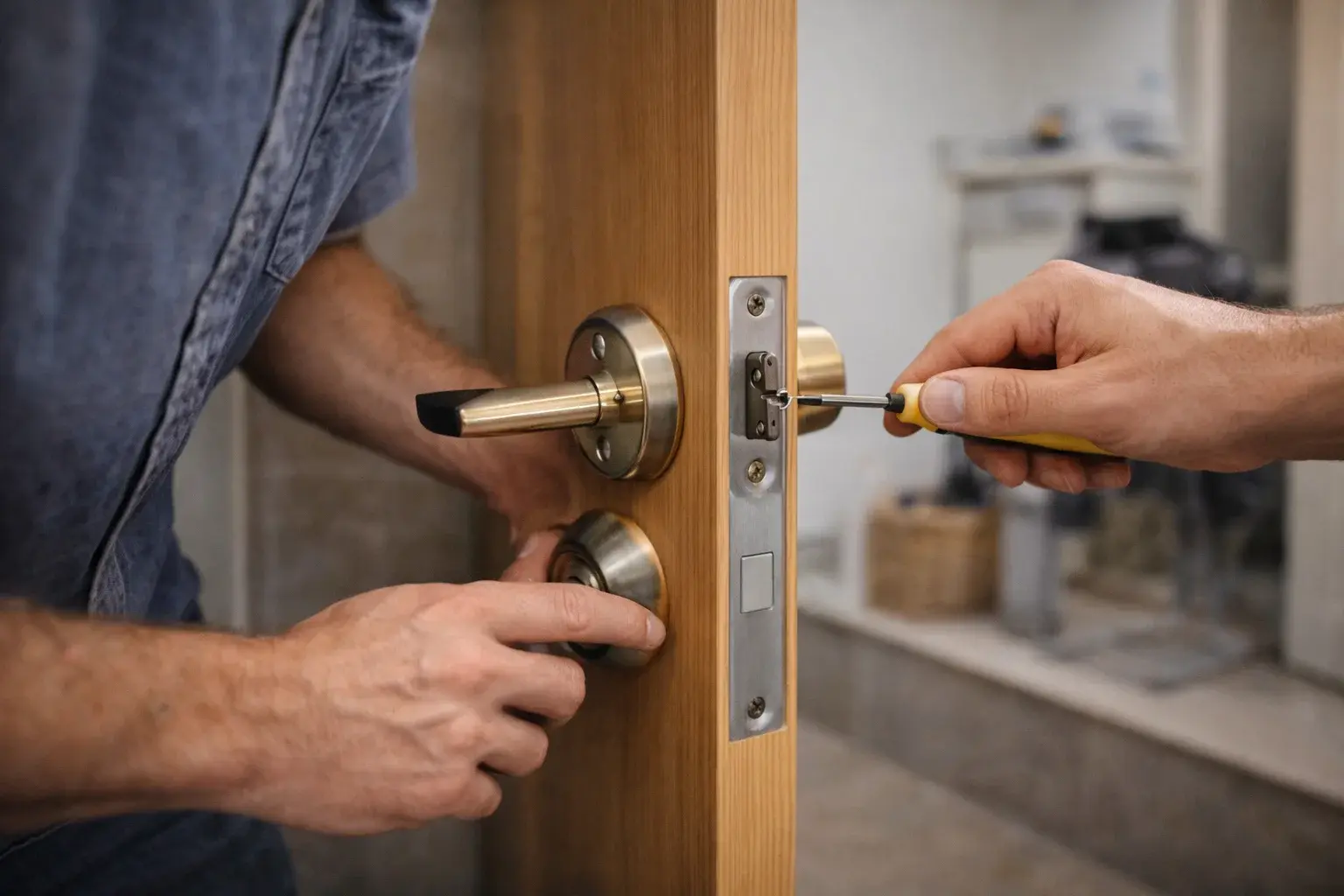
door closer installation and repair can be appropriate when the door sags, rubs, sticks or has uneven gaps around the opening. Check the closer model against the ordinary door, mounting support and manufacturer limits before fitting or adjustment.
Signs: the door closes poorly despite an otherwise sound visible opening or the latch, handle, hinge or ordinary running hardware no longer lines up or operates normally. Causes: normal wear in hinges, latches or compatible mechanical hardware or loose fixings, minor alignment drift or ordinary timber movement.
Show the arm’s path and surrounding trim or walls. The door must have the clearances required by the selected arrangement. Moving the arm to avoid an obstruction without following the maker’s instructions can create a different problem rather than a suitable fit.
Visible leakage or physical damage may make replacement more suitable than adjustment. Show the condition and model before buying parts. The ordinary service does not rebuild sealed hydraulic mechanisms or promise that a damaged closer can be restored by changing settings.
Do not force the closer arm or alter adjustments beyond its instructions. Report a return of uncontrolled closing for review. Limits: Ordinary non-rated surface-mounted mechanical units only. No fire, smoke or egress certification, powered systems, structural reinforcement or specialist mechanisms.