



Clear repair boundaries
Structural opening movement, fire-rated assemblies, widespread decay and security or locksmith work need the appropriate specialist.
Melbourne handyman & property maintenance
Doors · Belmont
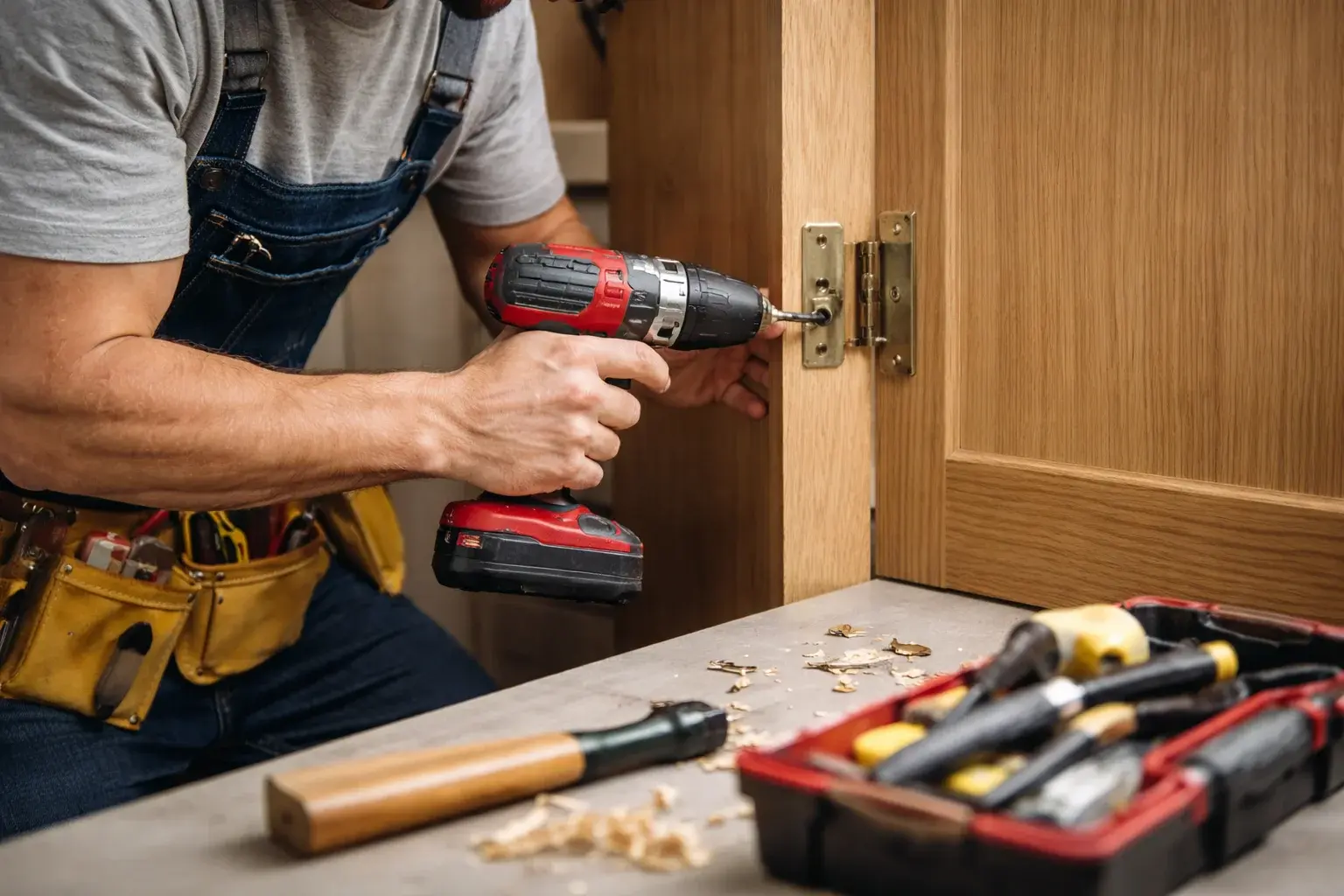
A useful door frame repair enquiry in Belmont shows more than a close-up of the damage. Show the full doorway, both hinges, the strike plate and the damaged section with a ruler beside it where safe. Whether the issue involves split jamb timber, loose door stops and damaged fixing areas, the aim is to agree a practical scope that suits the existing material and its condition.
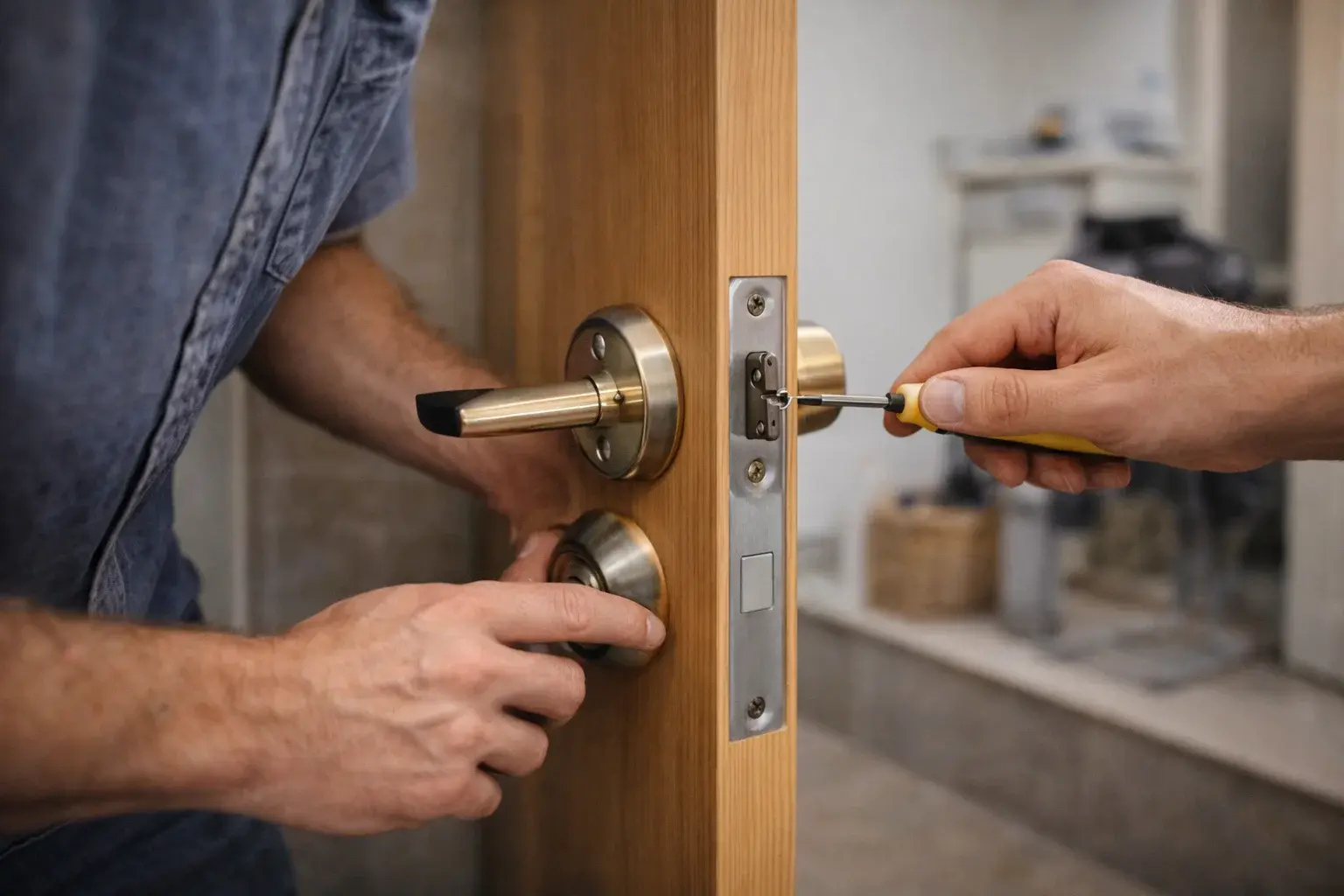
Door Frame Repair
split jamb timber, loose door stops and damaged fixing areas
Service overview
The condition beside a hinge or strike plate matters more than the size of the visible mark. A small damaged area can affect a fixing that carries everyday loads, while a larger cosmetic chip may leave the frame sound. Showing the complete doorway helps separate these cases.
The first check is whether the problem belongs to the frame, the door or its hardware. A rubbing door may need hinge attention rather than timber removal. Where the frame is extensively deteriorated, the opening has moved or the assembly has specialist requirements, a small patch may not be the right solution.
A door frame does more than finish the opening. Its side members support the hinges and give the latch a firm closing point. A split beside a fixing, a damaged stop or a loose timber section can affect how the door closes even when the door leaf is still usable.
Belmont property context
For a door frame repair visit in Belmont, describe the actual access to the affected part. A clear work area, permission to carry out the repair and any restrictions on entry help define the visit. Check whether the frame, door leaf or hardware is responsible, and whether the timber around the proposed repair is sound. For work in Belmont, include wide and close photographs, approximate dimensions and notes about parking, tenants or site access. Separate urgent faults from cosmetic improvements so materials, sequencing and appropriate services can be considered clearly.
Why Fix Nik
Structural opening movement, fire-rated assemblies, widespread decay and security or locksmith work need the appropriate specialist.
Show the full doorway, both hinges, the strike plate and the damaged section with a ruler beside it where safe. Clear images help identify the questions that need answering.
Check whether the frame, door leaf or hardware is responsible, and whether the timber around the proposed repair is sound. A repair is considered on its merits rather than assumed from the name of the job.
Common repair scenarios
Impact damage can break the edge or paint without moving the frame. Show the depth of the chip and the adjoining trim so the material and finish can be assessed.
Repeatedly loose fixings can indicate damaged timber or movement. Tightening the same screw again may not address the support behind it.
A chipped or split jamb can leave a strike plate poorly supported. Include the door in its closed position so the latch relationship is visible.
If a patch has failed before, include that history. Movement, weak timber or unresolved moisture can make repeating the same surface treatment unsuitable.
Stops guide the closed door against the frame. A loose strip or broken section may be assessed without replacing every piece around the opening.
Uneven clearances may involve hinge wear, frame movement or the door leaf. Widespread movement and significant adjoining cracks need specialist assessment.
How it works
Show the full doorway, both hinges, the strike plate and the damaged section with a ruler beside it where safe.
Check whether the frame, door leaf or hardware is responsible, and whether the timber around the proposed repair is sound.
Agree the affected timber section, compatible fixings and finish preparation before arranging suitable minor work.
Confirm access to your Belmont property, protect nearby belongings and agree any preparation before the visit.
Check door movement and closing, and follow any drying or coating instructions before normal use resumes.
FAQ
A small local split or worn fixing point may be repairable if there is adequate sound timber to support the hinge. A long split, loose frame or repeated movement needs closer assessment before a repair is agreed.
Yes. List them separately and show the affected fittings. That makes it easier to distinguish the frame repair from compatible handle or hinge work and agree which items can be handled together.
Often a small damaged section can be considered separately when the surrounding timber is sound. The door leaf, hinge support and latch position are checked together. Widespread decay, severe splitting or movement may make a limited repair unsuitable.
Wait until dimensions, material and repair method have been checked. An apparently similar moulding may have a different profile, and hinge screws or strike plates need to suit the existing assembly. Share any products you already have.
No. Worn hinges, paint build-up or the door itself may be involved. Describe where it rubs and whether the latch engages. A frame repair is only appropriate when the frame condition actually calls for it.
Yes. Include the approval contact, the best person to arrange access and any occupied-room restrictions. Clear access arrangements are particularly useful when the doorway serves a bedroom or the main entrance. Work is scheduled after scope and availability are confirmed.
Minor non-structural damage can be reviewed, but exposure and any water entry must be considered. A patch is not a substitute for resolving an active leak. Security, fire-rated assemblies and building defects may require a specialist.
Show the full doorway, both hinges, the strike plate and the damaged section with a ruler beside it where safe. Include your Belmont address and access details so suitable work can be discussed.