



Damaged surface finish
Scratches and corrosion may make replacement preferable to adjustment. State whether matching the finish of other doors is part of the request.
Melbourne handyman & property maintenance
Doors · Merricks
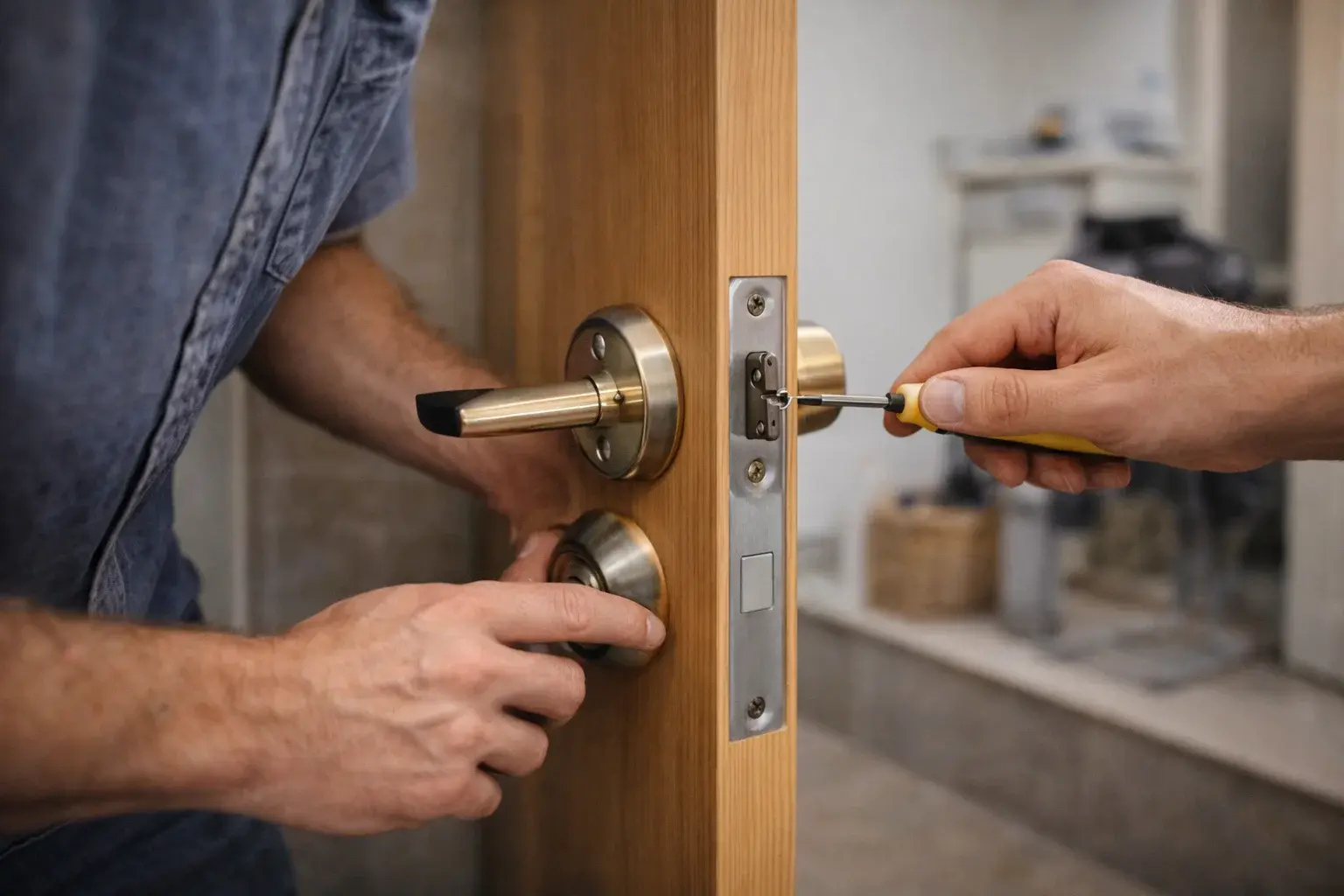
Door Handle Repair in Merricks starts with identifying what has failed and what can be kept. For loose handles, worn levers and compatible household latch fittings, the visible symptom is only part of the job. Review fixing support, lever movement and compatibility, separating handle faults from door alignment or lock problems. Send photos so the proposed scope can be discussed before a visit.
Door Handle Repair
loose handles, worn levers and compatible household latch fittings
Common repair scenarios
Scratches and corrosion may make replacement preferable to adjustment. State whether matching the finish of other doors is part of the request.
A drooping lever may involve wear or a spring problem. A photo of the complete fitting helps identify whether a compatible replacement can be considered.
If operation changes when the door closes, alignment may be involved. Show the latch and strike plate rather than only the handle face.
Movement at the lever or backplate needs checking before screws are simply tightened. Show whether the plate moves against the door or the lever moves within the fitting.
A recently fitted handle may bind if its dimensions do not suit the door. Send the product details and explain what changed after installation.
The mounting may need attention if screws repeatedly loosen. Include close views of the fixing points and any surrounding timber damage.
Why Fix Nik
Photograph both handle faces, the door-edge latch and the strike plate; include any visible brand markings or loose components. Clear images help identify the questions that need answering.
Review fixing support, lever movement and compatibility, separating handle faults from door alignment or lock problems. A repair is considered on its merits rather than assumed from the name of the job.
Confirm suitable adjustment or replacement fittings, finish preferences and any separate repairs before scheduling. The quoted task should be clear before the repair starts.
Merricks property context
For a door handle repair visit in Merricks, describe the actual access to the affected part. A clear work area, permission to carry out the repair and any restrictions on entry help define the visit. Review fixing support, lever movement and compatibility, separating handle faults from door alignment or lock problems. A useful Merricks enquiry identifies the affected room or outdoor area, explains what has changed and includes wide and close photographs. Measurements and access notes help separate urgent repairs from work that can be grouped into a later visit.
Service overview
A handle repair is a focused maintenance job, not a promise to replace every part of the door. Surrounding timber damage, a loose hinge or a shifted strike plate may need a separately agreed task. Showing both sides of the door helps identify the complete scope.
A handle can feel loose because its fixing screws have worked free, the spindle is worn or the mounting has lost support. Those causes need different responses. Fix Nik assesses suitable household handles and their fittings before deciding whether adjustment or a compatible replacement makes sense.
For rental or shared properties, identify who can approve replacement fittings and how access will be arranged. A new handle may alter appearance or key arrangements. Existing security requirements should be explained before a different fitting is proposed.
How it works
Photograph both handle faces, the door-edge latch and the strike plate; include any visible brand markings or loose components.
Review fixing support, lever movement and compatibility, separating handle faults from door alignment or lock problems.
Confirm suitable adjustment or replacement fittings, finish preferences and any separate repairs before scheduling.
Confirm access to your Merricks property, protect nearby belongings and agree any preparation before the visit.
Check operation from both sides with the door open and closed; report renewed looseness rather than forcing the lever.
FAQ
Yes. Describe what you have noticed, when it started and whether it has changed. Review fixing support, lever movement and compatibility, separating handle faults from door alignment or lock problems. Photos support an initial discussion, but a firm repair decision may still depend on seeing the material in person.
Keeping suitable material can limit disruption, but only when the remaining support and condition allow it. Confirm suitable adjustment or replacement fittings, finish preferences and any separate repairs before scheduling. If a small repair would leave the cause unresolved, the replacement or specialist options should be discussed first.
Describe the mechanism and whether access is affected. Fix Nik reviews suitable household fittings, but lockouts and specialist security or keyed mechanism work belong with a locksmith.
Any finishing work needs to be identified in the quote. Existing coatings, colour differences and drying stages may affect the result. Check operation from both sides with the door open and closed; report renewed looseness rather than forcing the lever. Exact matching to an aged or unknown finish cannot be assumed from a photograph.
Include a separate photo and description for each item. Compatible jobs can be considered together, but each still needs its own scope and suitable access. Lockouts, key cutting, security systems and specialist locking mechanisms require a locksmith or suitable specialist. Bundling an enquiry does not change the limits of the service.
Timing depends on the condition, access and compatible materials rather than the suburb. Confirm suitable adjustment or replacement fittings, finish preferences and any separate repairs before scheduling. Preparation, drying or parts availability can affect the sequence. The practical timing is discussed once enough detail is available to define the job.
Check operation from both sides with the door open and closed; report renewed looseness rather than forcing the lever. If the original symptom returns, note what has changed and share a photo rather than repeatedly adjusting or covering the affected area. Follow any specific guidance agreed for the materials used.
Photograph both handle faces, the door-edge latch and the strike plate; include any visible brand markings or loose components. Include your Merricks address and access details so suitable work can be discussed.