



Door drops at the latch side
A change in the upper or lower clearance can point to hinge movement. Include the full opening and where the door catches.
Melbourne handyman & property maintenance
Doors · Hesket
A useful door hinge repair enquiry in Hesket shows more than a close-up of the damage. Show every hinge, the screw positions, the complete door and the point where clearance or movement has changed. Whether the issue involves loose hinge fixings, worn fittings and door movement at the hinge side, the aim is to agree a practical scope that suits the existing material and its condition.
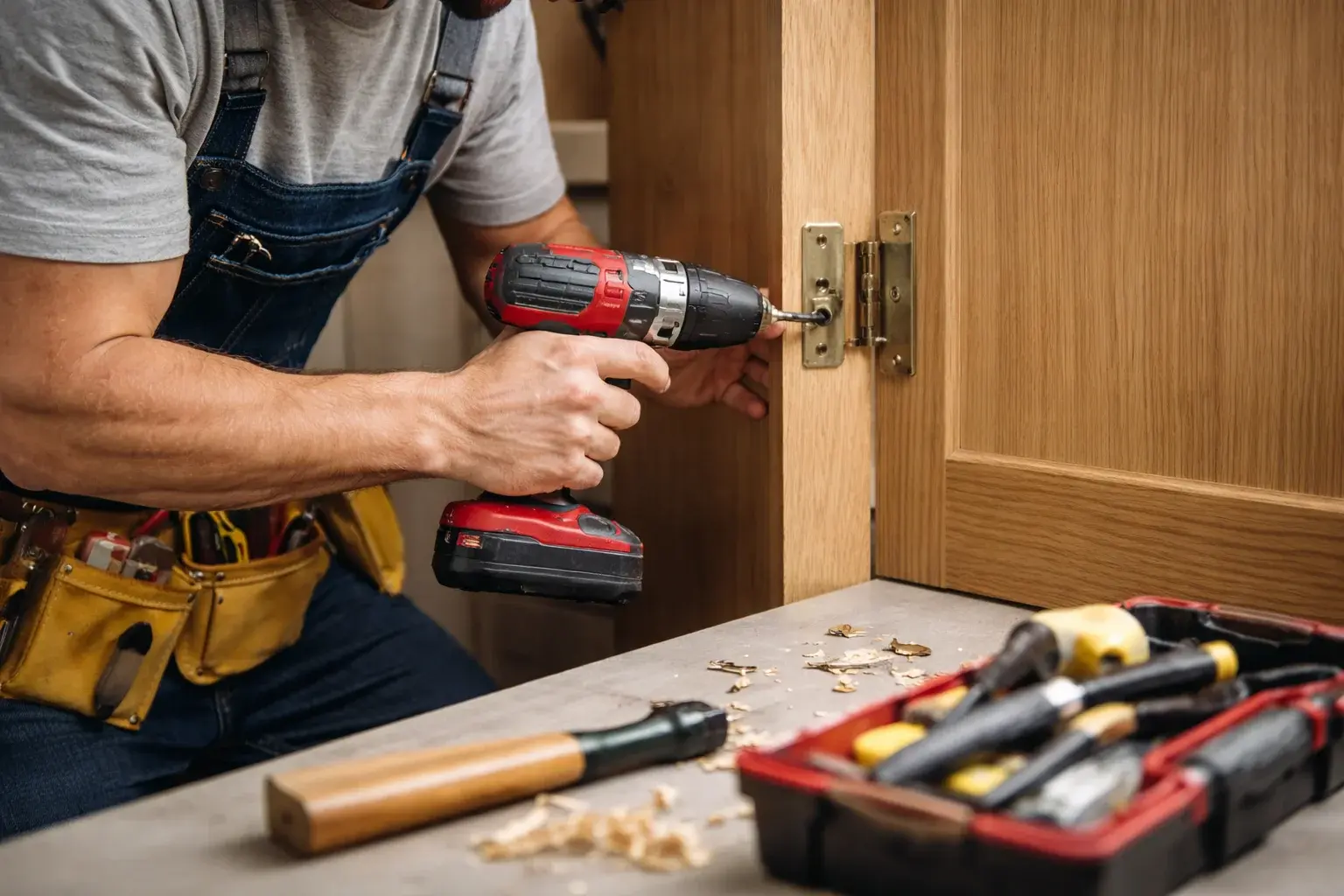
Door Hinge Repair
loose hinge fixings, worn fittings and door movement at the hinge side
Service overview
Suitable repair may involve securing sound mounting points, adjusting compatible fittings or replacing worn hinges with an appropriate match. Size, fixing pattern and the door arrangement matter. Replacement parts should be agreed after the existing assembly is understood.
Planning access is part of a hinge repair. The work may need the doorway kept clear and the door supported while fittings are assessed. Do not remove a hinge or try to support a heavy door yourself just to provide a quote photograph.
Hinges transfer the weight of a door into its supporting timber. When a fixing loosens or a hinge wears, the door can drop, rub or close unevenly. Fix Nik assesses suitable hinge repairs with the surrounding door and frame, rather than treating every rubbing edge as a reason to trim the door.
Common repair scenarios
A change in the upper or lower clearance can point to hinge movement. Include the full opening and where the door catches.
Timber damage around the hinge may need a frame or door repair as well. Photograph its extent without removing the fitting.
A squeak alone does not prove a hinge needs replacing. Explain whether noise comes with stiffness, looseness or visible wear.
Small cupboard-door hinges can be assessed separately from room-door fittings. Include the fixing plate and mounting surface in the enquiry.
Movement within the hinge can affect control of the door. A compatible replacement may be assessed if the surrounding mounting is suitable.
Rubbing can result from several causes. Identify the contact point and whether the hinges move when the door opens or closes.
Hesket property context
For Hesket enquiries, combine the job details with practical access information. If a tenant or property manager is involved, agree who can provide entry and authorise the quoted work. Agree compatible hinge or fixing work and any necessary minor timber repair without assuming structural alterations. Any separate finishing requirement should be raised with the initial photos. A useful Hesket enquiry identifies the affected room or outdoor area, explains what has changed and includes wide and close photographs. Measurements and access notes help separate urgent repairs from work that can be grouped into a later visit.
How it works
Show every hinge, the screw positions, the complete door and the point where clearance or movement has changed.
Distinguish worn hardware from weak fixing support and check how the door sits in its existing opening.
Agree compatible hinge or fixing work and any necessary minor timber repair without assuming structural alterations.
Confirm access to your Hesket property, protect nearby belongings and agree any preparation before the visit.
Check the swing, clearances and latch engagement; explain any remaining issue outside the agreed hinge work.
Why Fix Nik
Distinguish worn hardware from weak fixing support and check how the door sits in its existing opening. A repair is considered on its merits rather than assumed from the name of the job.
Check the swing, clearances and latch engagement; explain any remaining issue outside the agreed hinge work. Any limitations or finishing stages should be understood before normal use.
Agree compatible hinge or fixing work and any necessary minor timber repair without assuming structural alterations. The quoted task should be clear before the repair starts.
FAQ
Clear belongings from the immediate work area and keep access available. Show every hinge, the screw positions, the complete door and the point where clearance or movement has changed. Tell Fix Nik about fragile finishes, restricted entry or anything that must remain in use; dismantling the affected part yourself is not necessary.
The agreed scope should be reviewed before extending the work. Fire-rated or specialist door systems, major frame movement and structural opening defects need specialist assessment. A concealed or more extensive problem may need a separate assessment, so an initial enquiry is not a promise to complete every underlying defect.
Any finishing work needs to be identified in the quote. Existing coatings, colour differences and drying stages may affect the result. Check the swing, clearances and latch engagement; explain any remaining issue outside the agreed hinge work. Exact matching to an aged or unknown finish cannot be assumed from a photograph.
Discuss the product before purchasing it. Dimensions, fixing positions and compatibility matter, and an apparently similar part may not suit the existing assembly. Distinguish worn hardware from weak fixing support and check how the door sits in its existing opening. Photos and product details can help avoid buying an unsuitable replacement.
Yes. Describe what you have noticed, when it started and whether it has changed. Distinguish worn hardware from weak fixing support and check how the door sits in its existing opening. Photos support an initial discussion, but a firm repair decision may still depend on seeing the material in person.
Show every hinge, the screw positions, the complete door and the point where clearance or movement has changed. Include an overall view as well as close-ups so the relationship between the faulty part and its surroundings is clear. Please do not remove components simply to take a photograph.
Only if the hinge is the cause and its mounting is sound. Weak timber, loose fixings or frame movement can remain after a hardware change, so those conditions are considered first.
Show every hinge, the screw positions, the complete door and the point where clearance or movement has changed. Include your Hesket address and access details so suitable work can be discussed.