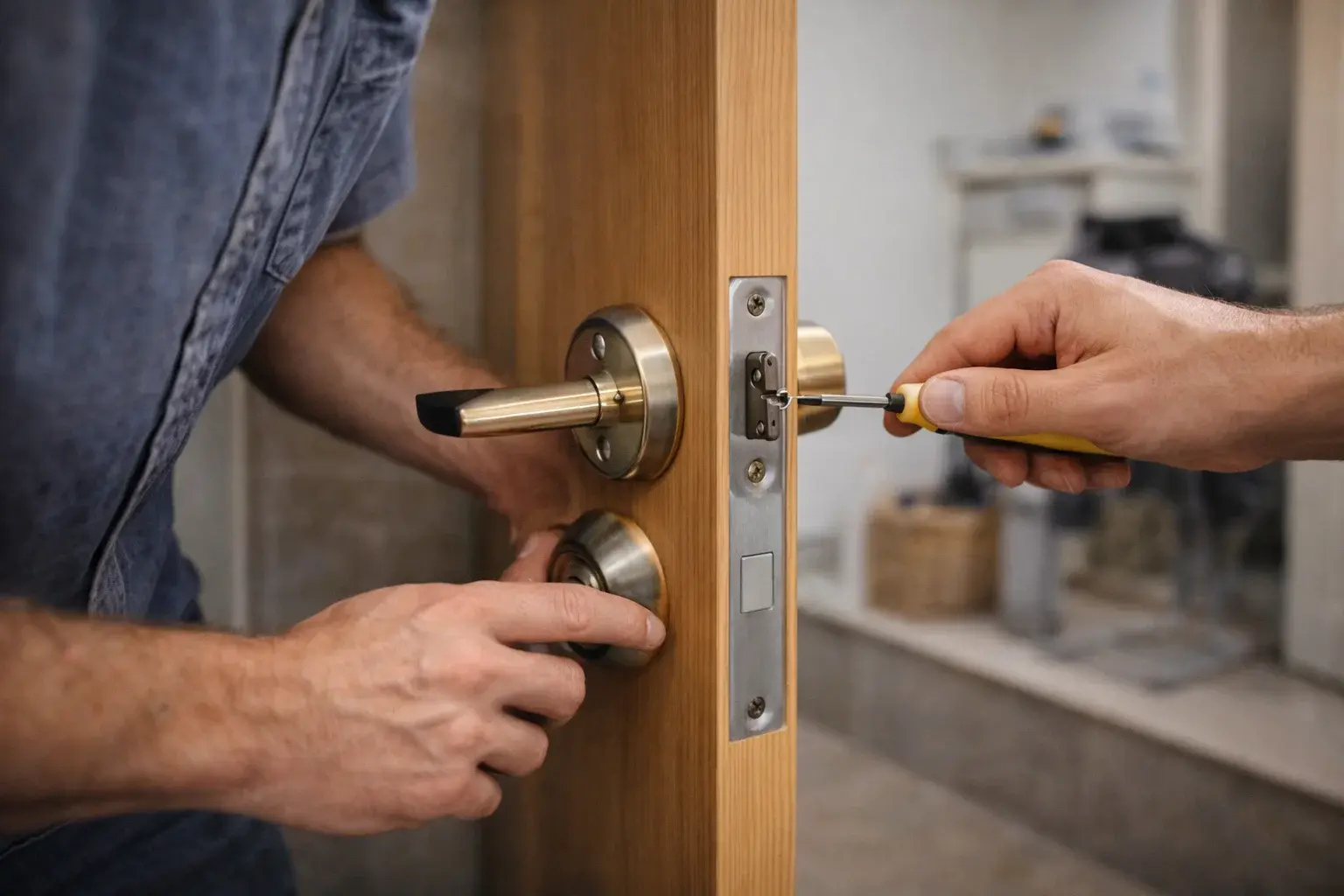
A practical door latch repair decision starts with the affected item, its condition and the surrounding materials. Adjust or replace agreed compatible mechanical latch components and test ordinary latching without forcing the door.
Signs: the latch, handle, hinge or ordinary running hardware no longer lines up or operates normally or the door sags, rubs, sticks or has uneven gaps around the opening. Causes: loose fixings, minor alignment drift or ordinary timber movement or local damage to an accessible component rather than an assumed structural defect.
Measure from the door edge to the handle centre before buying a replacement. For door latch repair, this detail is reviewed before work is accepted so the agreed task stays practical and proportionate. No lockouts, key cutting, rekeying, emergency entry, electronic security, fire-door work or locksmith services.
After work, the latch should engage with normal closing pressure rather than a slam. For door latch repair, this detail is reviewed before work is accepted so the agreed task stays practical and proportionate. No lockouts, key cutting, rekeying, emergency entry, electronic security, fire-door work or locksmith services.
Adjust or replace agreed compatible mechanical latch components and test ordinary latching without forcing the door. Limits: Ordinary authorised mechanical latch work only. No lockouts, key cutting, rekeying, emergency entry, electronic security or locksmith services.