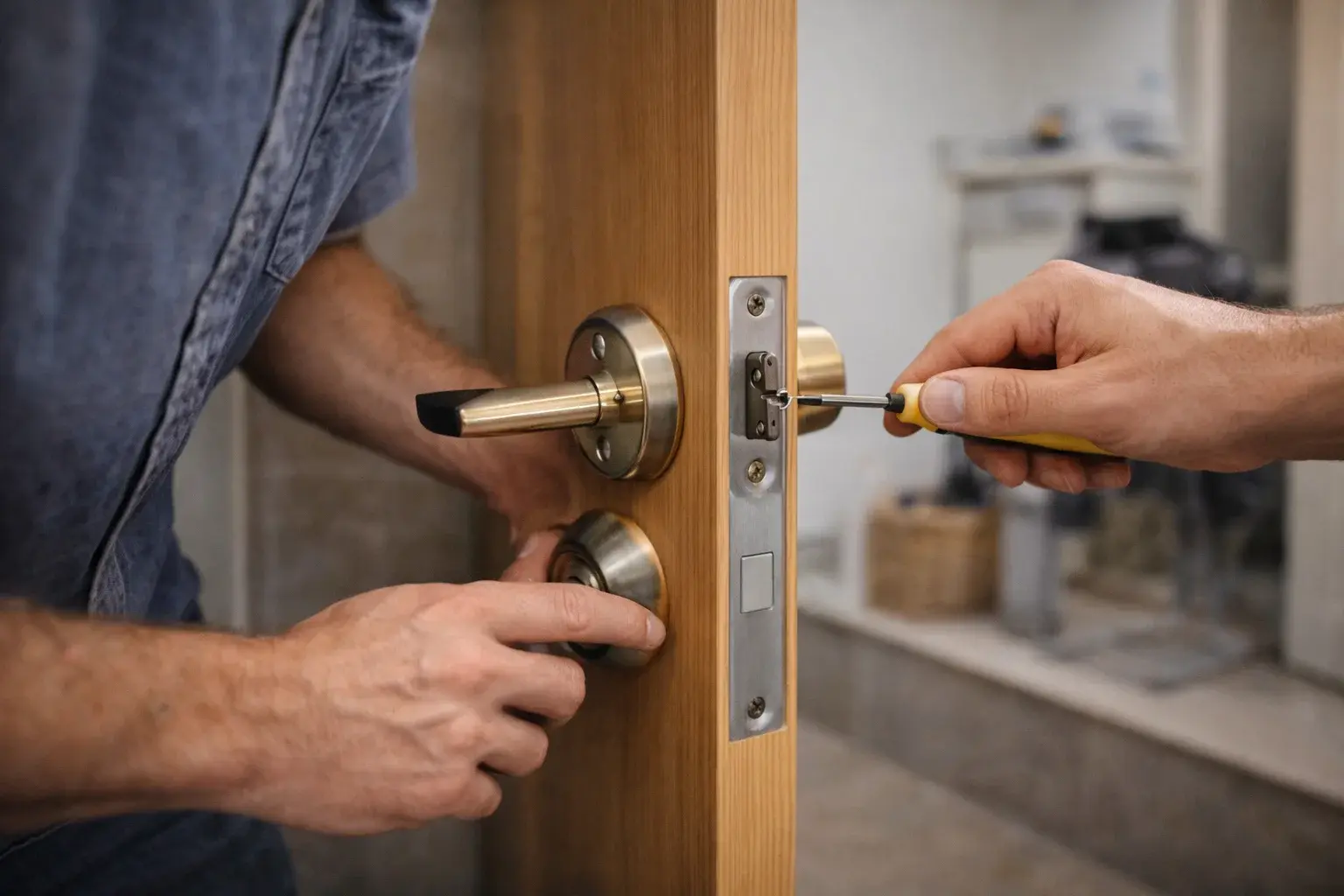
A practical door lock replacement decision starts with the affected item, its condition and the surrounding materials. Replace suitable ordinary mechanical hardware in the compatible existing preparation and check its operation with the authorised customer.
Signs: the door sags, rubs, sticks or has uneven gaps around the opening or the door closes poorly despite an otherwise sound visible opening. Causes: normal wear in hinges, latches or compatible mechanical hardware or loose fixings, minor alignment drift or ordinary timber movement.
Check the accepted mechanical hardware with the door open and then in its ordinary closed position. The authorised customer should understand the supplied product’s operation. This is a fitting check, not a security assessment, compliance certificate or promise against unauthorised entry.
Identify whether the supplied product matches the ordinary existing lockset arrangement. Similar handles can conceal different mechanisms. This task excludes emergency entry, key cutting, rekeying, specialist security advice and powered access systems; it starts with authorised access to the door.
adjust and retain suitable existing hardware. replace an identified compatible component after measuring the existing item. Limits: Authorised ordinary compatible mechanical lockset replacement only. No lockouts, emergency entry, key cutting, rekeying, locksmith security services, rated-door work or electrical integration.