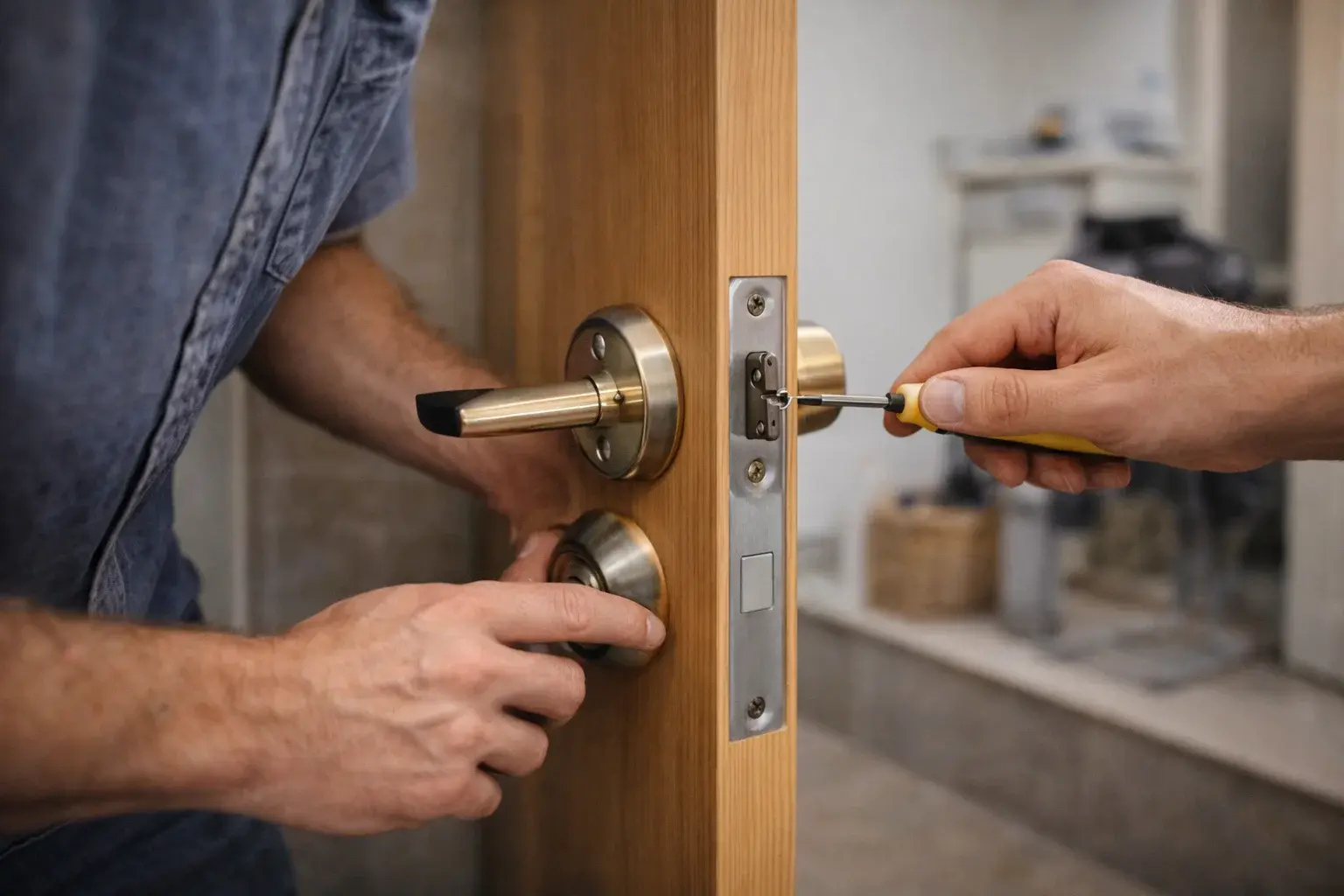
A practical internal door repair decision starts with the affected item, its condition and the surrounding materials. Complete agreed suitable internal-door hardware or alignment repairs and test ordinary opening, closing and latching.
Signs: the latch, handle, hinge or ordinary running hardware no longer lines up or operates normally or the door sags, rubs, sticks or has uneven gaps around the opening. Causes: local damage to an accessible component rather than an assumed structural defect or loose fixings, minor alignment drift or ordinary timber movement.
Existing cut-outs and backsets determine whether a replacement part may fit. For internal door repair, this detail is reviewed before work is accepted so the agreed task stays practical and proportionate. No structural opening changes, fire-rated doors, security systems, locksmith services or certification.
Explain whether the issue is rubbing, loose hardware, a latch miss or a damaged component. For internal door repair, this detail is reviewed before work is accepted so the agreed task stays practical and proportionate. No structural opening changes, fire-rated doors, security systems, locksmith services or certification.
Complete agreed suitable internal-door hardware or alignment repairs and test ordinary opening, closing and latching. Limits: Suitable ordinary internal door hardware and alignment only. No structural opening changes, fire-rated doors, locksmith services, security systems or certification.