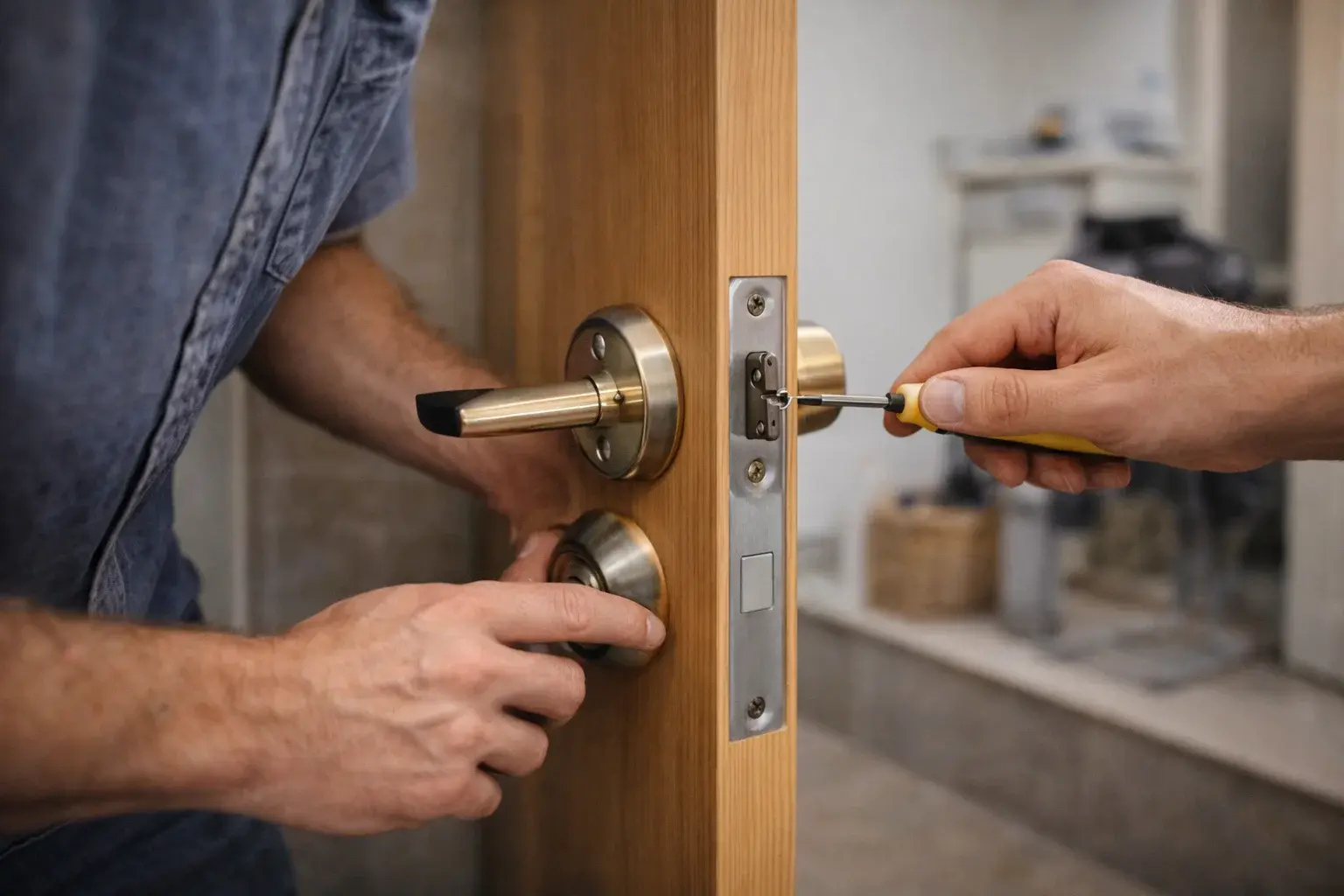
A practical internal door repair decision starts with the affected item, its condition and the surrounding materials. Complete agreed suitable internal-door hardware or alignment repairs and test ordinary opening, closing and latching.
Signs: the latch, handle, hinge or ordinary running hardware no longer lines up or operates normally or the door sags, rubs, sticks or has uneven gaps around the opening. Causes: local damage to an accessible component rather than an assumed structural defect or normal wear in hinges, latches or compatible mechanical hardware.
Clear the swing and identify any occupied-room or tenancy restrictions. For internal door repair, this detail is reviewed before work is accepted so the agreed task stays practical and proportionate. No structural opening changes, fire-rated doors, security systems, locksmith services or certification.
Water damage, splitting or a badly damaged leaf can change whether repair is practical. For internal door repair, this detail is reviewed before work is accepted so the agreed task stays practical and proportionate. No structural opening changes, fire-rated doors, security systems, locksmith services or certification.
Use compatible hardware only and report changes in movement before forcing a damaged handle, latch or hinge. Limits: Suitable ordinary internal door hardware and alignment only. No structural opening changes, fire-rated doors, locksmith services, security systems or certification.