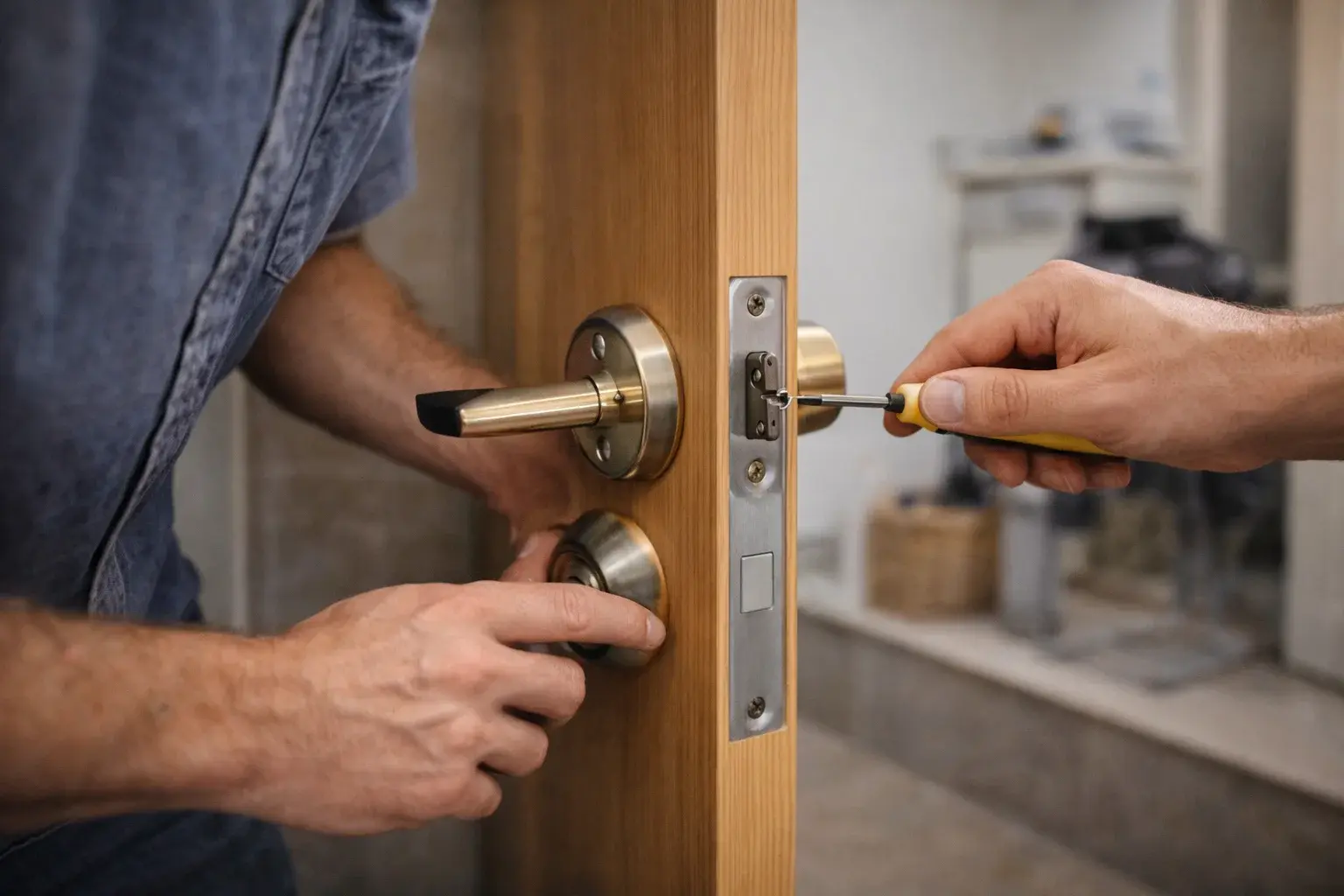
A sound leaf that only rubs or latches poorly may suit adjustment or hardware repair instead. Replacement is considered for an unsuitable or damaged leaf after checking that the existing opening can accept the proposed door.
internal door replacement can be appropriate when the door sags, rubs, sticks or has uneven gaps around the opening. Check the supplied leaf against the opening, hinge positions and product trimming allowance before removing the old door.
Signs: the door closes poorly despite an otherwise sound visible opening or the door sags, rubs, sticks or has uneven gaps around the opening. Causes: loose fixings, minor alignment drift or ordinary timber movement or normal wear in hinges, latches or compatible mechanical hardware.
Show which side carries the hinges and how the door swings into the room. Nearby furniture, another door or a light switch can affect practical use. Replacing the leaf does not automatically include reversing the opening direction or moving the stop.
Clear the swing and provide somewhere safe for the removed door. Agree whether disposal is required before the visit. If the existing frame is damaged or movement is apparent, the replacement plan needs review rather than using a new leaf to conceal the problem.
Arrange protection of cut edges and any agreed painting. Check the door again after finishes have cured without forcing the latch. Limits: Ordinary compatible internal leaf replacement only. No structural opening changes, fire or smoke-rated doors, certification, locksmith services or powered security integration.