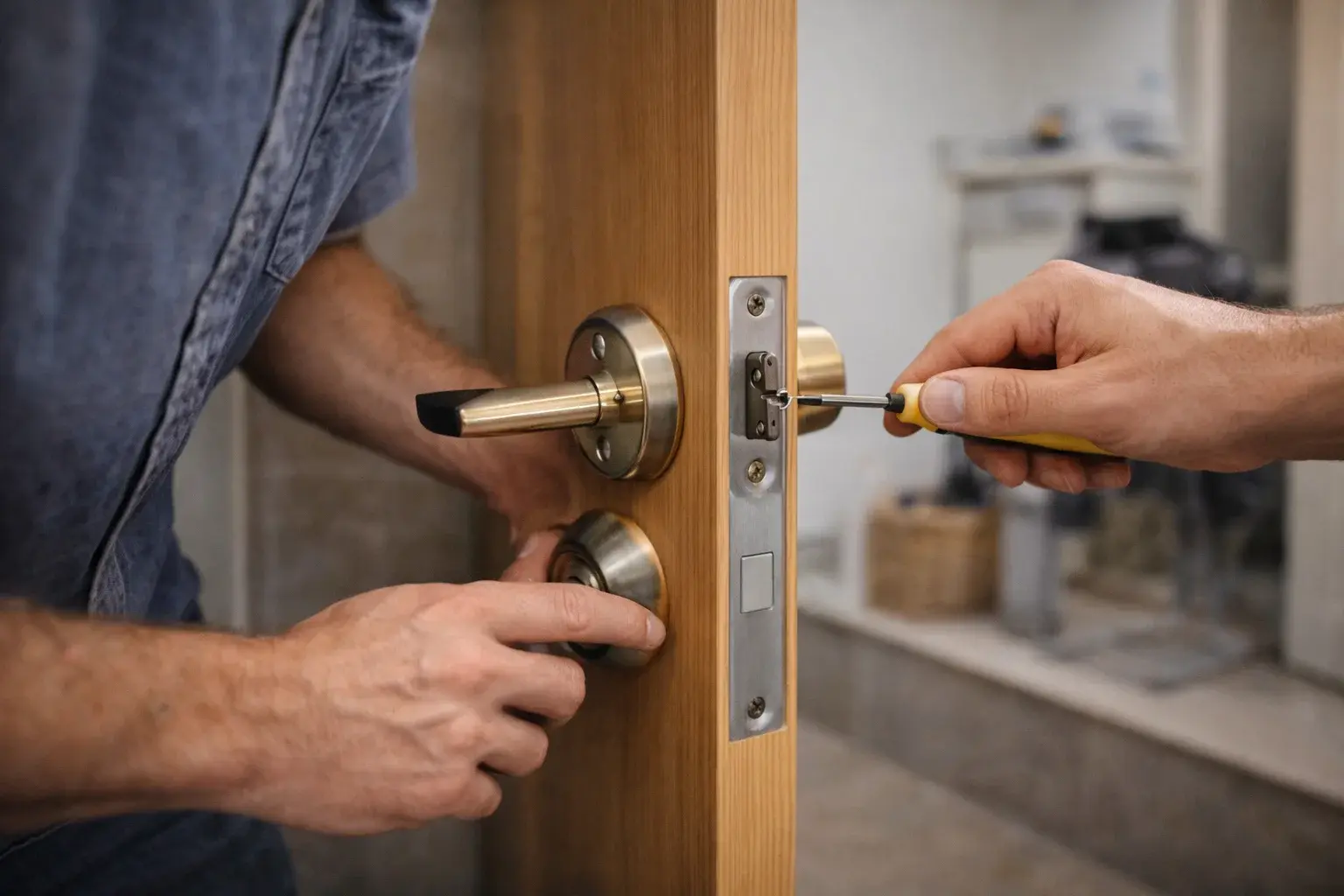
A sound leaf that only rubs or latches poorly may suit adjustment or hardware repair instead. Replacement is considered for an unsuitable or damaged leaf after checking that the existing opening can accept the proposed door.
A practical internal door replacement decision starts with the affected item, its condition and the surrounding materials. Hang the compatible replacement leaf, fit agreed ordinary hardware and check floor clearance, alignment and closing in the unchanged opening.
Signs: the latch, handle, hinge or ordinary running hardware no longer lines up or operates normally or the door sags, rubs, sticks or has uneven gaps around the opening. Causes: normal wear in hinges, latches or compatible mechanical hardware or loose fixings, minor alignment drift or ordinary timber movement.
Show which side carries the hinges and how the door swings into the room. Nearby furniture, another door or a light switch can affect practical use. Replacing the leaf does not automatically include reversing the opening direction or moving the stop.
Check the swing across the actual floor, including rugs and any planned flooring change. The aim is a workable clearance with an aligned leaf. Removing excessive material to compensate for an unsuitable opening is not a substitute for checking compatibility first.
adjust and retain suitable existing hardware. replace an identified compatible component after measuring the existing item. Limits: Ordinary compatible internal leaf replacement only. No structural opening changes, fire or smoke-rated doors, certification, locksmith services or powered security integration.