A sound leaf that only rubs or latches poorly may suit adjustment or hardware repair instead. Replacement is considered for an unsuitable or damaged leaf after checking that the existing opening can accept the proposed door.
internal door replacement can be appropriate when the door sags, rubs, sticks or has uneven gaps around the opening. Check the supplied leaf against the opening, hinge positions and product trimming allowance before removing the old door.
Signs: the door sags, rubs, sticks or has uneven gaps around the opening or the door closes poorly despite an otherwise sound visible opening. Causes: local damage to an accessible component rather than an assumed structural defect or loose fixings, minor alignment drift or ordinary timber movement.
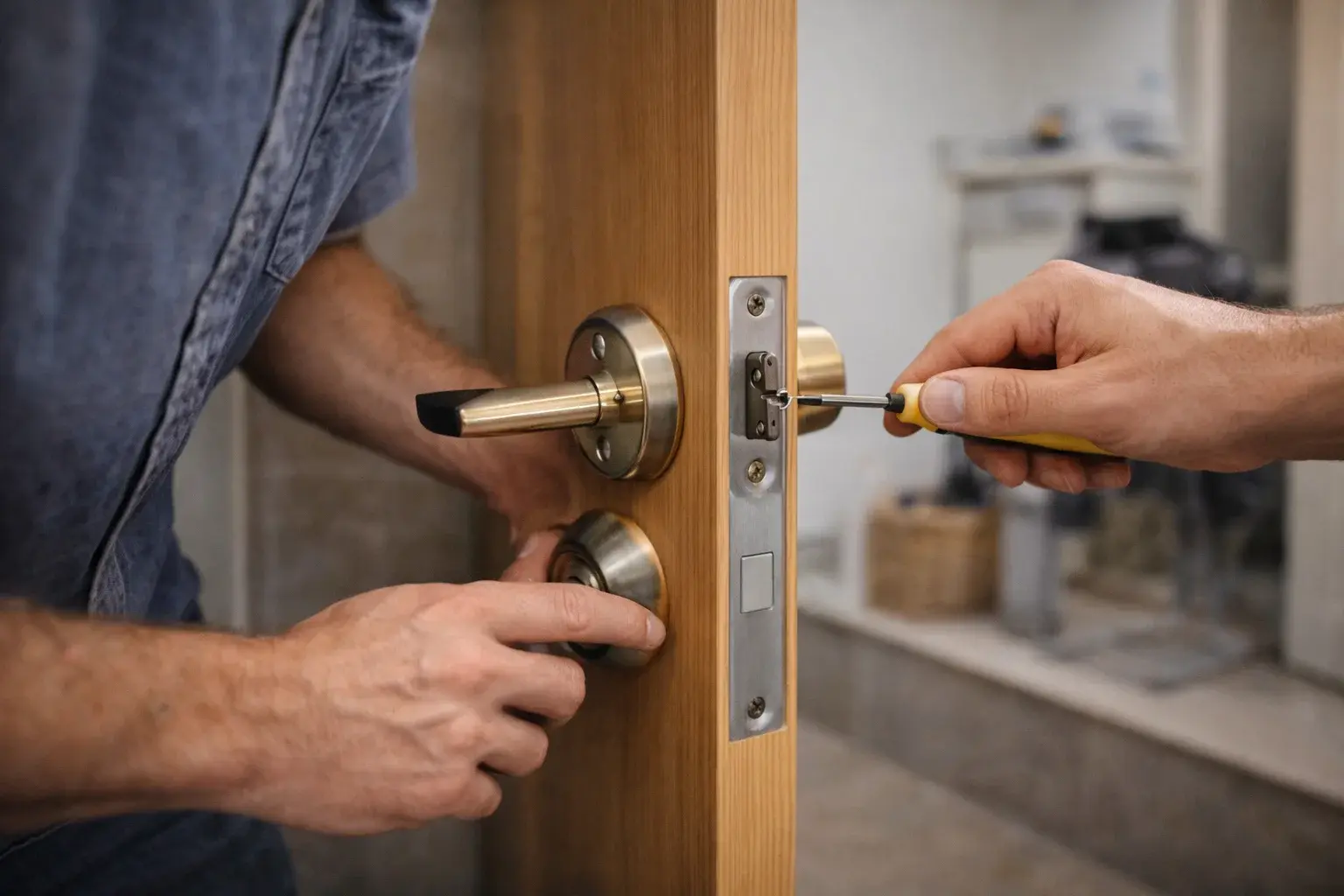
Factory cut-outs can restrict which handle or latch will fit. Show the hardware from both sides and the latch edge. Ordinary compatible hardware transfer can be considered, but existing holes should not be assumed to match a different product simply because both are internal doors.
A hollow-core or factory-finished leaf may allow only limited edge trimming. Share the exact product specification before purchase. A door that needs more material removed than its instructions permit should be exchanged for a suitable product rather than improvised to fit.
Arrange protection of cut edges and any agreed painting. Check the door again after finishes have cured without forcing the latch. Limits: Ordinary compatible internal leaf replacement only. No structural opening changes, fire or smoke-rated doors, certification, locksmith services or powered security integration.