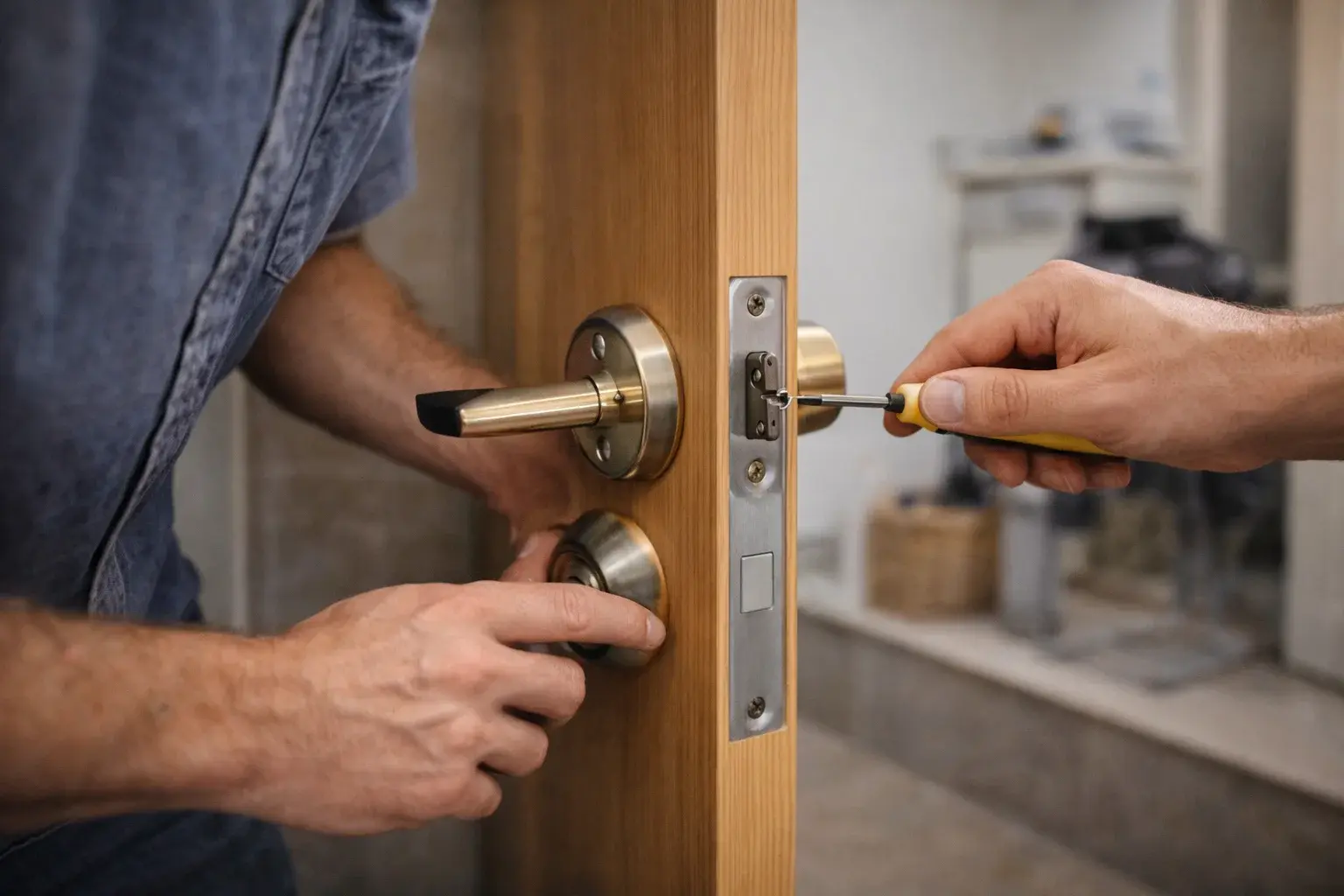
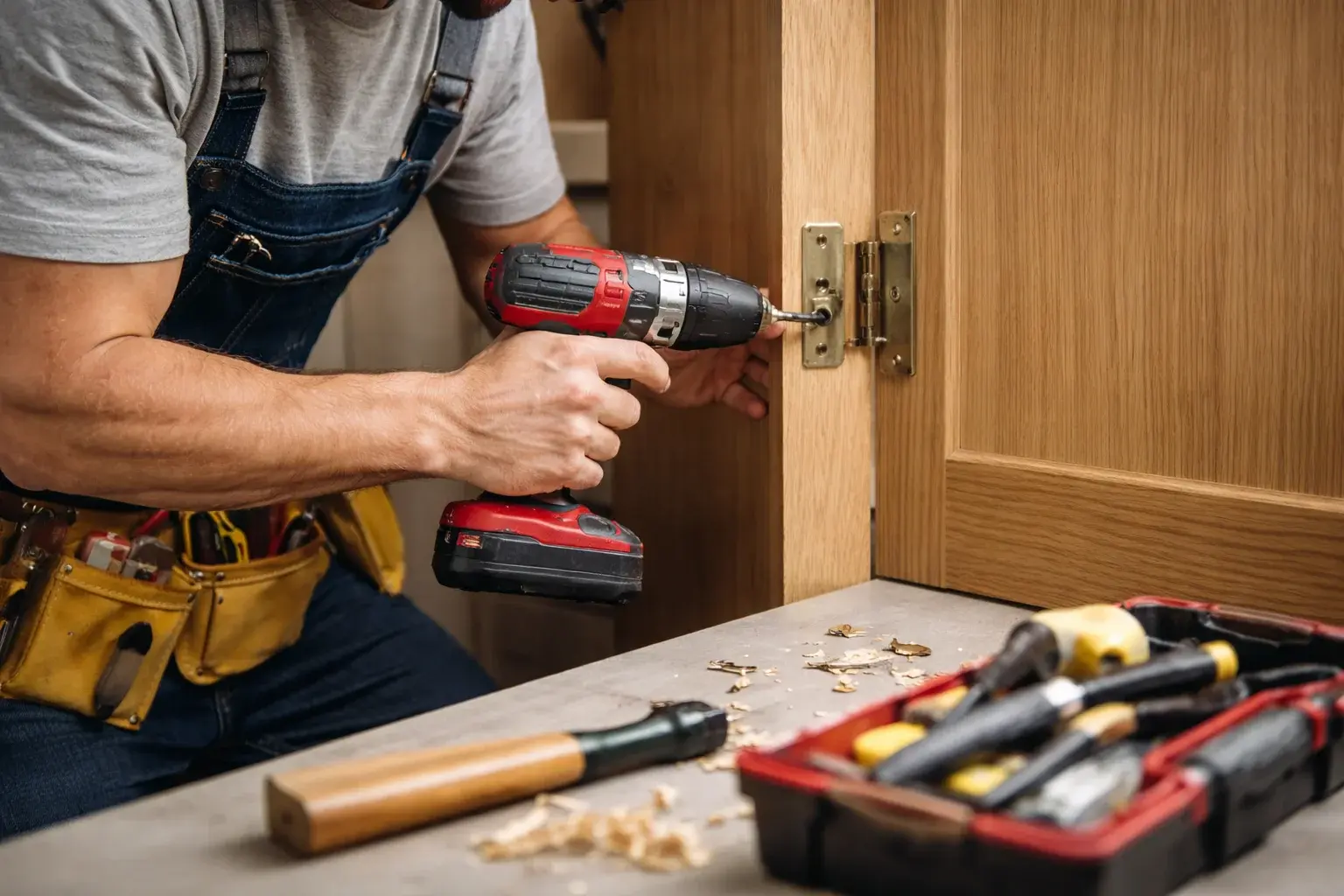
the latch, handle, hinge or ordinary running hardware no longer lines up or operates normally. Replace accessible compatible roller assemblies on an accepted panel, set the height and check ordinary travel and stops.
Signs: the door closes poorly despite an otherwise sound visible opening or the door sags, rubs, sticks or has uneven gaps around the opening. Causes: normal wear in hinges, latches or compatible mechanical hardware or local damage to an accessible component rather than an assumed structural defect.
Roller housings can differ even where doors look alike. Provide the door maker or part reference if known and photograph accessible identification. Do not remove a heavy panel just to obtain a measurement; safe access to the assembly must be planned first.
Dents, debris or wear in the rail can contribute to difficult movement. A roller replacement quote should distinguish these from a roller fault. Track repair can be considered separately where suitable; new wheels alone cannot promise smooth travel over a damaged running surface.
Keep the running surface clear and follow the hardware instructions. Report renewed drag rather than repeatedly forcing the panel. Limits: Ordinary non-powered safely handled panels only. No heavy specialist lifting, glazing work, powered operators, structural changes or access-control integration.