sliding door roller replacement can be appropriate when the door sags, rubs, sticks or has uneven gaps around the opening. Review roller compatibility, panel handling and rail condition before deciding whether a roller swap is suitable.
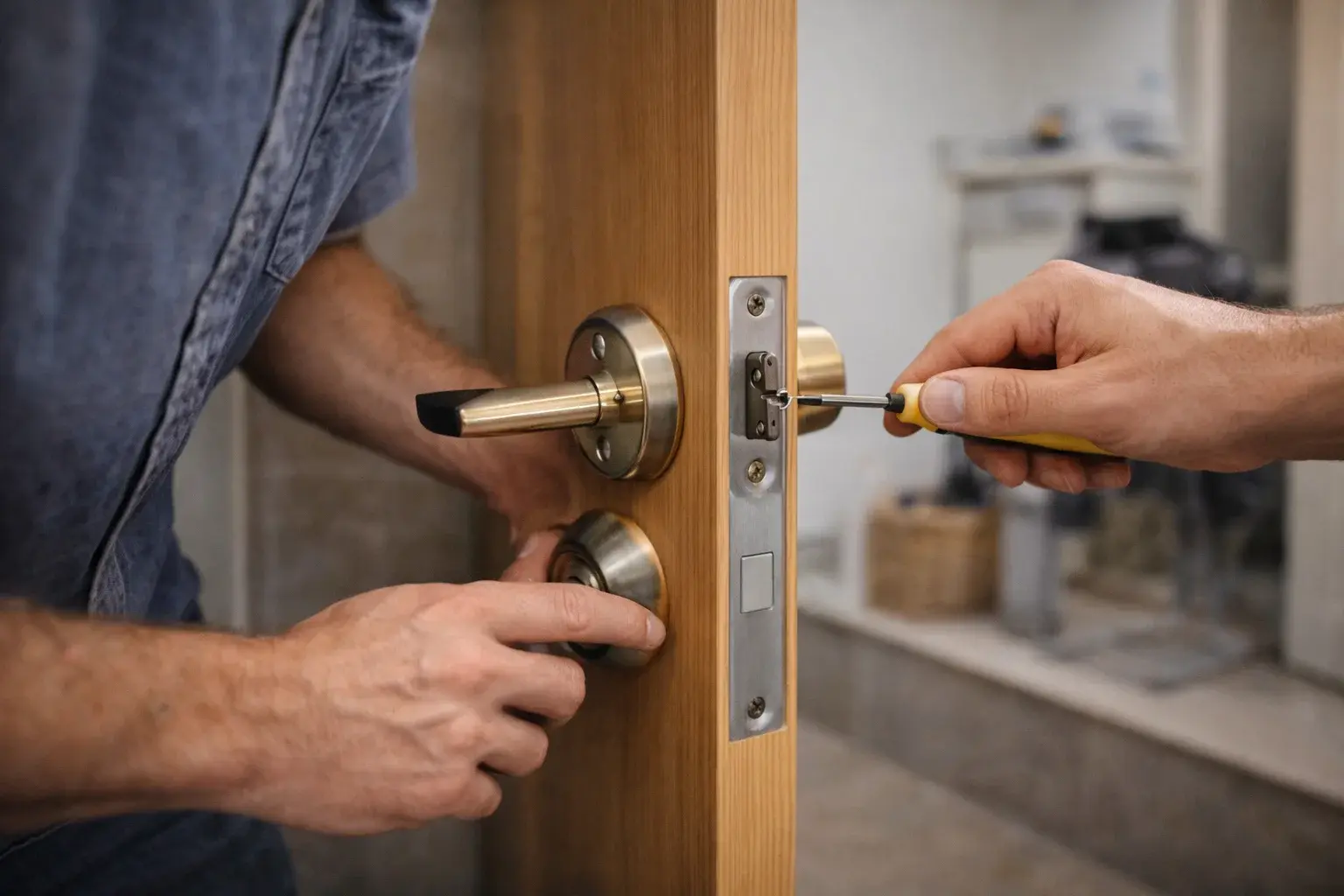
Signs: the latch, handle, hinge or ordinary running hardware no longer lines up or operates normally or the door closes poorly despite an otherwise sound visible opening. Causes: local damage to an accessible component rather than an assumed structural defect or loose fixings, minor alignment drift or ordinary timber movement.
Check the accepted panel through its ordinary movement after replacement. Stops and closing alignment should be considered alongside the rollers. The task does not include powered operators, access-control integration or certification of a specialist door system.
Roller housings can differ even where doors look alike. Provide the door maker or part reference if known and photograph accessible identification. Do not remove a heavy panel just to obtain a measurement; safe access to the assembly must be planned first.
Keep the running surface clear and follow the hardware instructions. Report renewed drag rather than repeatedly forcing the panel. Limits: Ordinary non-powered safely handled panels only. No heavy specialist lifting, glazing work, powered operators, structural changes or access-control integration.