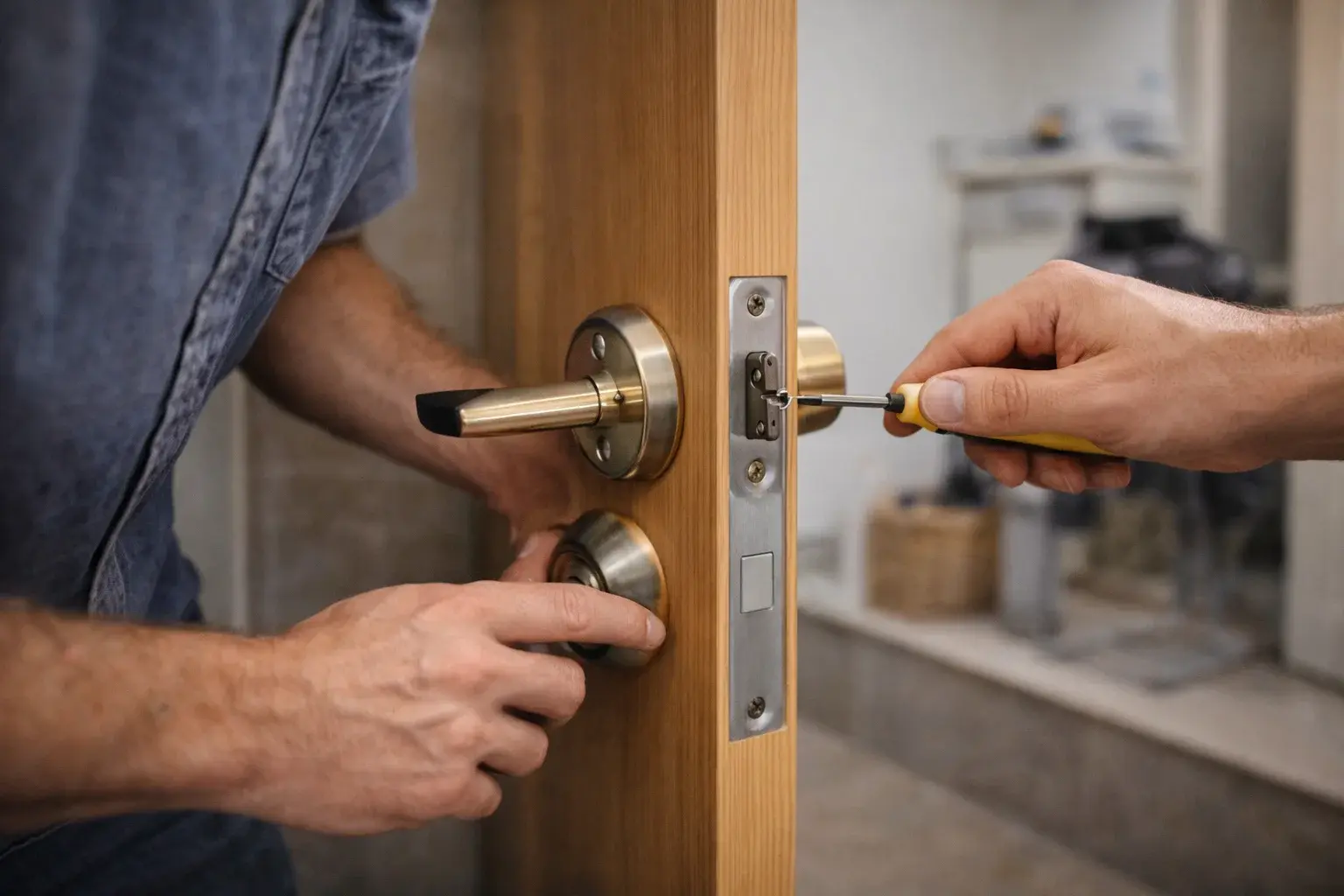
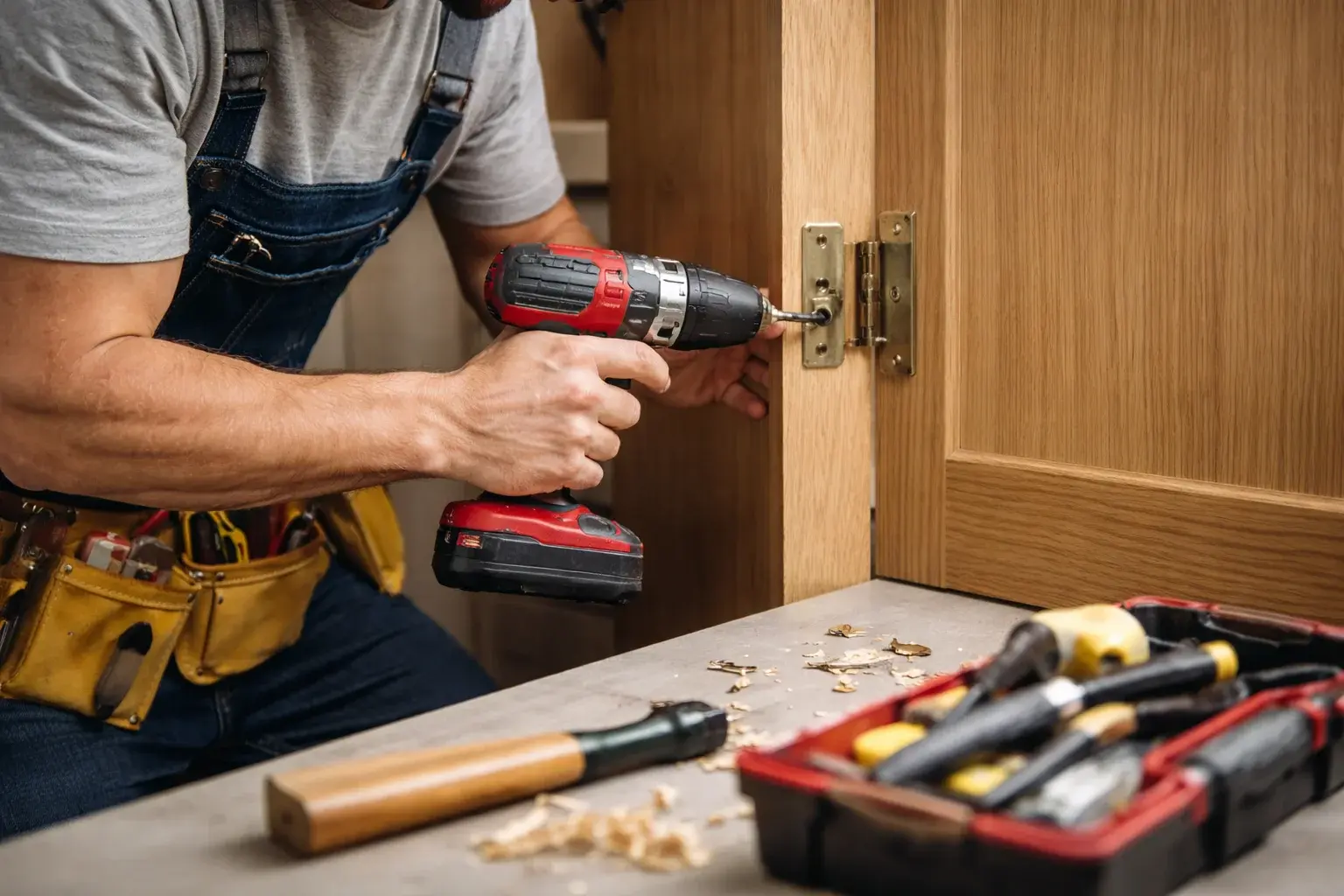
A practical sliding door roller replacement decision starts with the affected item, its condition and the surrounding materials. Replace accessible compatible roller assemblies on an accepted panel, set the height and check ordinary travel and stops.
Signs: the door sags, rubs, sticks or has uneven gaps around the opening or the latch, handle, hinge or ordinary running hardware no longer lines up or operates normally. Causes: loose fixings, minor alignment drift or ordinary timber movement or normal wear in hinges, latches or compatible mechanical hardware.
The wheel shape and diameter must suit the running rail. A visually similar wheel is not enough to establish compatibility. Ordering from an approximate photograph can leave the door unsupported or incorrectly aligned, so confirm the part information before committing to a replacement.
After fitting, the panel height needs checking against the opening and compatible hardware. Excessive adjustment is not a cure for an unsuitable part. The aim is supported travel and workable clearances, with any remaining frame or track limitation explained before handover.
Keep the running surface clear and follow the hardware instructions. Report renewed drag rather than repeatedly forcing the panel. Limits: Ordinary non-powered safely handled panels only. No heavy specialist lifting, glazing work, powered operators, structural changes or access-control integration.