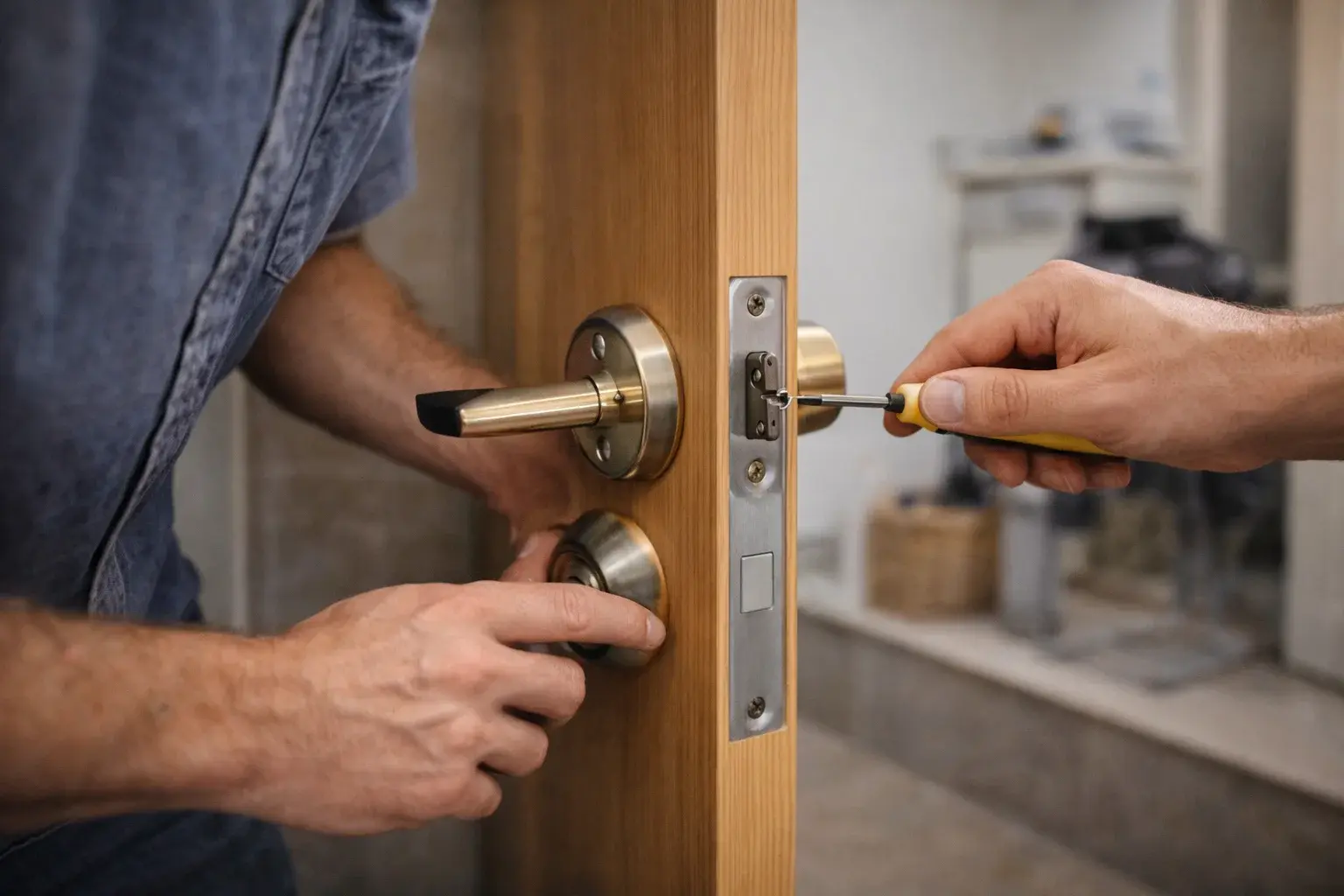
A practical sliding door roller replacement decision starts with the affected item, its condition and the surrounding materials. Replace accessible compatible roller assemblies on an accepted panel, set the height and check ordinary travel and stops.
Signs: the latch, handle, hinge or ordinary running hardware no longer lines up or operates normally or the door closes poorly despite an otherwise sound visible opening. Causes: normal wear in hinges, latches or compatible mechanical hardware or loose fixings, minor alignment drift or ordinary timber movement.
A panel can have more than one roller assembly, and the condition of each matters. Discuss whether compatible assemblies need replacing together. Replacing only an obvious damaged wheel may leave an uneven panel if the other support is worn or cannot be adjusted correctly.
Check the accepted panel through its ordinary movement after replacement. Stops and closing alignment should be considered alongside the rollers. The task does not include powered operators, access-control integration or certification of a specialist door system.
Replace accessible compatible roller assemblies on an accepted panel, set the height and check ordinary travel and stops. Limits: Ordinary non-powered safely handled panels only. No heavy specialist lifting, glazing work, powered operators, structural changes or access-control integration.