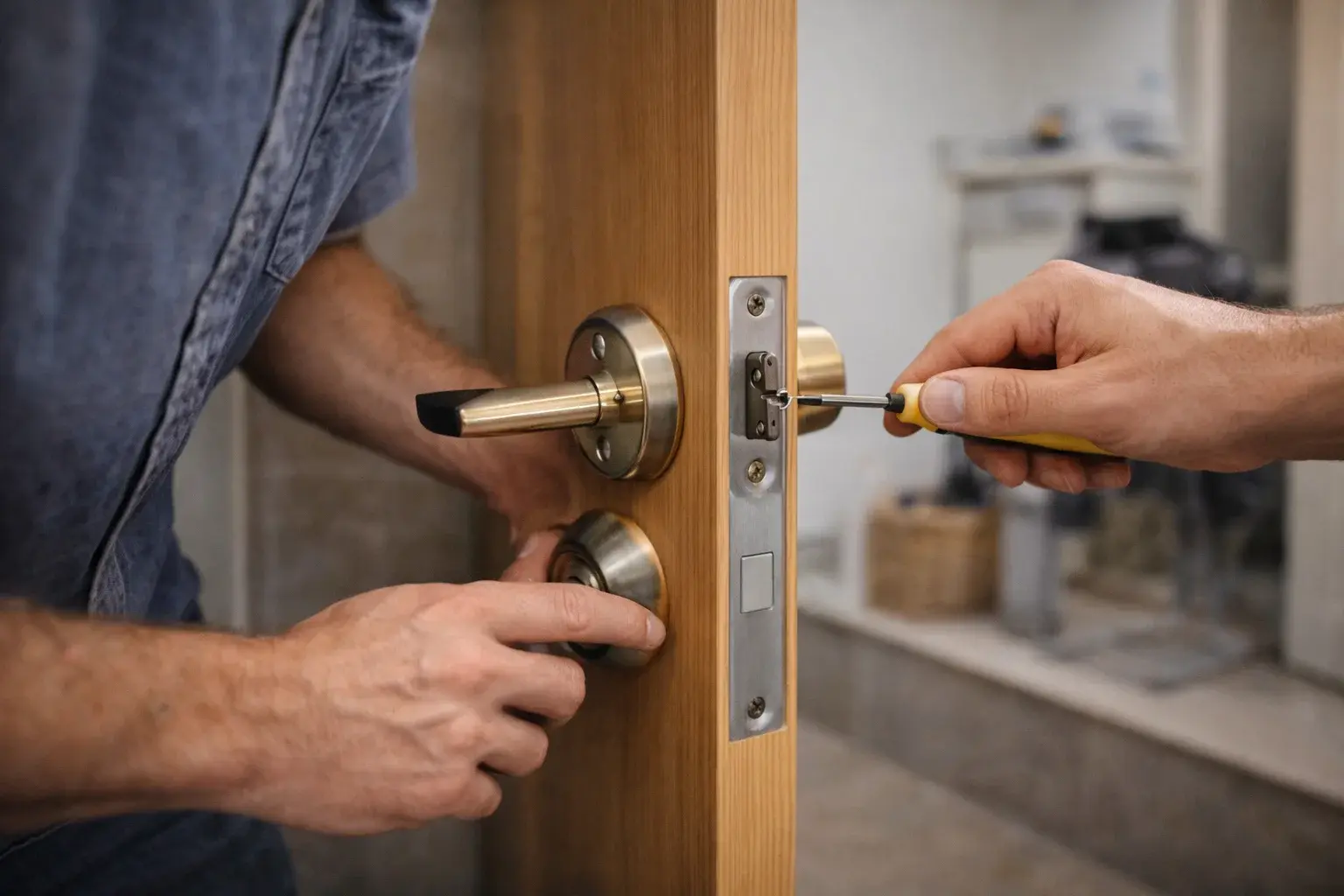
A practical sliding door track repair decision starts with the affected item, its condition and the surrounding materials. Repair an accepted accessible rail or fit a compatible running insert or replacement section without changing the building envelope.
Signs: the door sags, rubs, sticks or has uneven gaps around the opening or the door closes poorly despite an otherwise sound visible opening. Causes: local damage to an accessible component rather than an assumed structural defect or normal wear in hinges, latches or compatible mechanical hardware.
Existing drainage features must not be obstructed by an ordinary repair. Show the complete threshold arrangement in the enquiry. Changes to a drainage or glazing system require the appropriate expertise and are not authorised simply because the damaged rail is nearby.
A replacement rail or insert needs the correct shape and dimensions. Provide the system reference where available. Similar-looking tracks may support different rollers, so a generic strip should not be assumed to be a suitable repair for every sliding door.
Keep the rail clear and check travel after the agreed work. Report recurrent catching so the remaining cause can be reviewed. Limits: Accessible non-structural running rails only. No threshold waterproofing alterations, drainage-system redesign, structural changes, major glazing or powered operators.