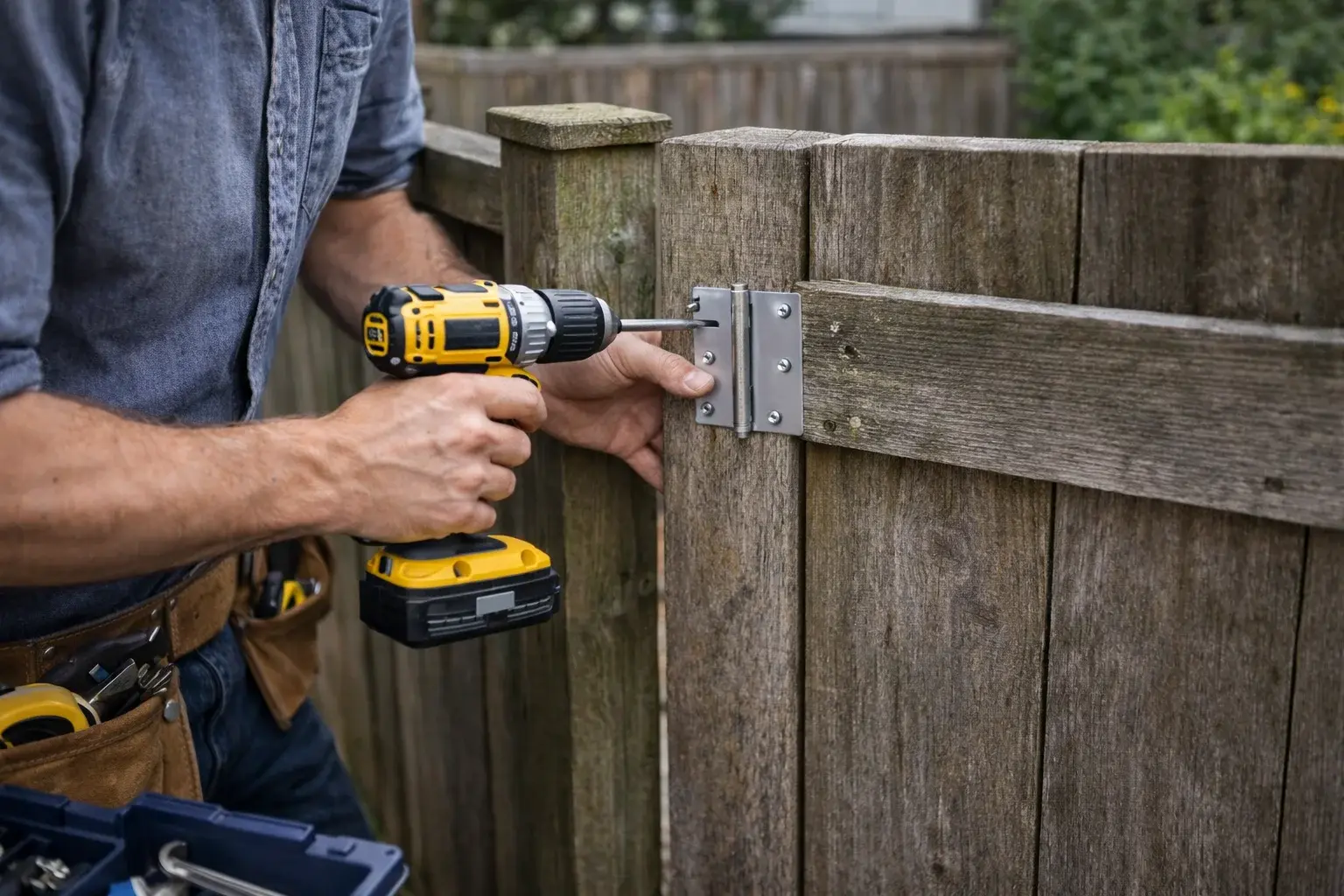
a gate does not swing, latch or sit as intended. Prepare and sand accepted sound boards with appropriate abrasive stages and dust control, within the agreed accessible area.
Signs: a gate does not swing, latch or sit as intended or an accessible board, rail, gate fitting or timber surface shows wear, movement or a damaged finish. Causes: weather exposure and ordinary surface deterioration or an aged coating, stain or finish that needs preparation before maintenance.
If the coating history or material condition raises a hazardous-material concern, ordinary sanding should not proceed on an assumption. Share existing product records where available. Specialist testing or removal is outside the scope and must not be replaced by a disclaimer after disturbance.
Identify the previous coating where possible and show peeling, glossy or stained areas. Different finishes affect the preparation method. Unknown or suspect hazardous coatings are excluded; a sanding enquiry does not authorise stripping every old surface regardless of its composition.
repair a suitable local component. prepare and maintain sound accessible timber with a compatible finish. Limits: Sound ordinary accessible boards only. No structural restoration, rot concealment, hazardous coating removal, asbestos or specialist dust remediation.