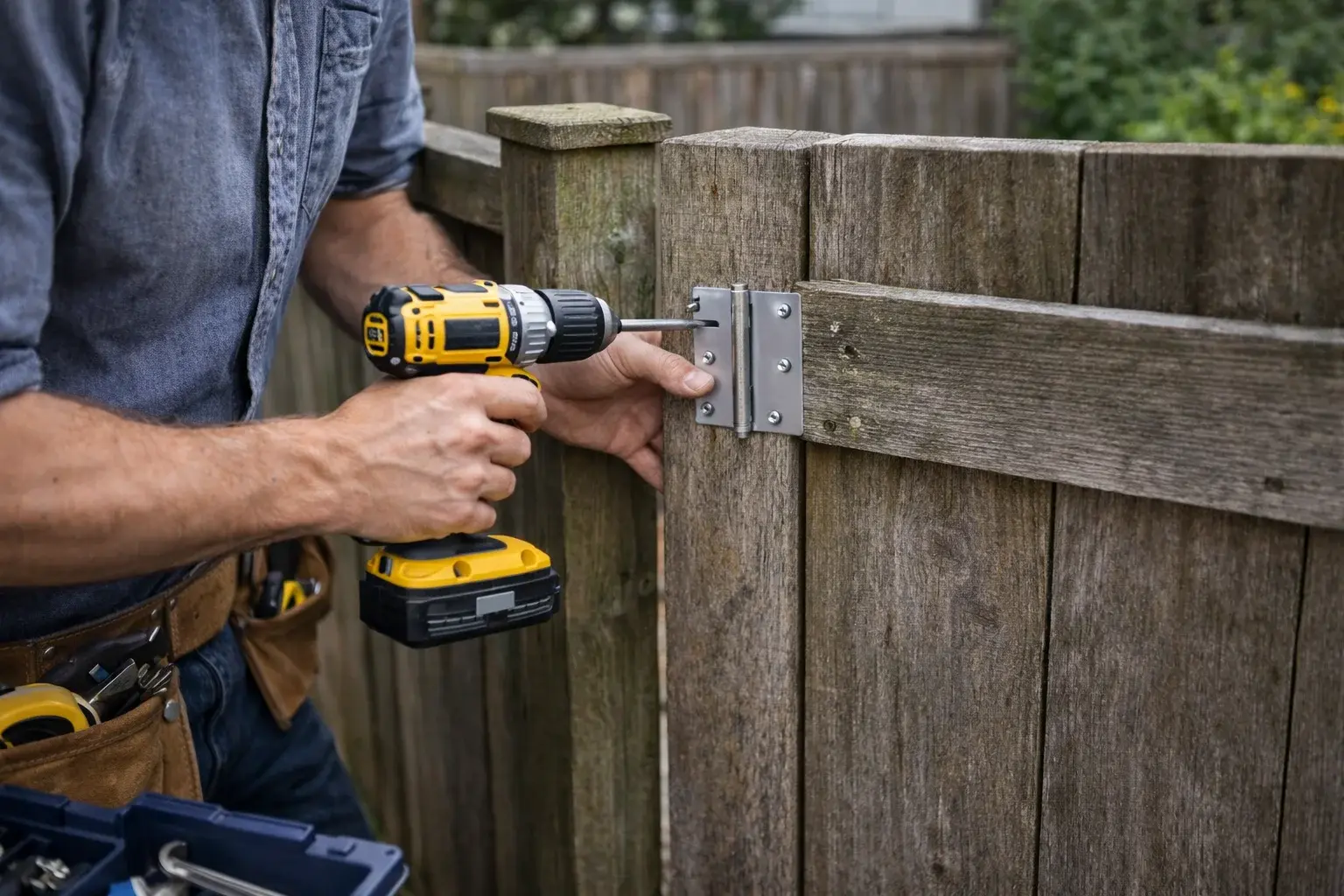
deck sanding can be appropriate when an accessible board, rail, gate fitting or timber surface shows wear, movement or a damaged finish. Review board condition, remaining thickness and coating suitability before agreeing a sanding method and the next finish.
Signs: a gate does not swing, latch or sit as intended or outdoor timber looks weathered and needs a focused maintenance or repair decision. Causes: weather exposure and ordinary surface deterioration or an aged coating, stain or finish that needs preparation before maintenance.
Discuss nearby doors, plants and occupied spaces before sanding. Appropriate containment and collection depend on the site and accepted material. This ordinary preparation service does not include hazardous dust remediation or work on a coating whose safety has not been established.
Sanding removes timber as well as surface material. Heavily worn, thin or damaged boards may not be suitable. The task concerns sound boards, and surface preparation must not be used to conceal rot or substitute for a separate deck repair assessment.
repair a suitable local component. prepare and maintain sound accessible timber with a compatible finish. Limits: Sound ordinary accessible boards only. No structural restoration, rot concealment, hazardous coating removal, asbestos or specialist dust remediation.