A practical deck sanding decision starts with the affected item, its condition and the surrounding materials. Prepare and sand accepted sound boards with appropriate abrasive stages and dust control, within the agreed accessible area.
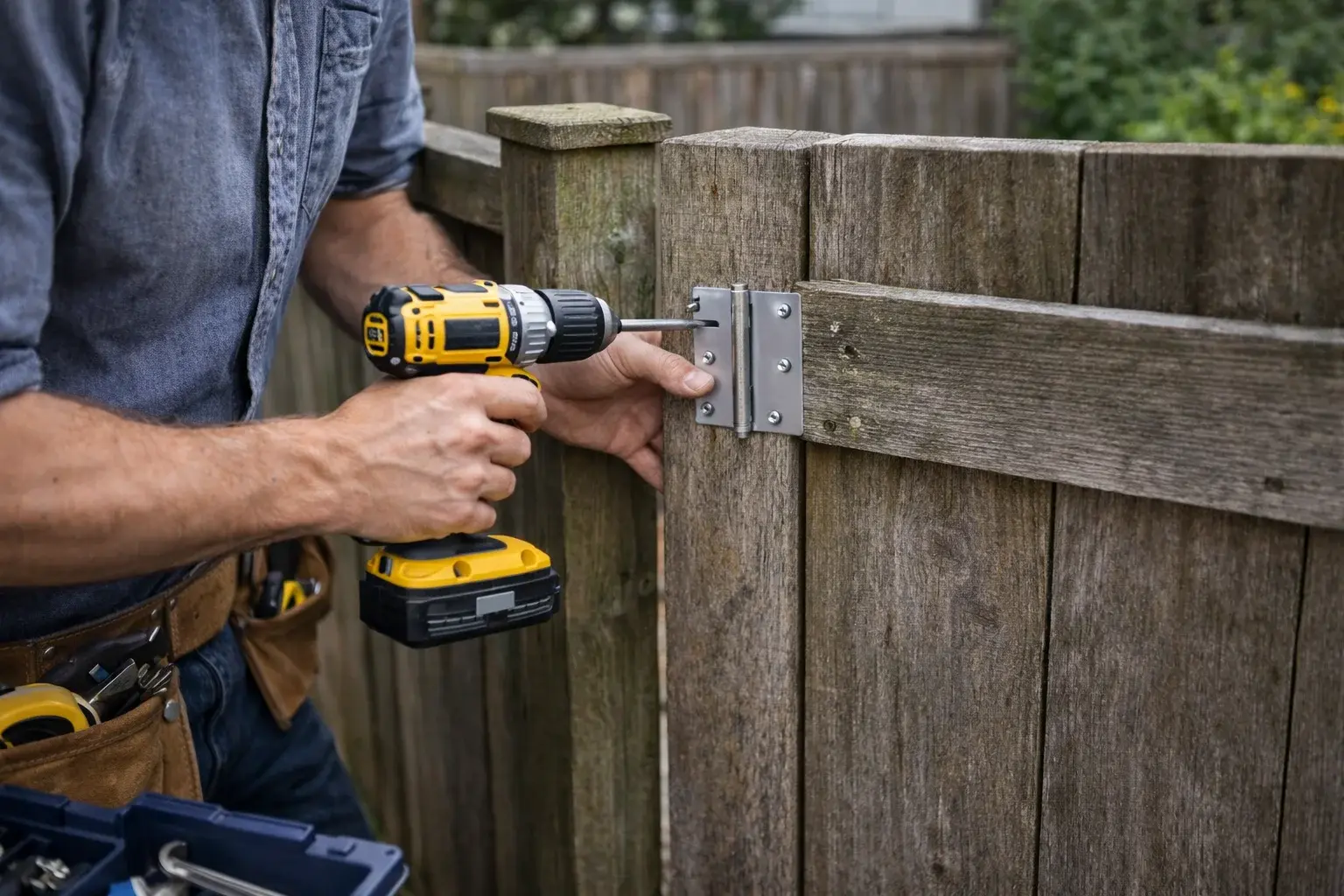
Signs: a gate does not swing, latch or sit as intended or outdoor timber looks weathered and needs a focused maintenance or repair decision. Causes: weather exposure and ordinary surface deterioration or an aged coating, stain or finish that needs preparation before maintenance.
Railings, posts, corners and fixed furniture affect tool access. Include these in the dimensions and photographs. Hand-detail work around obstructions can change the scope, while inaccessible areas should be identified before assuming the entire deck can receive identical preparation.
If the coating history or material condition raises a hazardous-material concern, ordinary sanding should not proceed on an assumption. Share existing product records where available. Specialist testing or removal is outside the scope and must not be replaced by a disclaimer after disturbance.
Prepare and sand accepted sound boards with appropriate abrasive stages and dust control, within the agreed accessible area. Limits: Sound ordinary accessible boards only. No structural restoration, rot concealment, hazardous coating removal, asbestos or specialist dust remediation.