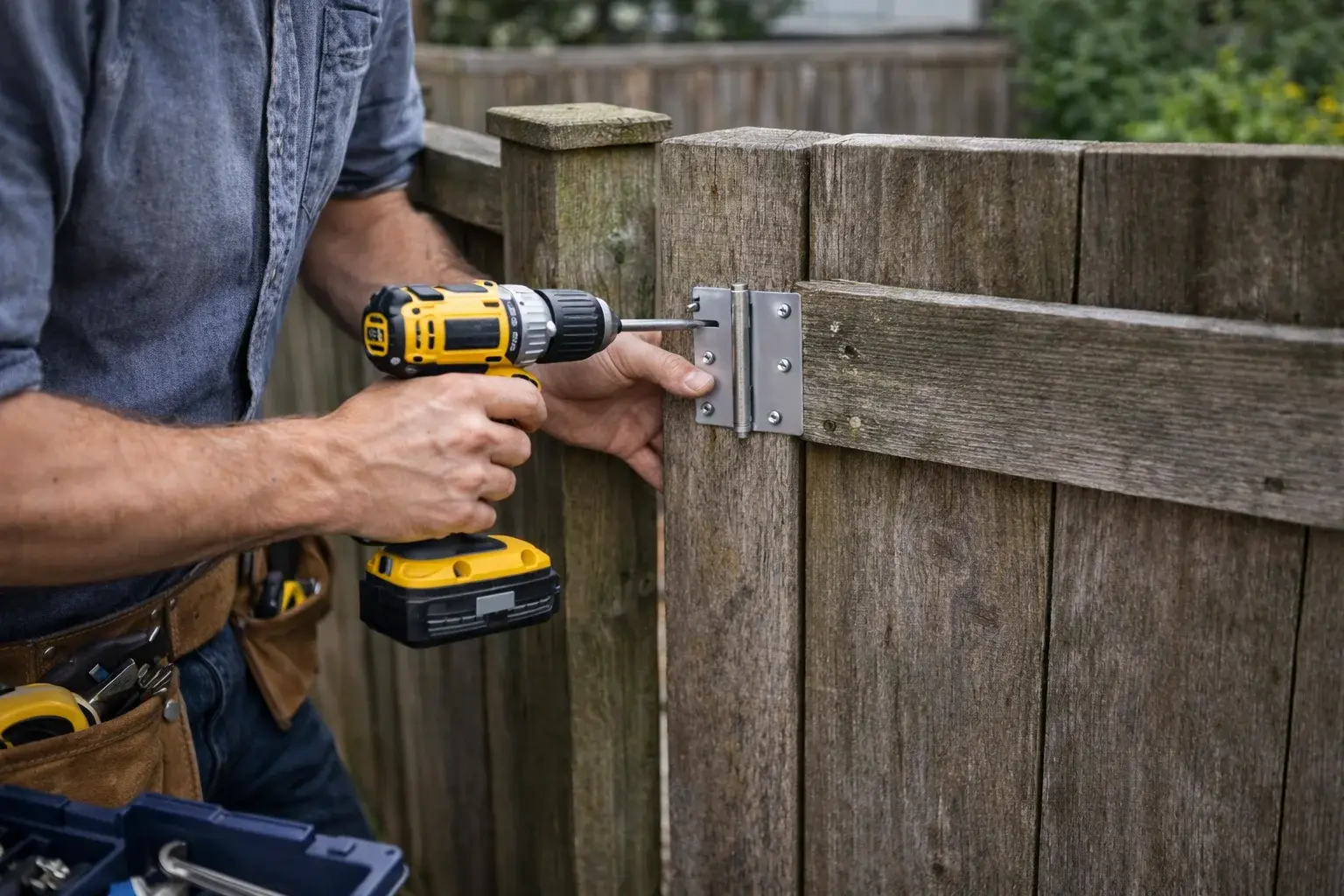
A practical gate latch repair decision starts with the affected item, its condition and the surrounding materials. Adjust or fit agreed compatible mechanical latch components and test ordinary closing and release of the gate.
Signs: the door closes poorly despite an otherwise sound visible opening or the door sags, rubs, sticks or has uneven gaps around the opening. Causes: loose fixings, minor alignment drift or ordinary timber movement or local damage to an accessible component rather than an assumed structural defect.
Contact marks reveal whether the gate reaches the latch at the correct height. For gate latch repair, this detail is reviewed before work is accepted so the agreed task stays practical and proportionate. No powered gates, access-control systems, structural posts, security certification or boundary disputes.
The gate should latch with normal movement, without lifting or slamming it into place. For gate latch repair, this detail is reviewed before work is accepted so the agreed task stays practical and proportionate. No powered gates, access-control systems, structural posts, security certification or boundary disputes.
Use the latch normally and report severe gate sag, damaged posts or automated equipment for separate review. Limits: Ordinary mechanical gate latch work only. No powered gates, access control, structural post work, security certification or boundary disputes.