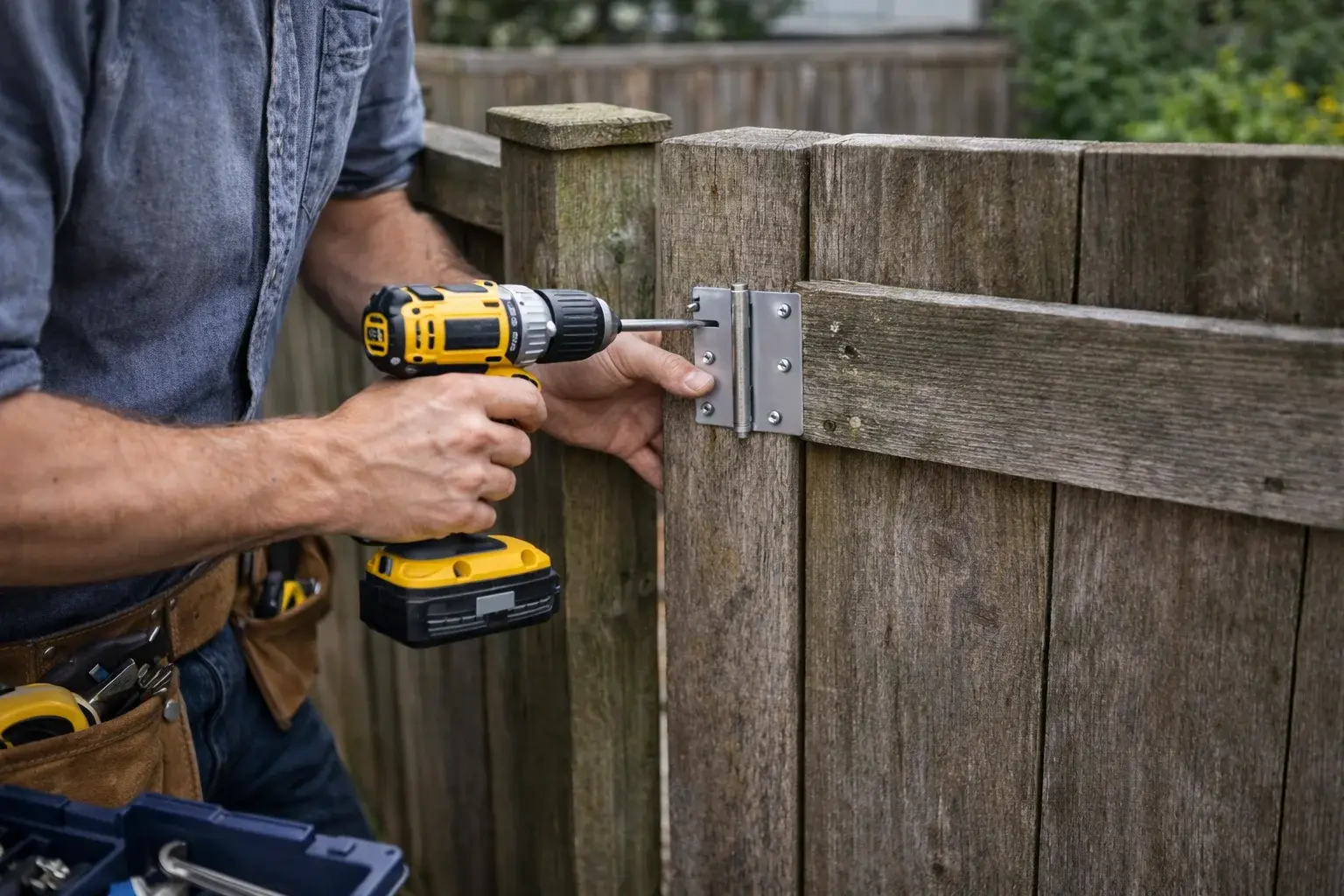
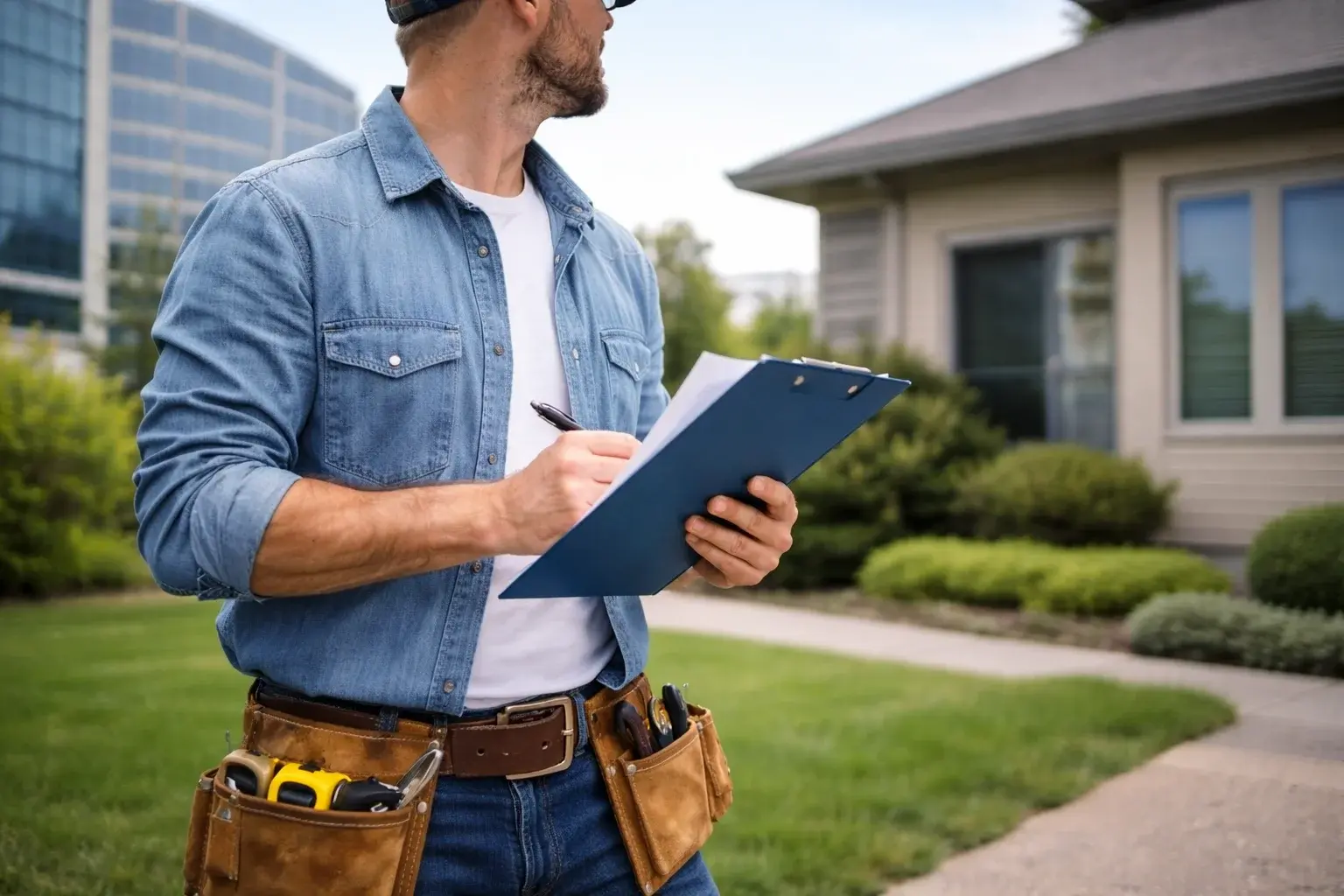
A practical outdoor timber repair decision starts with the affected item, its condition and the surrounding materials. Repair or replace agreed suitable local non-structural timber components and leave the limits of the work clear.
Signs: the latch, handle, hinge or ordinary running hardware no longer lines up or operates normally or the door closes poorly despite an otherwise sound visible opening. Causes: loose fixings, minor alignment drift or ordinary timber movement or local damage to an accessible component rather than an assumed structural defect.
A repair should not conceal widespread decay that makes replacement more appropriate. For outdoor timber repair, this detail is reviewed before work is accepted so the agreed task stays practical and proportionate. No structural reconstruction, roofing, retaining walls, hazardous coating removal, electrical work or certified safety systems.
Explain nearby gardens, paving and obstacles before work is planned. For outdoor timber repair, this detail is reviewed before work is accepted so the agreed task stays practical and proportionate. No structural reconstruction, roofing, retaining walls, hazardous coating removal, electrical work or certified safety systems.
Follow any agreed finish care and report spreading rot, structural movement or water-entry concerns separately. Limits: Accessible non-structural exterior timber work only. No structural reconstruction, roofing, retaining walls, hazardous coating removal, electrical work or certified safety systems.