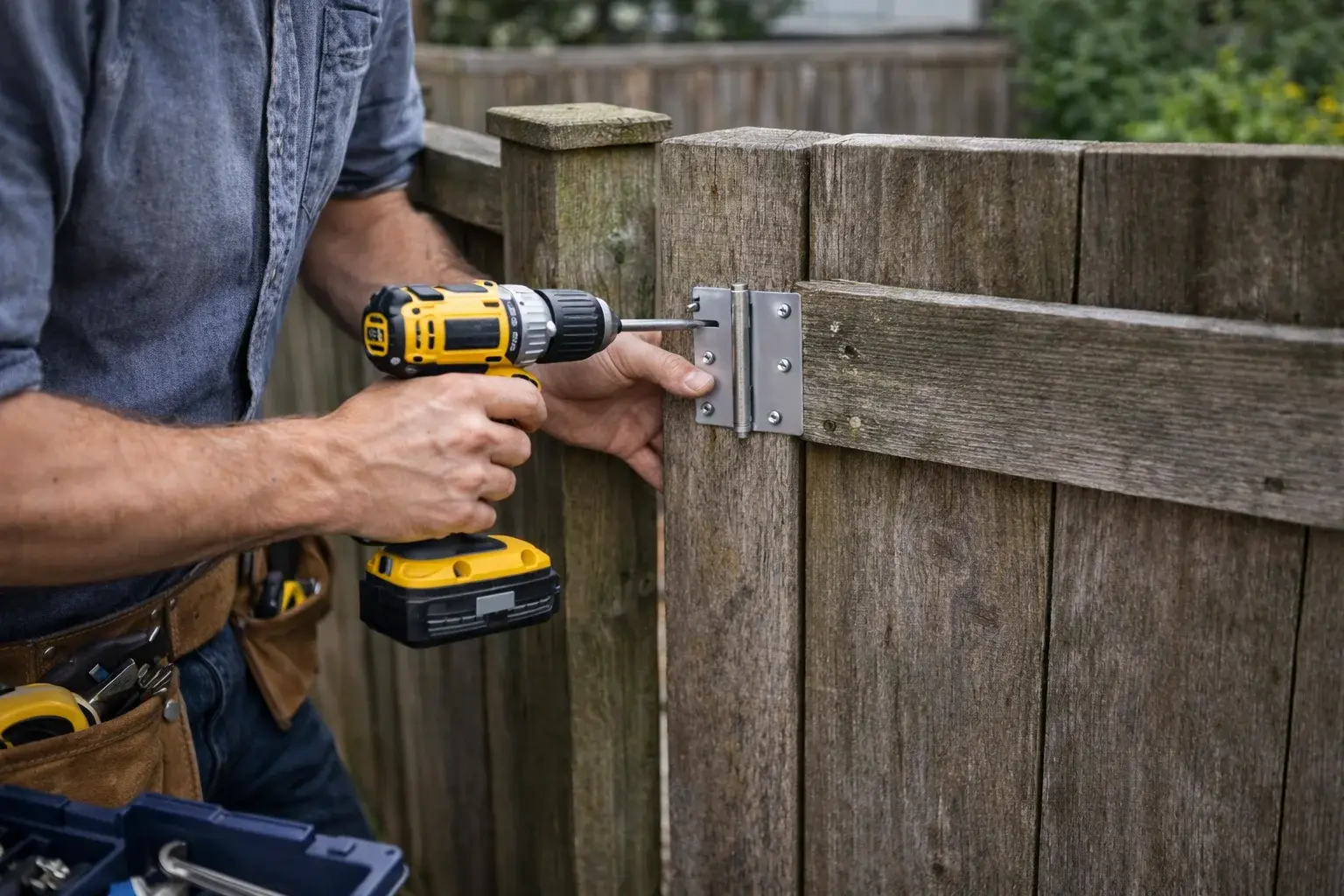
A practical outdoor timber repair decision starts with the affected item, its condition and the surrounding materials. Repair or replace agreed suitable local non-structural timber components and leave the limits of the work clear.
Signs: the door sags, rubs, sticks or has uneven gaps around the opening or the door closes poorly despite an otherwise sound visible opening. Causes: normal wear in hinges, latches or compatible mechanical hardware or local damage to an accessible component rather than an assumed structural defect.
Section size and profile help identify practical matching material. For outdoor timber repair, this detail is reviewed before work is accepted so the agreed task stays practical and proportionate. No structural reconstruction, roofing, retaining walls, hazardous coating removal, electrical work or certified safety systems.
Water paths can influence suitability but are not a waterproofing diagnosis. For outdoor timber repair, this detail is reviewed before work is accepted so the agreed task stays practical and proportionate. No structural reconstruction, roofing, retaining walls, hazardous coating removal, electrical work or certified safety systems.
adjust and retain suitable existing hardware. replace an identified compatible component after measuring the existing item. Limits: Accessible non-structural exterior timber work only. No structural reconstruction, roofing, retaining walls, hazardous coating removal, electrical work or certified safety systems.