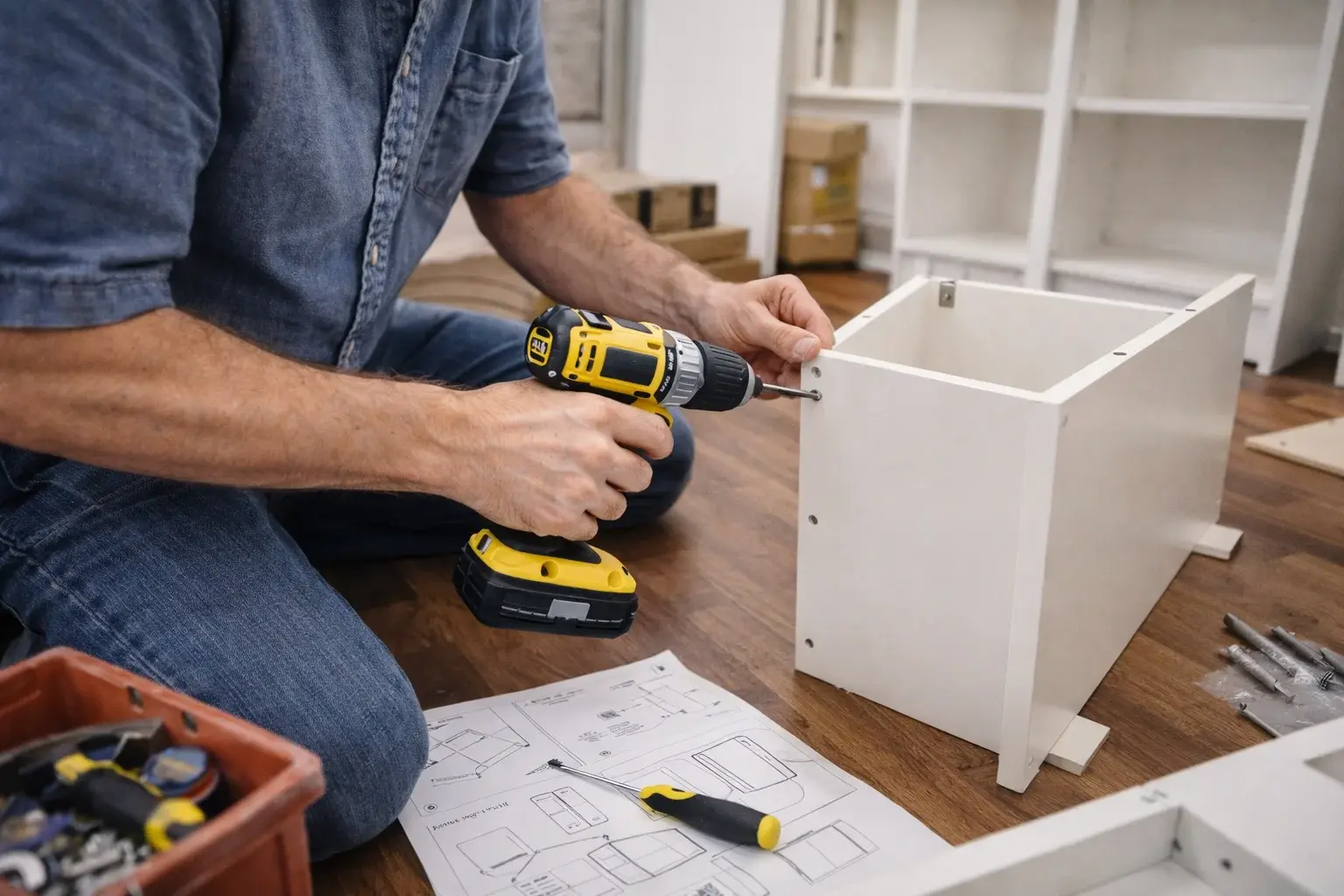
A practical desk assembly decision starts with the affected item, its condition and the surrounding materials. Follow the supplied mechanical assembly sequence, fit compatible furniture accessories and check the agreed positioning and levelling.
Signs: a visible maintenance item is worn, loose, damaged or no longer works as expected or a practical repair list needs the affected item and its condition identified. Causes: loose compatible components or incomplete prior work or ordinary use, visible wear or local damage.
Drawers, modesty panels and return sections add work beyond attaching legs to a top. Include the full product configuration. Supplied mechanical fittings can be considered together, while unrelated storage units should be listed as additional items in the quote request.
Separate similar bolts using the instruction labels rather than appearance alone. A fastener that is too long can damage a desktop. Keep spare parts and packing information until the assembly is checked and any supplier shortage has been resolved.
The agreed service covers manufacturer-directed assembly of supported desk frames, tops and supplied furniture hardware. Exclusions: Electrical installation, cable relocation, custom joinery, motor/controller repair.