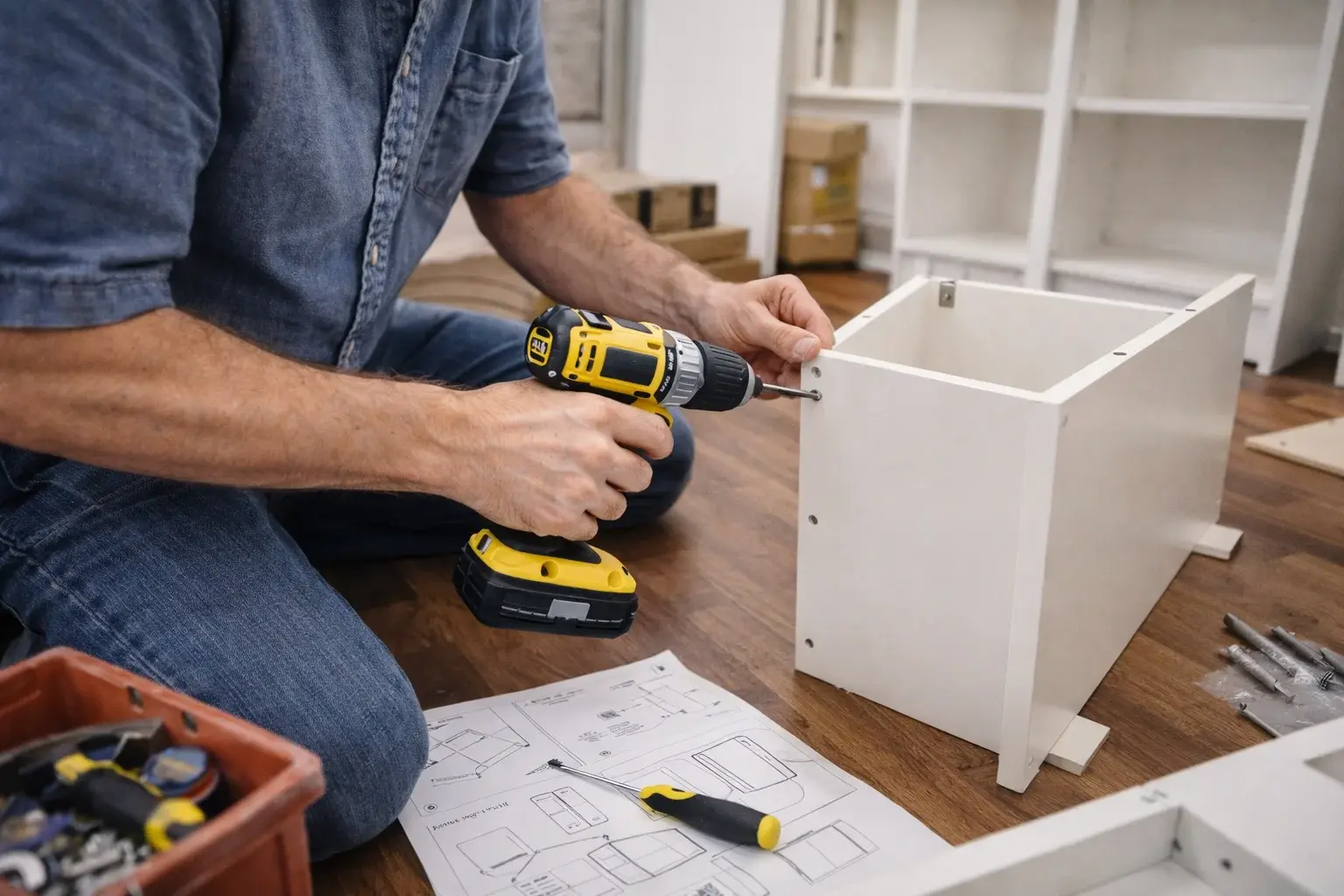
flatpack cabinet assembly can be appropriate when a visible maintenance item is worn, loose, damaged or no longer works as expected. Panel condition, matching hardware and the product sequence determine whether a freestanding unit can be assembled as supplied.
Signs: a practical repair list needs the affected item and its condition identified or a bounded task needs a clear decision before work is scheduled. Causes: conditions that need direct review before a repair option is chosen or ordinary use, visible wear or local damage.
Use the supports and permitted positions supplied for the cabinet. Include additional shelves in the product list before the quote. A shelf that looks similar may have different dimensions or a different supported load, so compatibility needs to be established.
Tall or drawer-heavy storage may have restraint requirements even when marketed as freestanding. Review the instructions and intended wall before assembly. Suitable fixing, permission and safe access must be established; the finished unit should not conceal an unresolved stability issue.
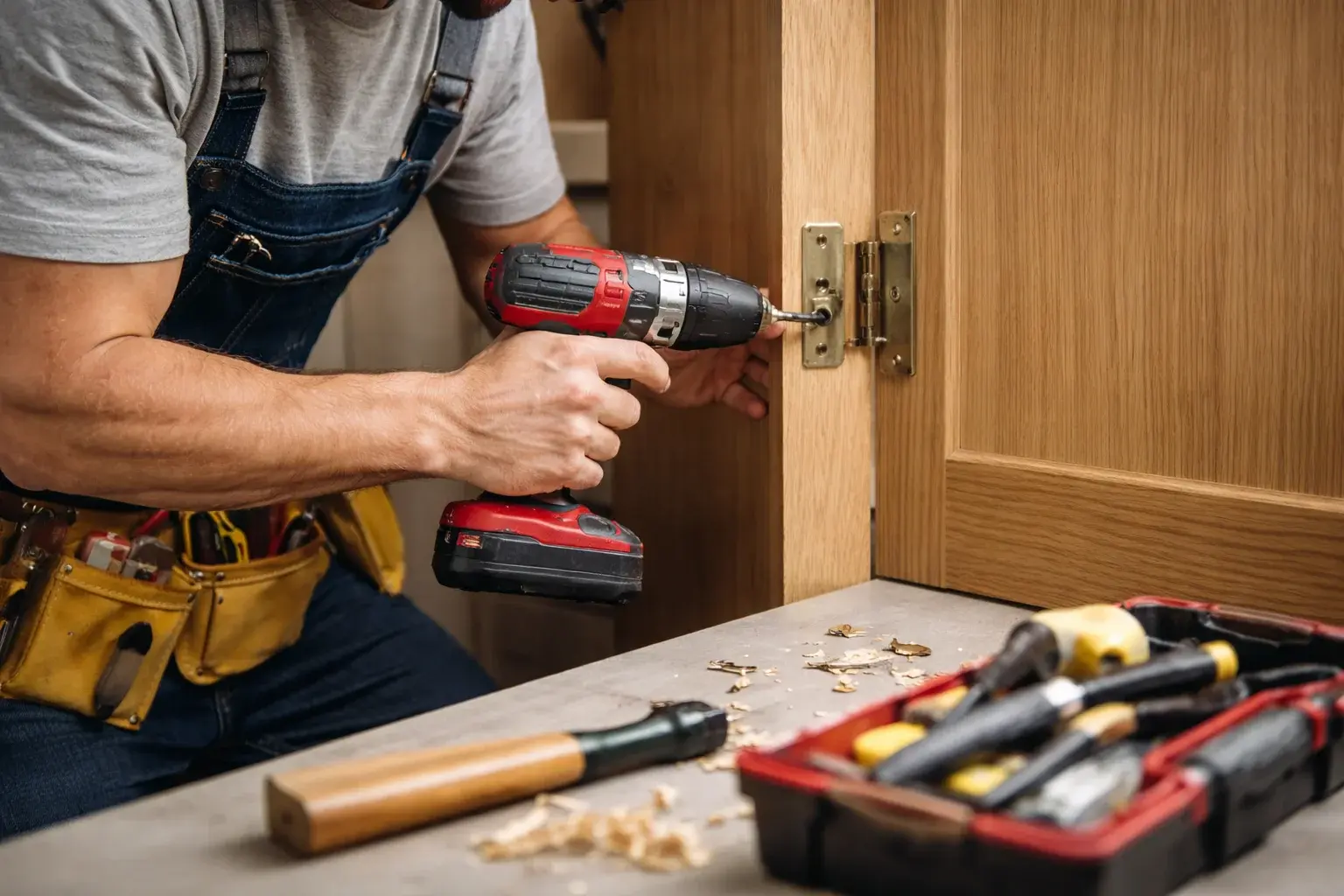
The agreed service covers panel assembly, runners, hinges, alignment and suitable restraint review. Exclusions: Fitted kitchen installation, service connections, bespoke cabinets, wardrobe/desk duplication.