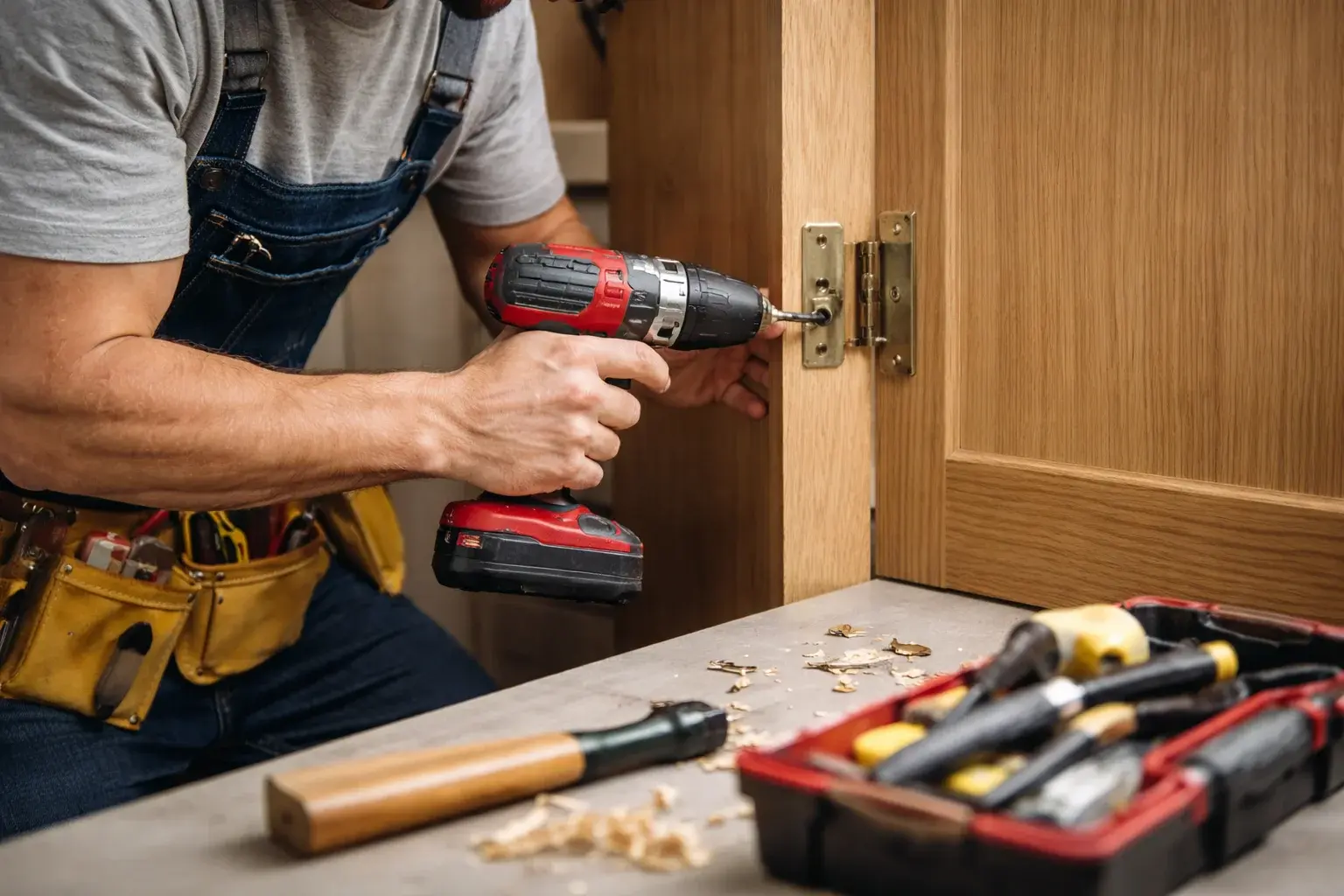




An agreed task
Build the cabinet carcass, install supplied runners and hinges, check alignment and review any required restraint. Identify any additional items separately so the scope and preparation are understood by everyone arranging the work.
Melbourne handyman & property maintenance
Furniture assembly · Cockatoo
Arrange flatpack cabinet assembly in Cockatoo with a practical plan for supplied freestanding cabinet panels, doors and compact drawer units. Build the cabinet carcass, install supplied runners and hinges, check alignment and review any required restraint. Send photographs and access details so the materials, preparation and next step can be discussed.
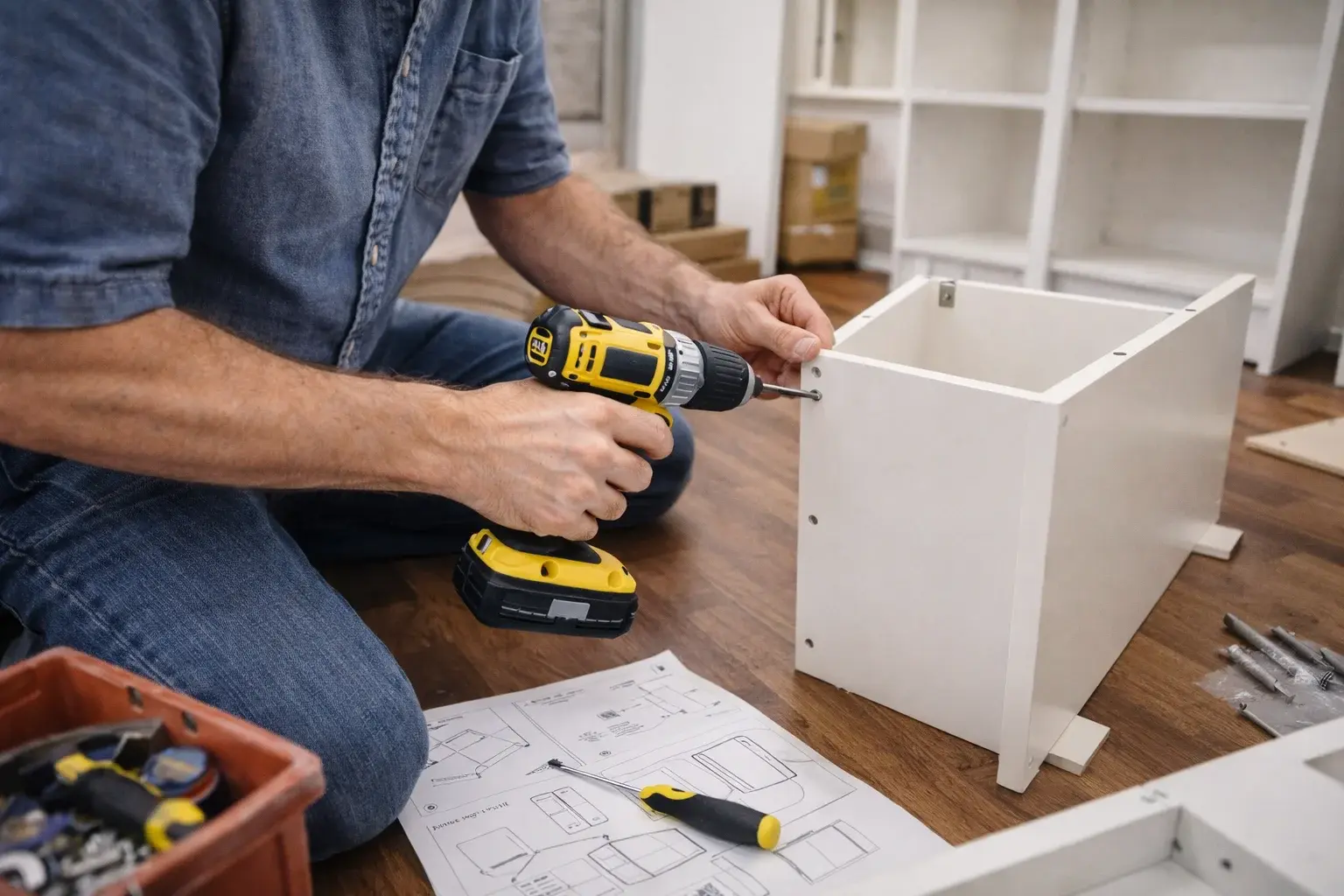
Flatpack Cabinet Assembly
supplied freestanding cabinet panels, doors and compact drawer units
Service overview
Tall or drawer-heavy storage may have restraint requirements even when marketed as freestanding. Review the instructions and intended wall before assembly. Suitable fixing, permission and safe access must be established; the finished unit should not conceal an unresolved stability issue.
Use the supports and permitted positions supplied for the cabinet. Include additional shelves in the product list before the quote. A shelf that looks similar may have different dimensions or a different supported load, so compatibility needs to be established.
Back panels and fixed shelves can establish the cabinet shape before doors are attached. Following the specified order helps keep the body square. Installing visible fittings too early can make later steps inaccessible or conceal a misassembled joint.
The agreed service covers panel assembly, runners, hinges, alignment and suitable restraint review. Exclusions: Fitted kitchen installation, service connections, bespoke cabinets, wardrobe/desk duplication.
Cockatoo property context
For Cockatoo enquiries, describe the available workspace as well as the requested flatpack cabinet assembly. Panel condition, matching hardware and the product sequence determine whether a freestanding unit can be assembled as supplied. Include the best access contact and explain any restrictions affecting the work area. A useful Cockatoo enquiry identifies the affected room or outdoor area, explains what has changed and includes wide and close photographs. Measurements and access notes help separate urgent repairs from work that can be grouped into a later visit.
Planning the work
Build the cabinet carcass, install supplied runners and hinges, check alignment and review any required restraint. Identify any additional items separately so the scope and preparation are understood by everyone arranging the work.
Unexpected conditions can alter the available options. Any additional work, different components or separate specialist requirement should be discussed before extending the agreed task, rather than treated as automatically included.
Include the unit model, packing list, door or drawer options and photographs of the intended position. Keep labels and instructions available so the item can be identified accurately instead of relying on a general description.
Panel condition, matching hardware and the product sequence determine whether a freestanding unit can be assembled as supplied. Any unresolved requirement should be explained before committing to a visit or buying additional materials.
Common situations
Chipped edges, split fixing holes or a bent runner should be photographed with the part label visible. Keep the packaging and contact the supplier about replacements. A damaged structural panel should not be disguised with a cosmetic patch to finish assembly.
Door clearances are checked after the cabinet body is assembled and positioned. The supplied hinge adjustments have limits. If the frame is twisted or a panel has been fitted incorrectly, adjusting the hinge alone will not resolve the underlying problem.
Describe where the cartons are stored and the final room. Working space is needed to protect finished panels while parts are organised. Moving other furniture, stairs and heavy items should be discussed beforehand rather than assumed to be included.
How it works
Include the unit model, packing list, door or drawer options and photographs of the intended position.
Panel condition, matching hardware and the product sequence determine whether a freestanding unit can be assembled as supplied.
Build the cabinet carcass, install supplied runners and hinges, check alignment and review any required restraint.
Confirm the Cockatoo address, access contact and preparation. Mention anything that limits safe handling or use of the space before scheduling.
Use the supplied shelf and drawer limits. Report movement or loose fittings and keep a unit unloaded when its required restraint is incomplete.
FAQ
Describe where the cartons are stored and the final room. Working space is needed to protect finished panels while parts are organised. Moving other furniture, stairs and heavy items should be discussed beforehand rather than assumed to be included.
Build the cabinet carcass, install supplied runners and hinges, check alignment and review any required restraint. Arrange the required owner or manager permission and identify the access contact. Include restrictions affecting drilling, finishes or room use where relevant; the property address alone does not establish authority to carry out work.
Panel condition, matching hardware and the product sequence determine whether a freestanding unit can be assembled as supplied. Provide any available product information, previous repair history or material details. A photograph supports an initial discussion but cannot confirm hidden condition, internal components or every fixing requirement.
Door clearances are checked after the cabinet body is assembled and positioned. The supplied hinge adjustments have limits. If the frame is twisted or a panel has been fitted incorrectly, adjusting the hinge alone will not resolve the underlying problem.
Panel condition, matching hardware and the product sequence determine whether a freestanding unit can be assembled as supplied. Explain what has already been changed and show the current condition. Retain loose parts or product labels. Previous work can affect the available options, so it should be disclosed before the quote is agreed.
Include the unit model, packing list, door or drawer options and photographs of the intended position. Use the quote form with the property address and a short list of requirements. Identify the quantities and any deadline so Fix Nik can review the scope and clarify the next practical step.
Build the cabinet carcass, install supplied runners and hinges, check alignment and review any required restraint. The quote identifies the actual item, components and extent of work. An enquiry for one task does not automatically include every related item in the room or property.
Include the unit model, packing list, door or drawer options and photographs of the intended position. Include your Cockatoo address and access details so Fix Nik can review the work and explain the next step.