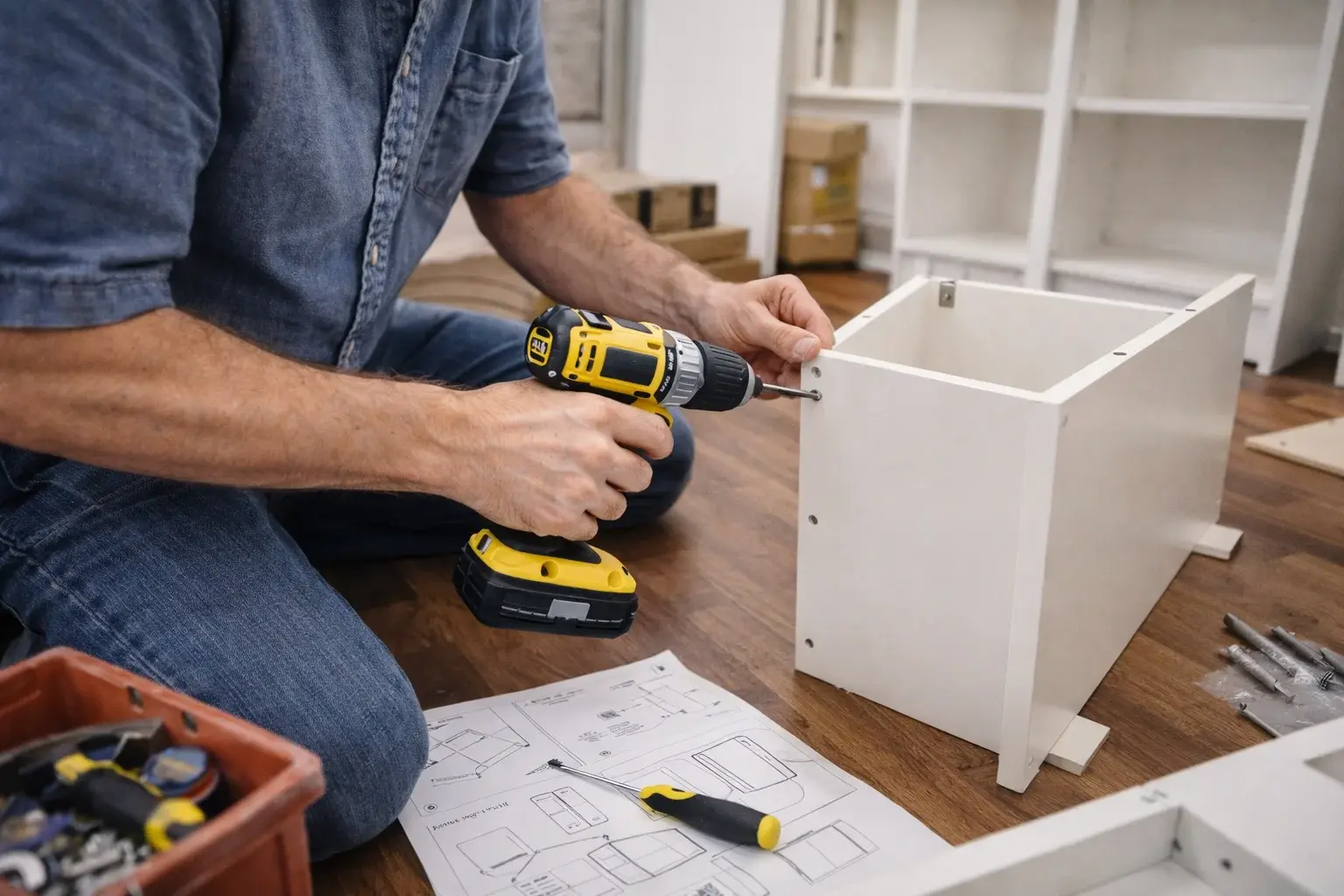
A practical flatpack cabinet assembly decision starts with the affected item, its condition and the surrounding materials. Build the cabinet carcass, install supplied runners and hinges, check alignment and review any required restraint.
Signs: a practical repair list needs the affected item and its condition identified or a visible maintenance item is worn, loose, damaged or no longer works as expected. Causes: ordinary use, visible wear or local damage or conditions that need direct review before a repair option is chosen.
Door clearances are checked after the cabinet body is assembled and positioned. The supplied hinge adjustments have limits. If the frame is twisted or a panel has been fitted incorrectly, adjusting the hinge alone will not resolve the underlying problem.
Describe where the cartons are stored and the final room. Working space is needed to protect finished panels while parts are organised. Moving other furniture, stairs and heavy items should be discussed beforehand rather than assumed to be included.
The agreed service covers panel assembly, runners, hinges, alignment and suitable restraint review. Exclusions: Fitted kitchen installation, service connections, bespoke cabinets, wardrobe/desk duplication.