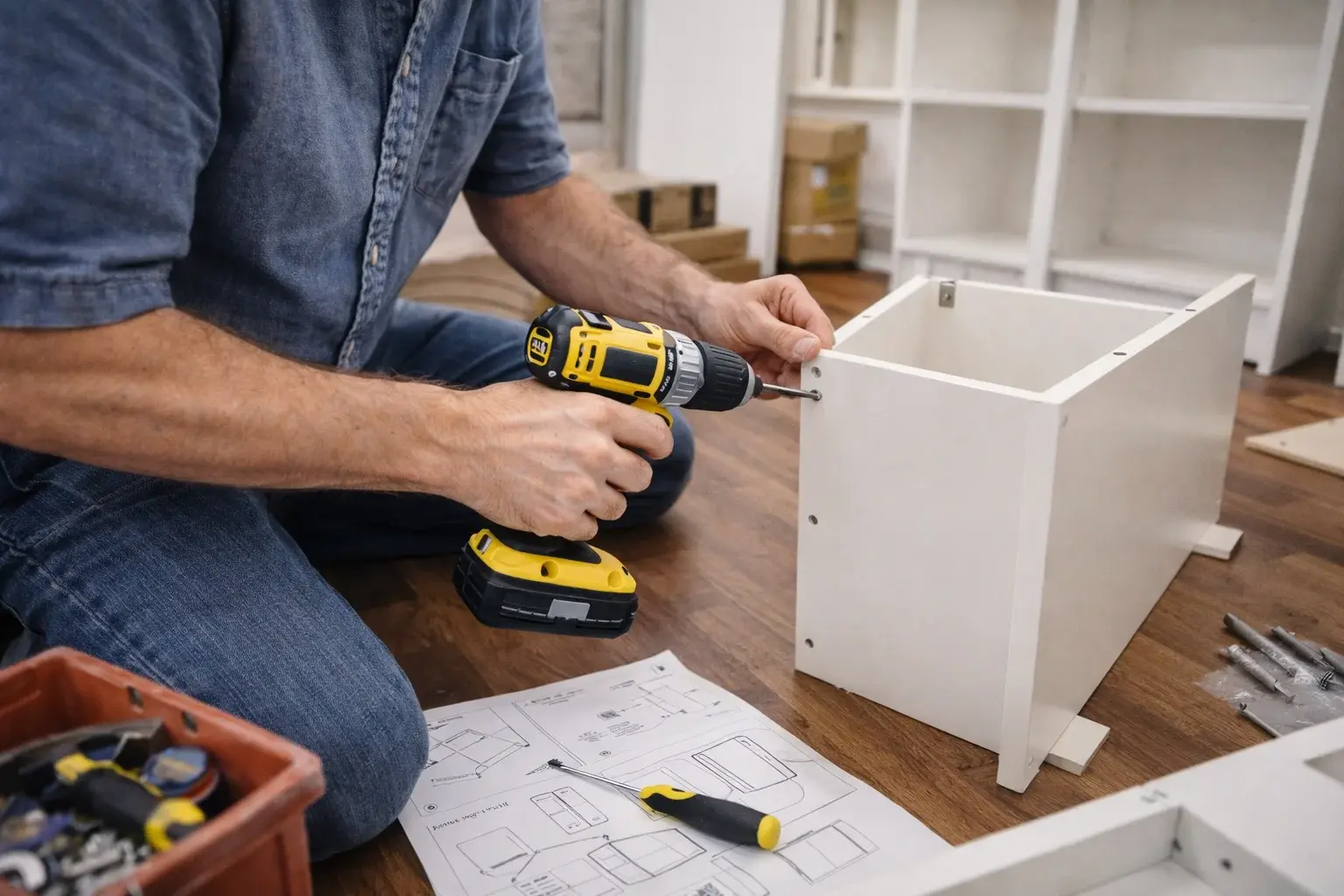
flatpack cabinet assembly can be appropriate when a visible maintenance item is worn, loose, damaged or no longer works as expected. Panel condition, matching hardware and the product sequence determine whether a freestanding unit can be assembled as supplied.
Signs: a bounded task needs a clear decision before work is scheduled or a practical repair list needs the affected item and its condition identified. Causes: loose compatible components or incomplete prior work or ordinary use, visible wear or local damage.
Chipped edges, split fixing holes or a bent runner should be photographed with the part label visible. Keep the packaging and contact the supplier about replacements. A damaged structural panel should not be disguised with a cosmetic patch to finish assembly.
Tall or drawer-heavy storage may have restraint requirements even when marketed as freestanding. Review the instructions and intended wall before assembly. Suitable fixing, permission and safe access must be established; the finished unit should not conceal an unresolved stability issue.
The agreed service covers panel assembly, runners, hinges, alignment and suitable restraint review. Exclusions: Fitted kitchen installation, service connections, bespoke cabinets, wardrobe/desk duplication.