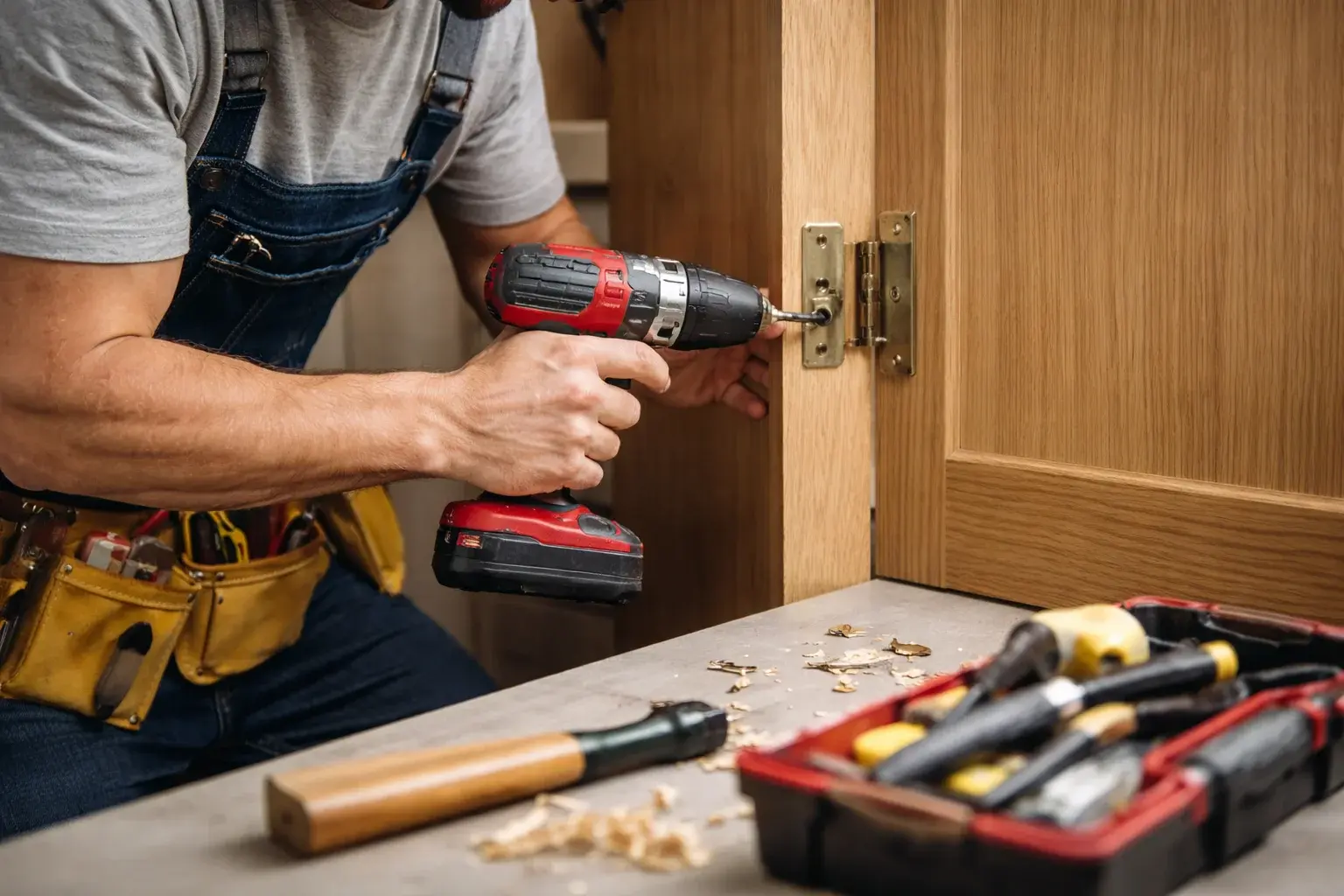
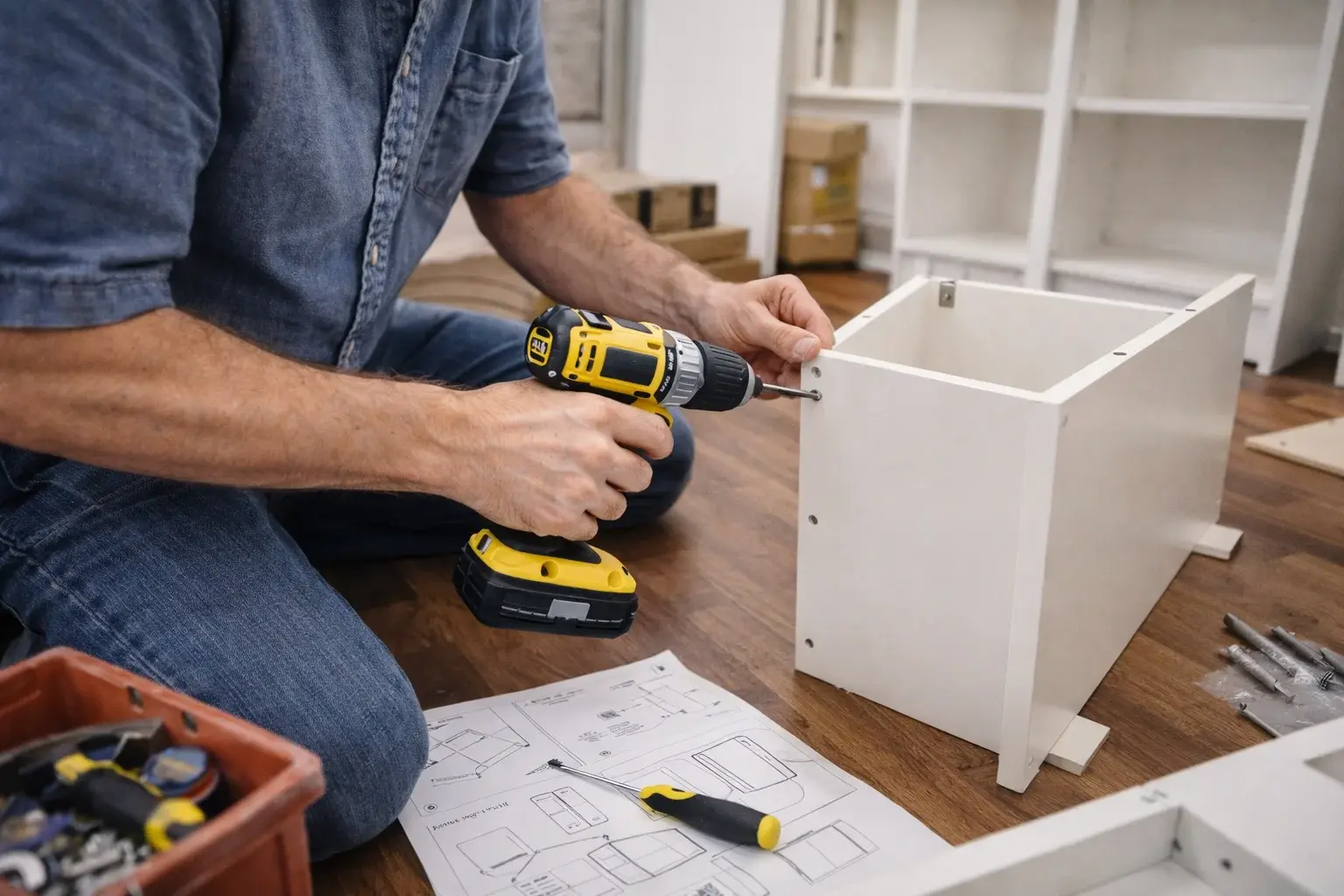
A practical flatpack cabinet assembly decision starts with the affected item, its condition and the surrounding materials. Build the cabinet carcass, install supplied runners and hinges, check alignment and review any required restraint.
Signs: a bounded task needs a clear decision before work is scheduled or a practical repair list needs the affected item and its condition identified. Causes: ordinary use, visible wear or local damage or conditions that need direct review before a repair option is chosen.
Chipped edges, split fixing holes or a bent runner should be photographed with the part label visible. Keep the packaging and contact the supplier about replacements. A damaged structural panel should not be disguised with a cosmetic patch to finish assembly.
Back panels and fixed shelves can establish the cabinet shape before doors are attached. Following the specified order helps keep the body square. Installing visible fittings too early can make later steps inaccessible or conceal a misassembled joint.
The agreed service covers panel assembly, runners, hinges, alignment and suitable restraint review. Exclusions: Fitted kitchen installation, service connections, bespoke cabinets, wardrobe/desk duplication.