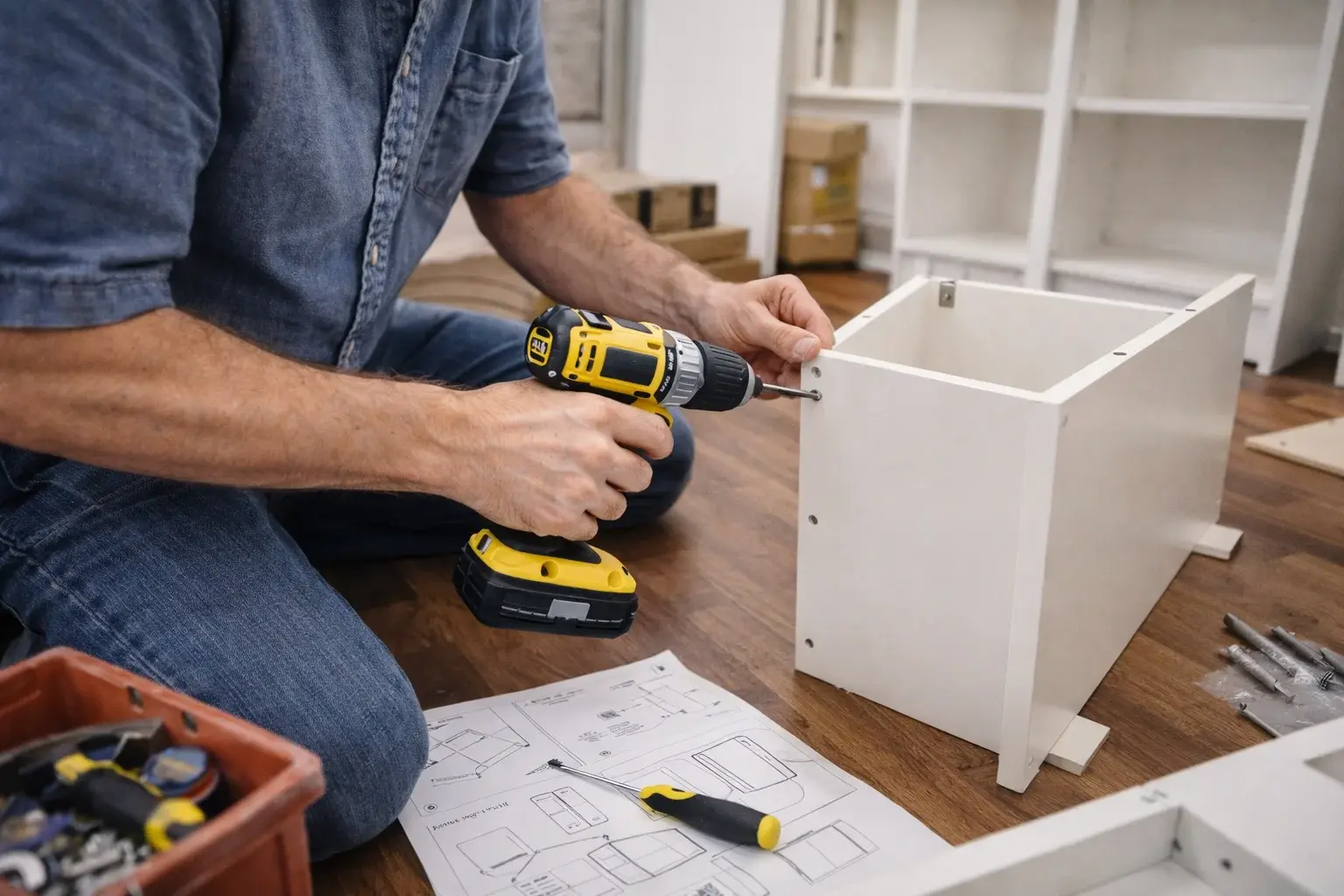
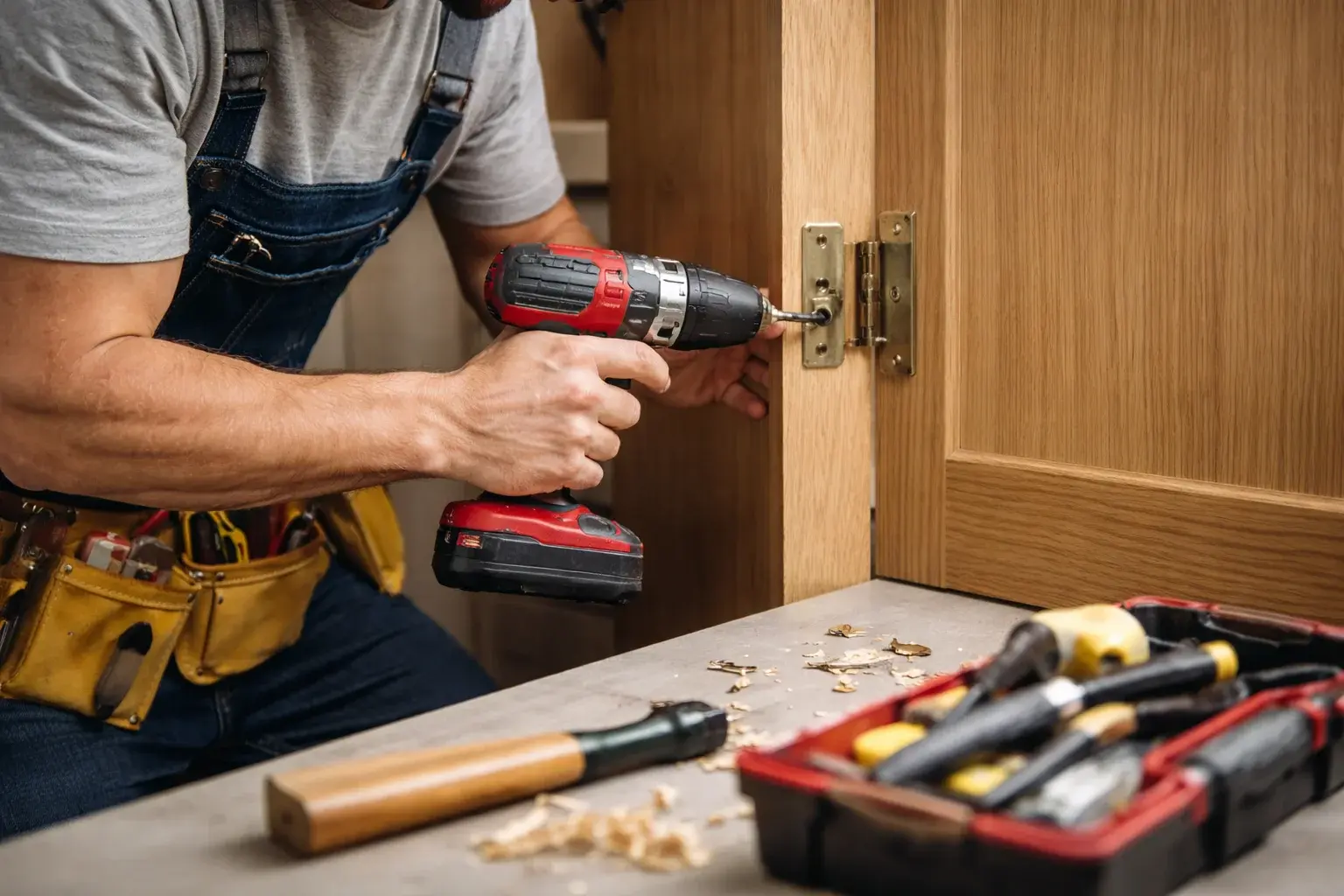
A practical flatpack cabinet assembly decision starts with the affected item, its condition and the surrounding materials. Build the cabinet carcass, install supplied runners and hinges, check alignment and review any required restraint.
Signs: a visible maintenance item is worn, loose, damaged or no longer works as expected or a practical repair list needs the affected item and its condition identified. Causes: conditions that need direct review before a repair option is chosen or ordinary use, visible wear or local damage.
Tall or drawer-heavy storage may have restraint requirements even when marketed as freestanding. Review the instructions and intended wall before assembly. Suitable fixing, permission and safe access must be established; the finished unit should not conceal an unresolved stability issue.
Compact drawer units can include several runner and front adjustments. Provide the exact configuration and number of drawers. This assembly scope concerns new supplied components; a damaged existing drawer mechanism should be described as a separate repair request.
The agreed service covers panel assembly, runners, hinges, alignment and suitable restraint review. Exclusions: Fitted kitchen installation, service connections, bespoke cabinets, wardrobe/desk duplication.