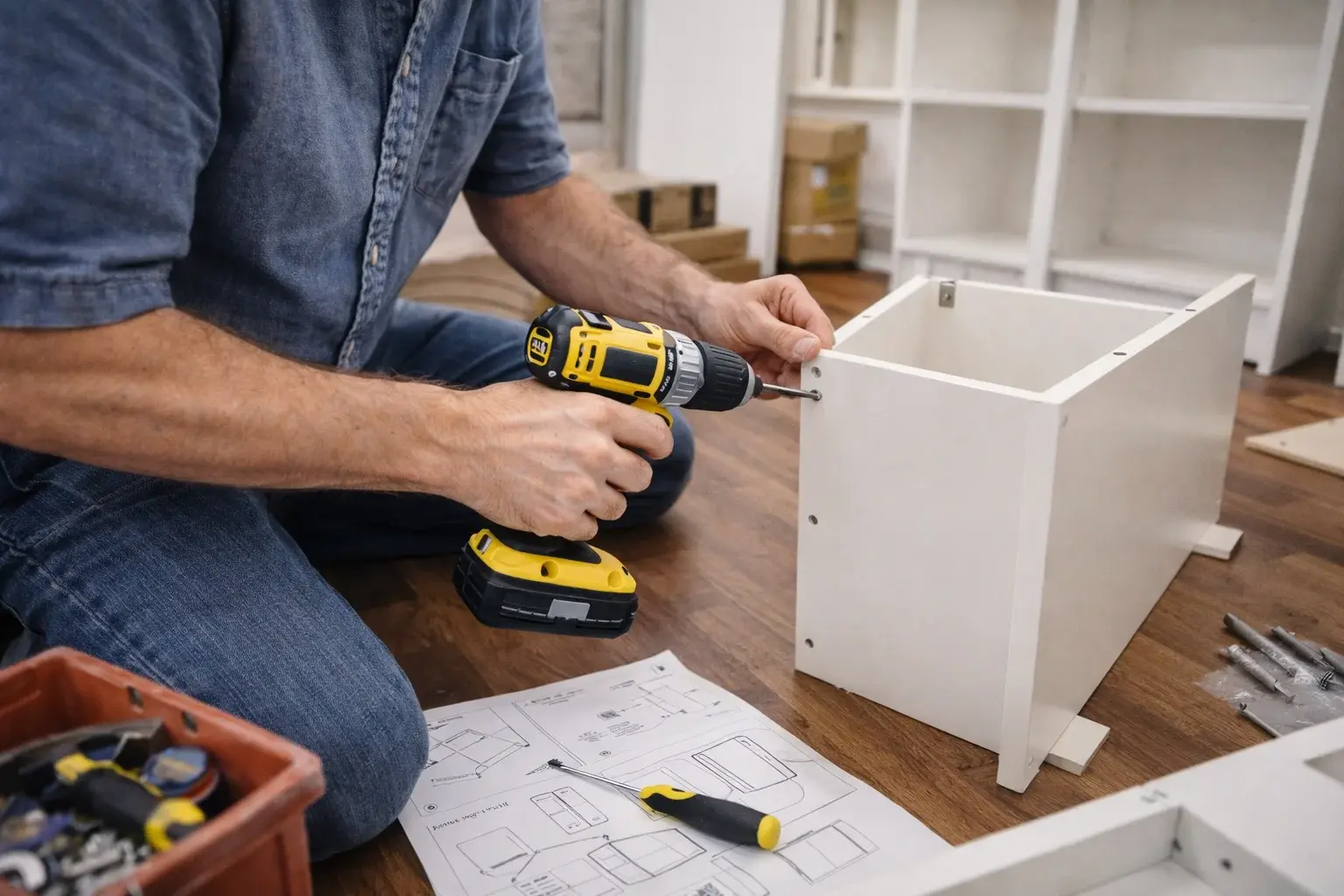
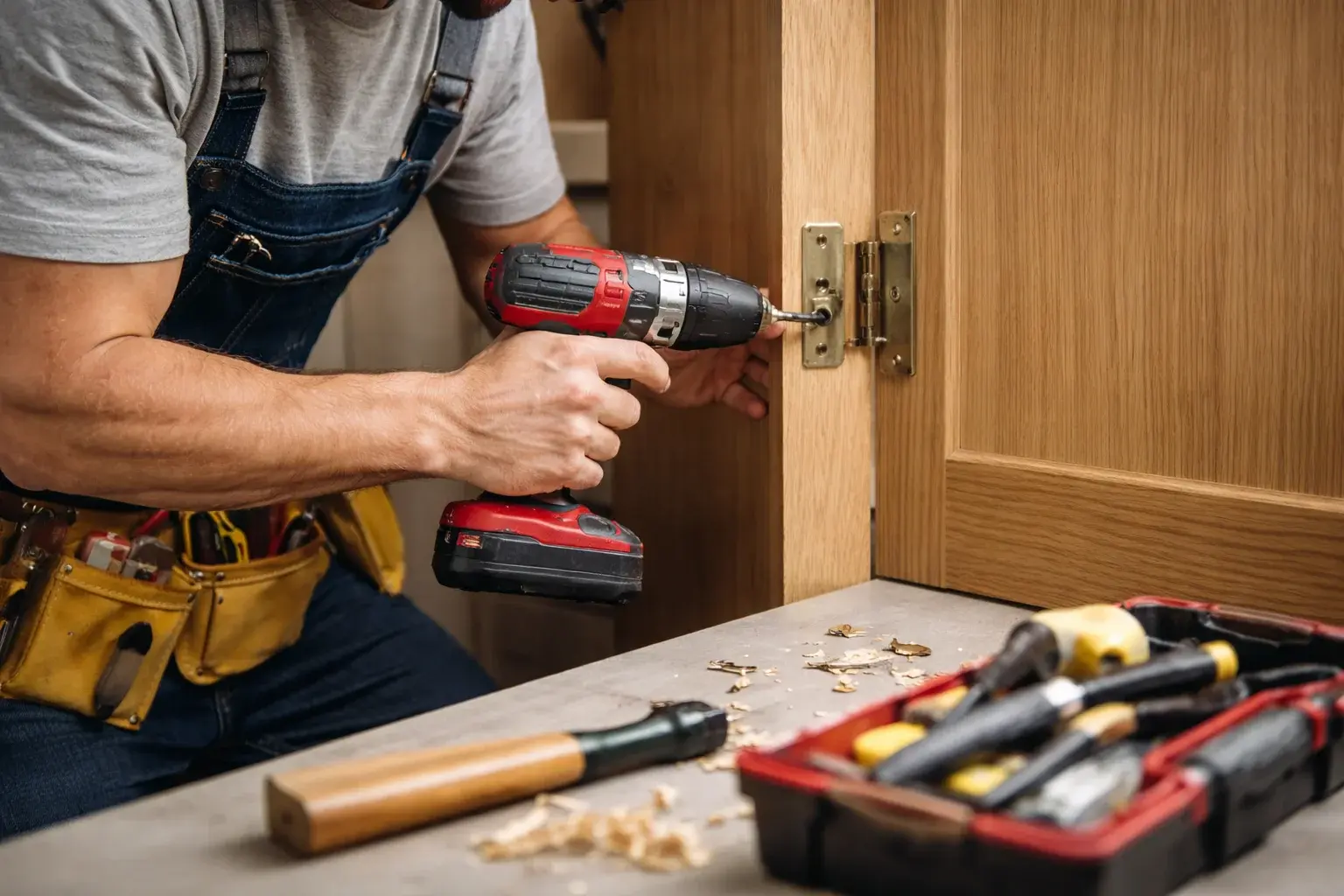
furniture anchoring can be appropriate when a supplied item, trim or fitting is loose, incomplete, damaged or needs adjustment. Check the product-approved attachment, wall substrate, fixing suitability and drilling constraints before agreeing restraint work.
Signs: a supplied item, trim or fitting is loose, incomplete, damaged or needs adjustment or a practical repair or compatible installation needs a clear product and access review. Causes: an incomplete assembly or a mismatched replacement component or local damage that does not establish a structural requirement.
The attachment point must be suitable for the furniture construction and instructions. A thin back panel may not be a load-bearing fixing location. If the approved point is damaged or missing, reconstruction of load-bearing components is outside the accepted anchoring task.
Arrange the appropriate owner or manager permission for wall fixing and identify the access contact. A tenant enquiry alone does not establish authority to drill. Discuss any restrictions before scheduling rather than discovering after arrival that the proposed attachment is not permitted.
Follow the furniture loading and restraint instructions. Moving the unit or changing its use may require the attachment to be reviewed. Limits: Product-approved restraint of suitable ordinary furniture only. No improvised load-bearing reconstruction, structural alteration, electrical work, certification or childproofing guarantees.