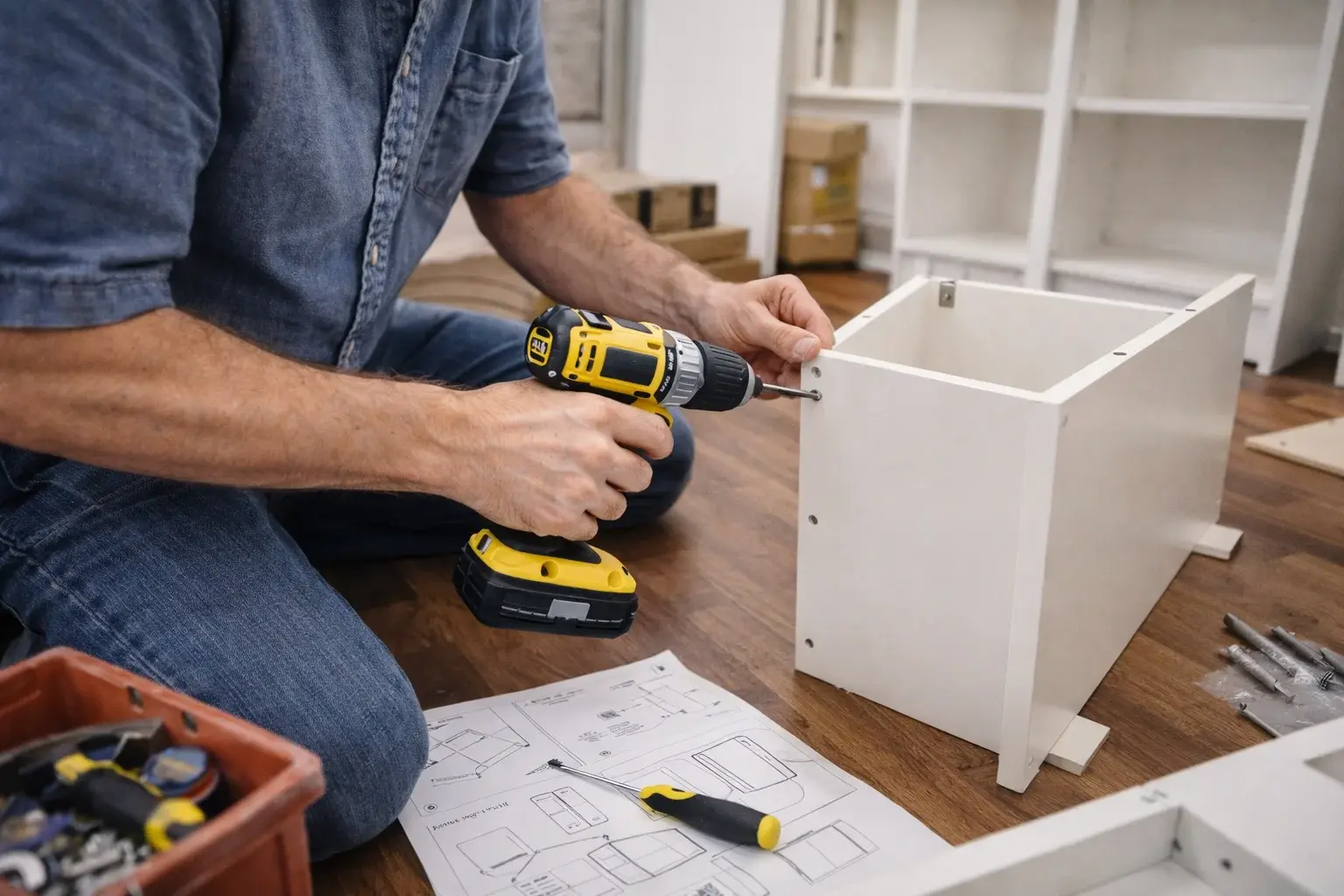
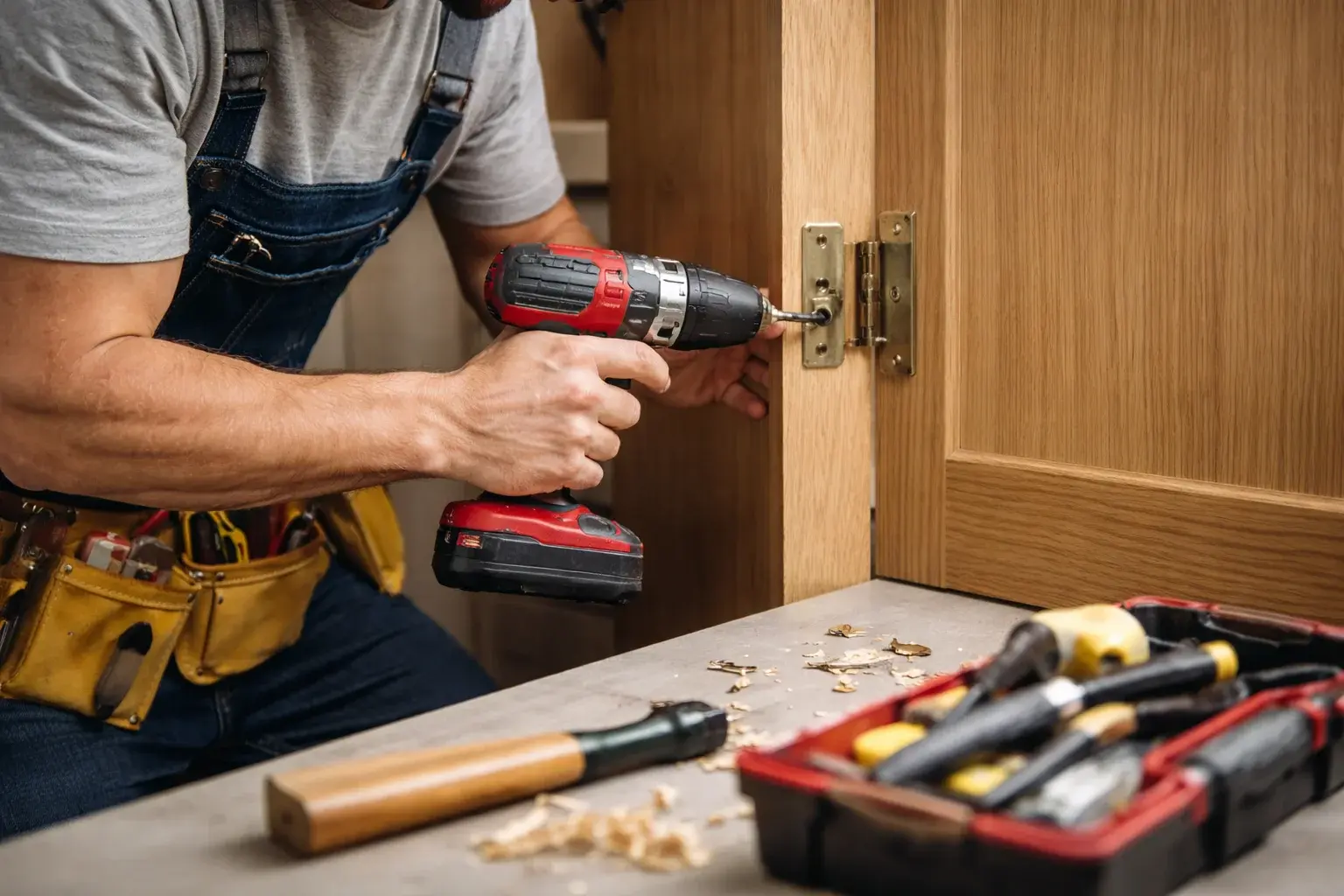
A practical furniture anchoring decision starts with the affected item, its condition and the surrounding materials. Fit a compatible approved furniture restraint at suitable sound attachment points and explain any product or placement limitations.
Signs: a supplied item, trim or fitting is loose, incomplete, damaged or needs adjustment or the component no longer sits level, opens or supports ordinary use as intended. Causes: ordinary wear, loose compatible fixings or minor fitting movement or an incomplete assembly or a mismatched replacement component.
Skirting can hold furniture away from the wall and affect restraint geometry. Show the gap and the proposed final position. The supplied restraint must accommodate the arrangement appropriately; removing structural material or forcing the unit against the wall is not an assumed solution.
The attachment point must be suitable for the furniture construction and instructions. A thin back panel may not be a load-bearing fixing location. If the approved point is damaged or missing, reconstruction of load-bearing components is outside the accepted anchoring task.
Follow the furniture loading and restraint instructions. Moving the unit or changing its use may require the attachment to be reviewed. Limits: Product-approved restraint of suitable ordinary furniture only. No improvised load-bearing reconstruction, structural alteration, electrical work, certification or childproofing guarantees.