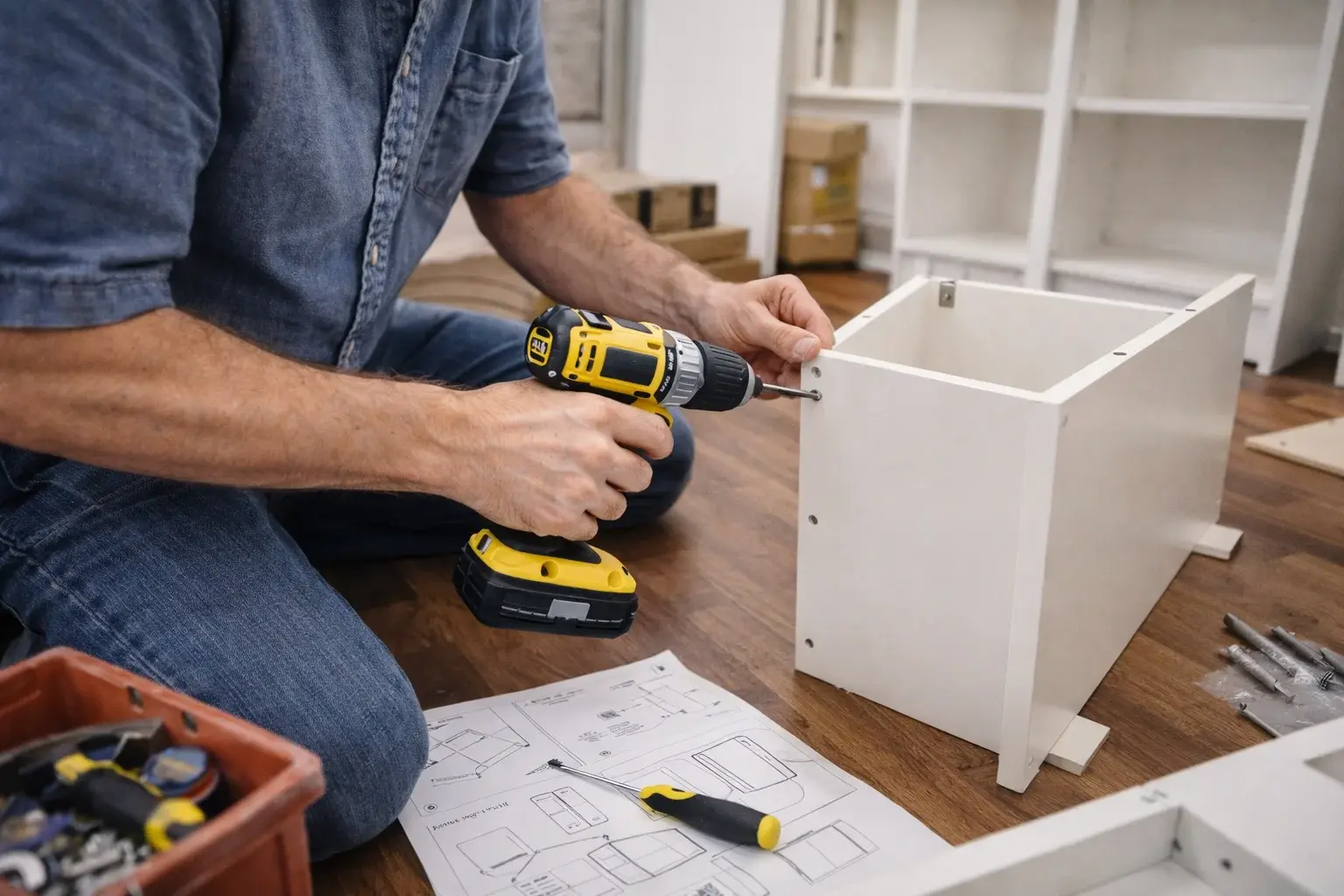
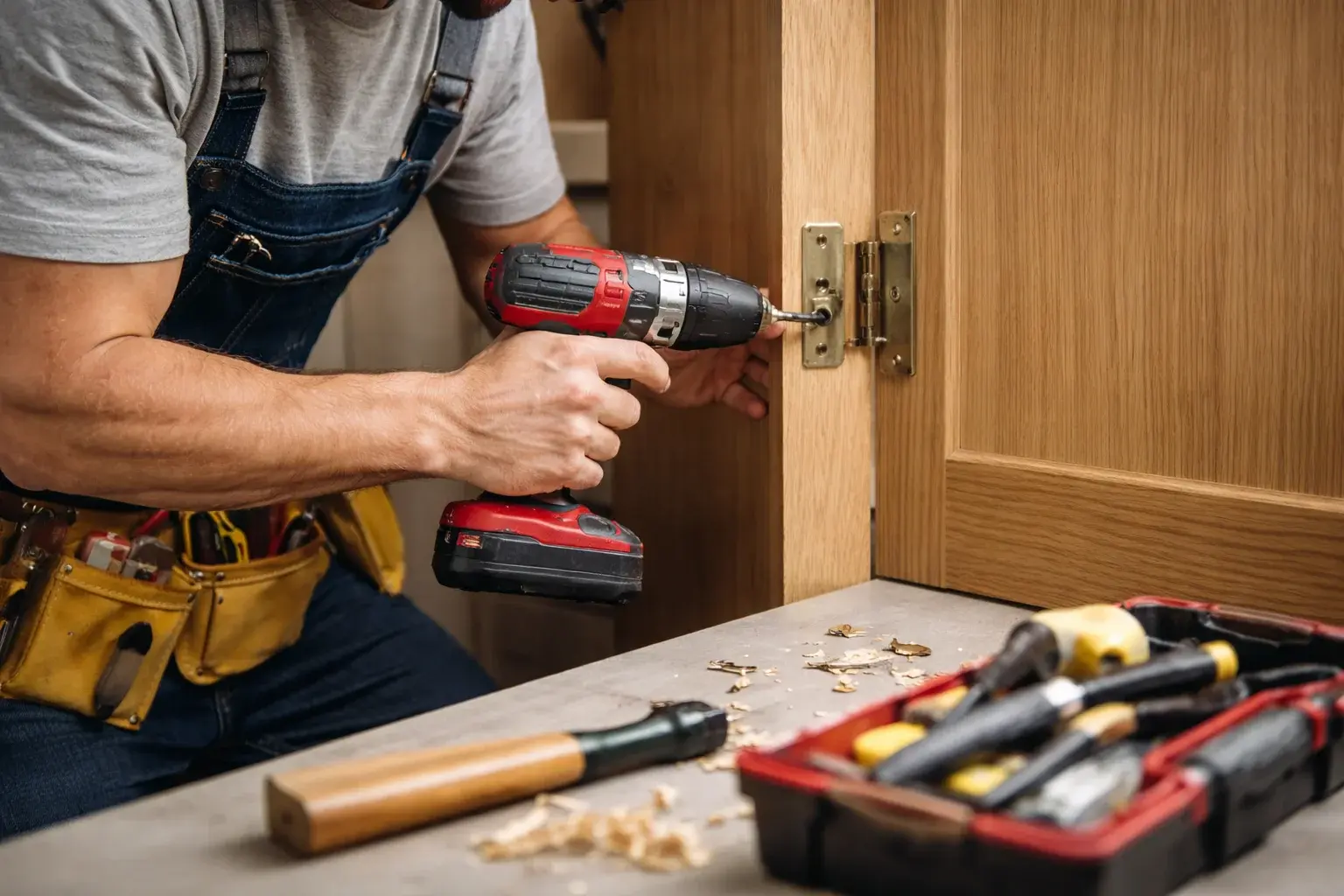
furniture anchoring can be appropriate when a supplied item, trim or fitting is loose, incomplete, damaged or needs adjustment. Check the product-approved attachment, wall substrate, fixing suitability and drilling constraints before agreeing restraint work.
Signs: a supplied item, trim or fitting is loose, incomplete, damaged or needs adjustment or a practical repair or compatible installation needs a clear product and access review. Causes: local damage that does not establish a structural requirement or ordinary wear, loose compatible fixings or minor fitting movement.
Empty the furniture where safe and explain whether it can be moved to expose the approved point. Heavy handling needs assessment before booking. Anchoring should be planned around a workable safe position, not performed blindly through an obstructed gap.
Provide the complete supplied restraint and instructions where available. A generic strap should not be assumed suitable for every product. Missing or unsuitable parts need resolution before the unit can be treated as having an agreed completed attachment.
Follow the furniture loading and restraint instructions. Moving the unit or changing its use may require the attachment to be reviewed. Limits: Product-approved restraint of suitable ordinary furniture only. No improvised load-bearing reconstruction, structural alteration, electrical work, certification or childproofing guarantees.