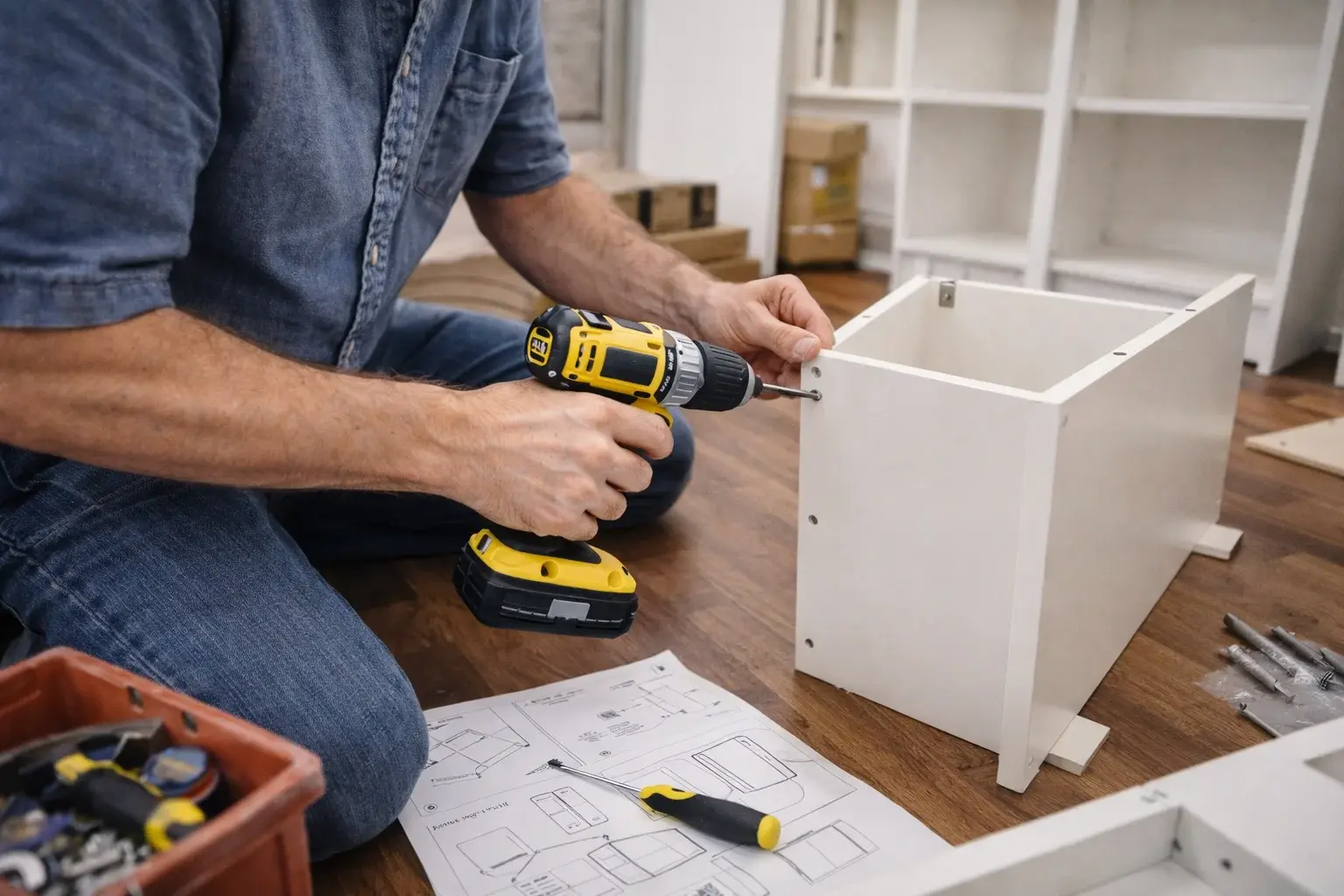
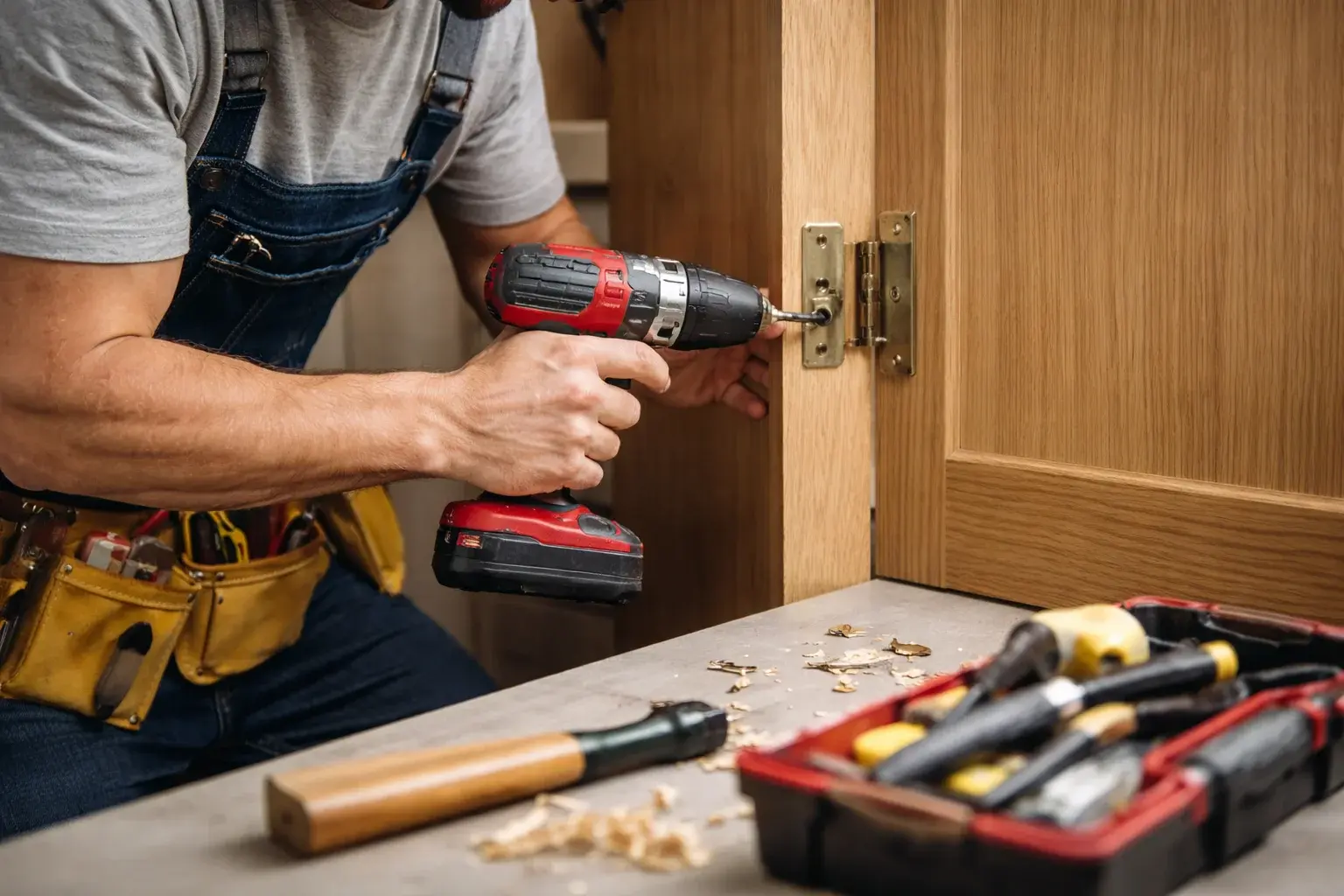
furniture anchoring can be appropriate when a supplied item, trim or fitting is loose, incomplete, damaged or needs adjustment. Check the product-approved attachment, wall substrate, fixing suitability and drilling constraints before agreeing restraint work.
Signs: the component no longer sits level, opens or supports ordinary use as intended or a supplied item, trim or fitting is loose, incomplete, damaged or needs adjustment. Causes: ordinary wear, loose compatible fixings or minor fitting movement or an incomplete assembly or a mismatched replacement component.
A suitable wall fixing depends on the actual substrate and support, not just the painted surface. Hidden services also affect safe drilling. Photographs help plan the visit but cannot confirm every concealed condition or establish that a particular fixing will be suitable.
Empty the furniture where safe and explain whether it can be moved to expose the approved point. Heavy handling needs assessment before booking. Anchoring should be planned around a workable safe position, not performed blindly through an obstructed gap.
adjust or repair a suitable existing item. fit a compatible supplied component after checking measurements and instructions. Limits: Product-approved restraint of suitable ordinary furniture only. No improvised load-bearing reconstruction, structural alteration, electrical work, certification or childproofing guarantees.