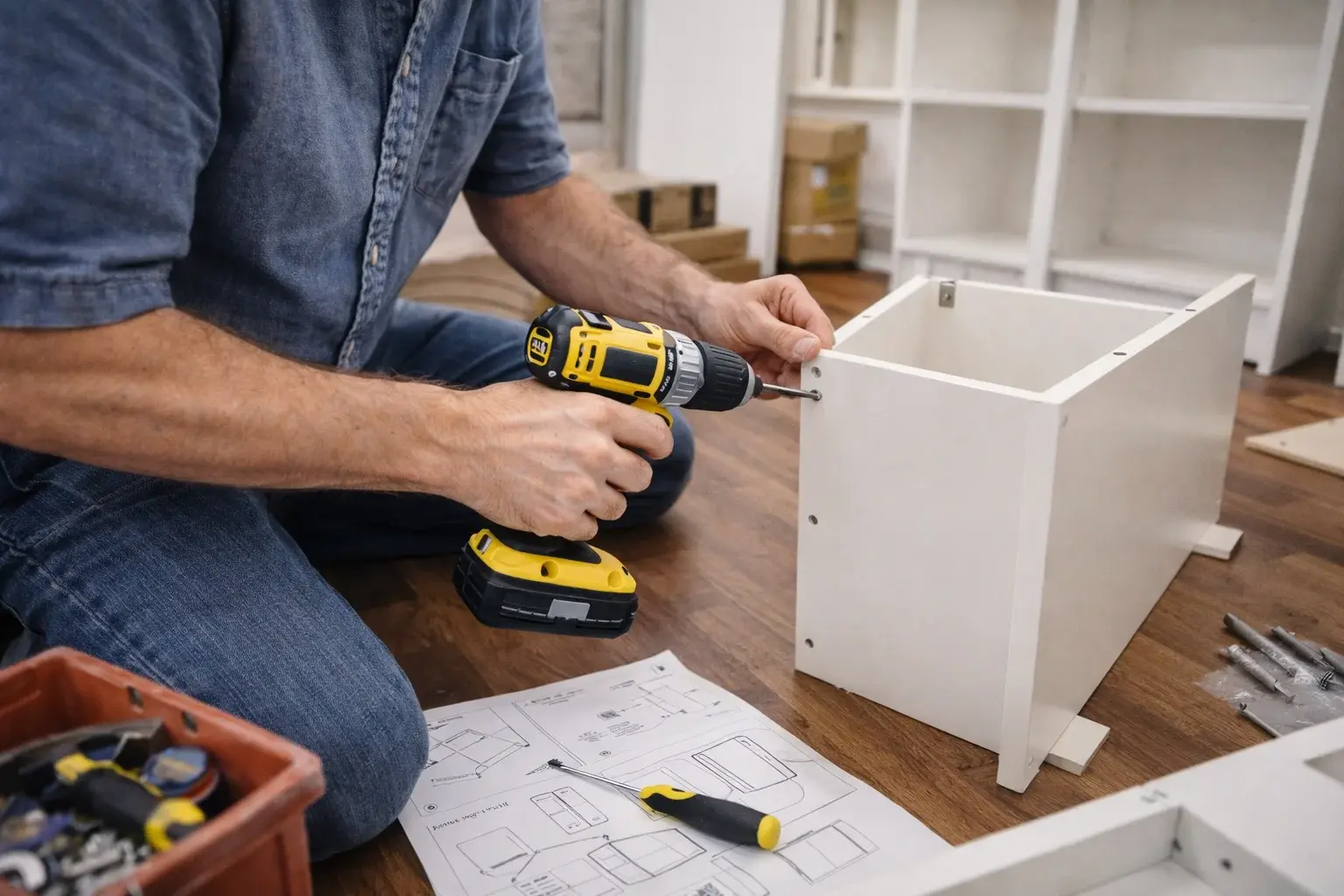
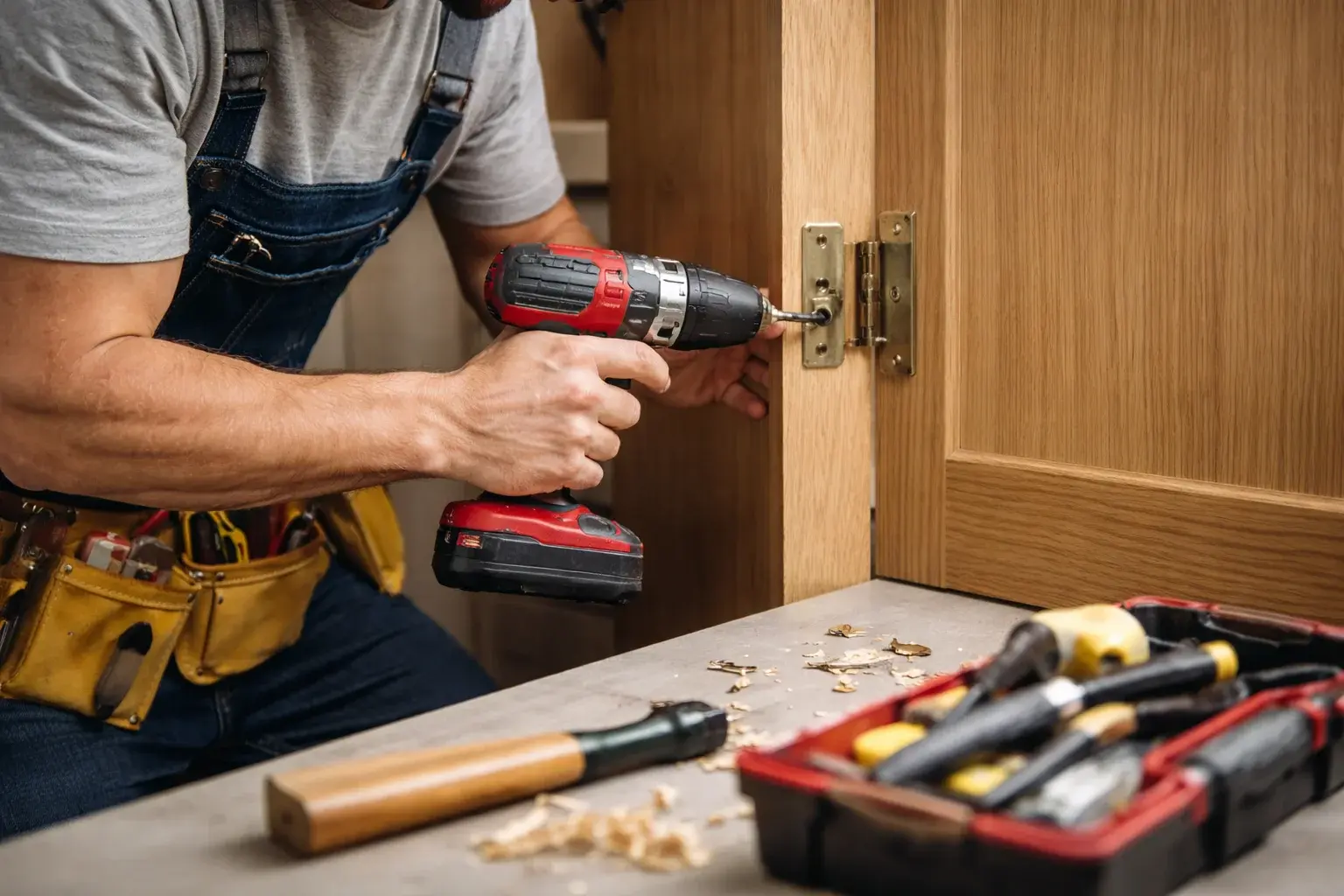
furniture anchoring can be appropriate when a supplied item, trim or fitting is loose, incomplete, damaged or needs adjustment. Check the product-approved attachment, wall substrate, fixing suitability and drilling constraints before agreeing restraint work.
Signs: a supplied item, trim or fitting is loose, incomplete, damaged or needs adjustment or a practical repair or compatible installation needs a clear product and access review. Causes: an incomplete assembly or a mismatched replacement component or ordinary wear, loose compatible fixings or minor fitting movement.
Empty the furniture where safe and explain whether it can be moved to expose the approved point. Heavy handling needs assessment before booking. Anchoring should be planned around a workable safe position, not performed blindly through an obstructed gap.
If the product or wall cannot accept a suitable restraint, the limitation must be explained rather than hidden with extra screws. The service offers ordinary approved attachment, not childproofing certification, a safety guarantee or rebuilding damaged furniture to create new load-bearing fixing points.
Fit a compatible approved furniture restraint at suitable sound attachment points and explain any product or placement limitations. Limits: Product-approved restraint of suitable ordinary furniture only. No improvised load-bearing reconstruction, structural alteration, electrical work, certification or childproofing guarantees.