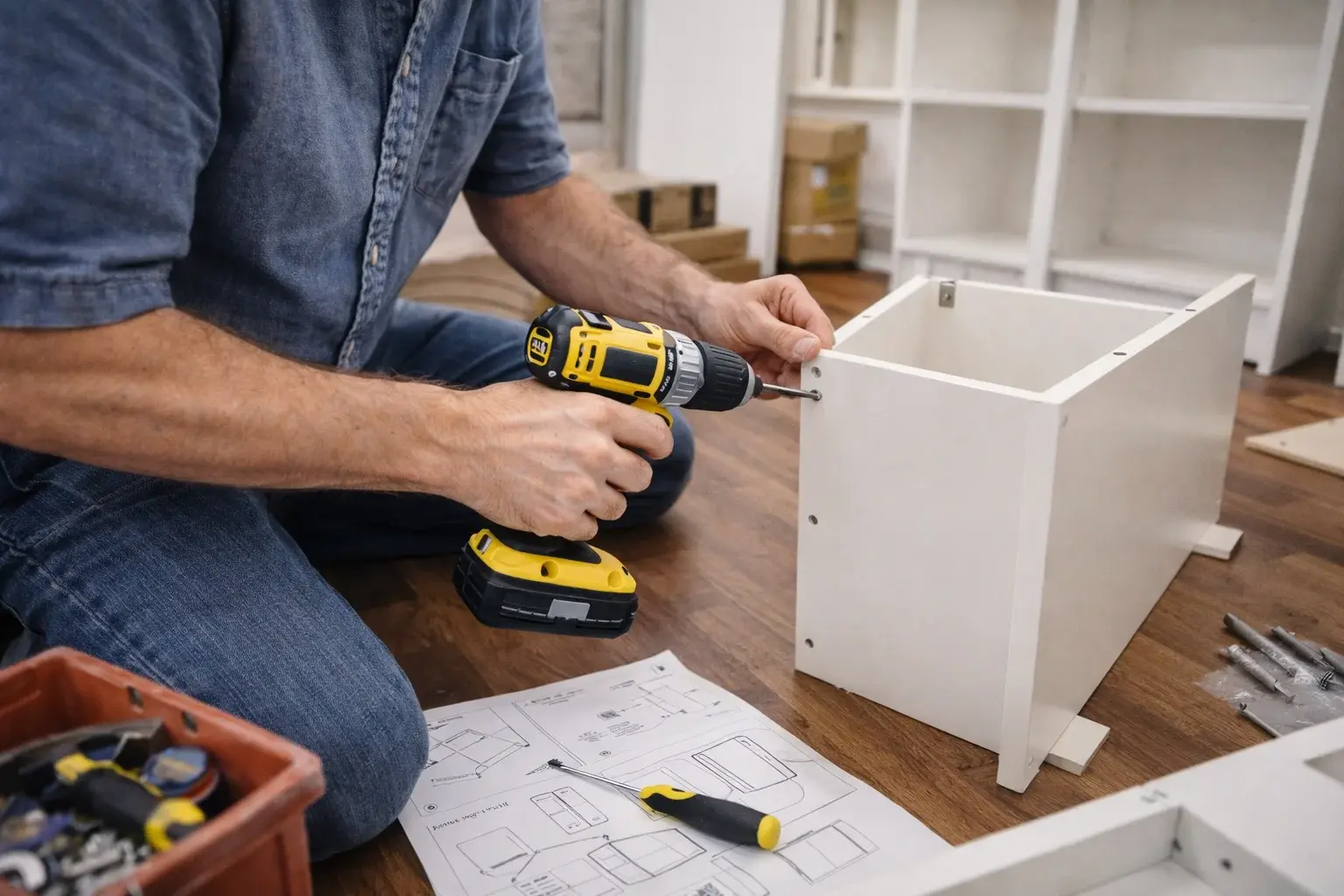
A practical outdoor furniture assembly decision starts with the affected item, its condition and the surrounding materials. Assemble compatible supplied furniture in its instructed sequence, align the accepted tables and seats and check the intended level position.
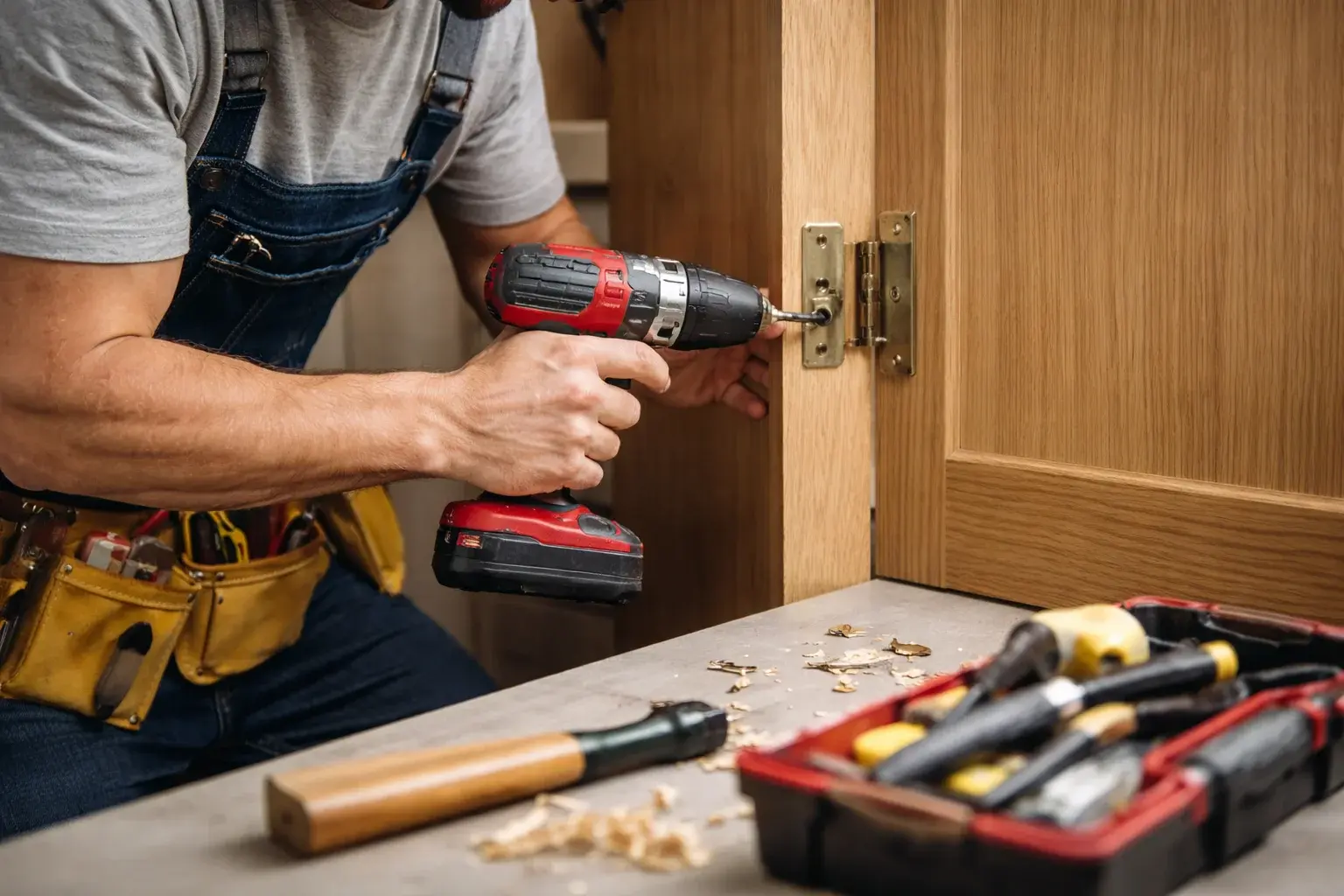
Signs: the latch, handle, hinge or ordinary running hardware no longer lines up or operates normally or the door sags, rubs, sticks or has uneven gaps around the opening. Causes: normal wear in hinges, latches or compatible mechanical hardware or local damage to an accessible component rather than an assumed structural defect.
Show the intended patio or other standing area. Supplied adjustable feet can be considered where provided, but assembly does not include rebuilding paving or levelling the property. The furniture needs an appropriate stable position before it is put into ordinary use.
Braces and rails can need fitting before the main frame is fully tightened. Follow the supplied sequence rather than forcing the last component into place. Incorrect orientation can affect alignment, so partially assembled work should be photographed before further adjustment.
Follow the product’s load, exposure and maintenance instructions. Retain spare supplied parts and keep incomplete furniture out of use. Limits: Ordinary supplied non-powered furniture only. No play structures, gas or electrical appliances, cots, bunk or loft beds, medical furniture, lift mechanisms or damaged load-bearing reconstruction.