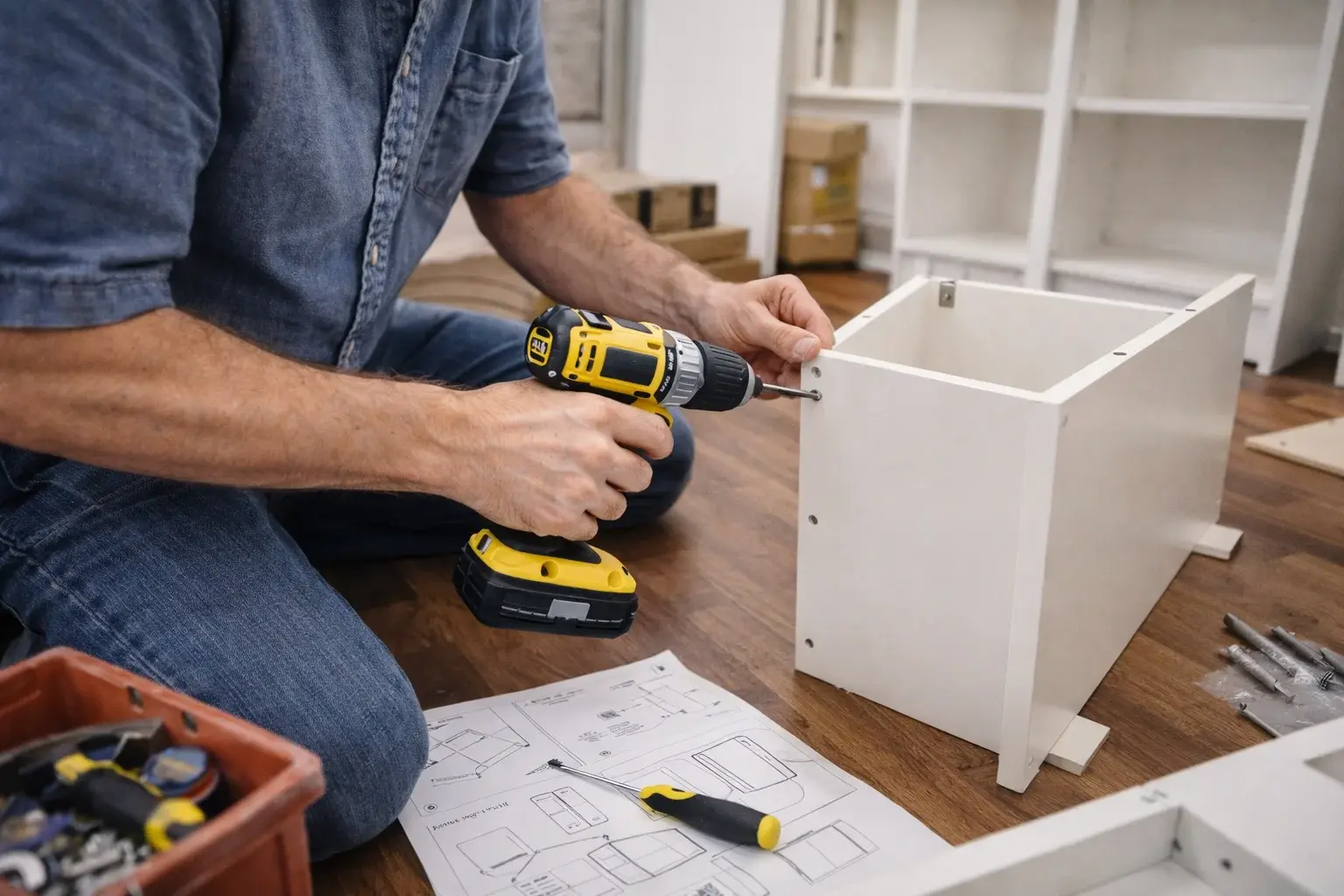
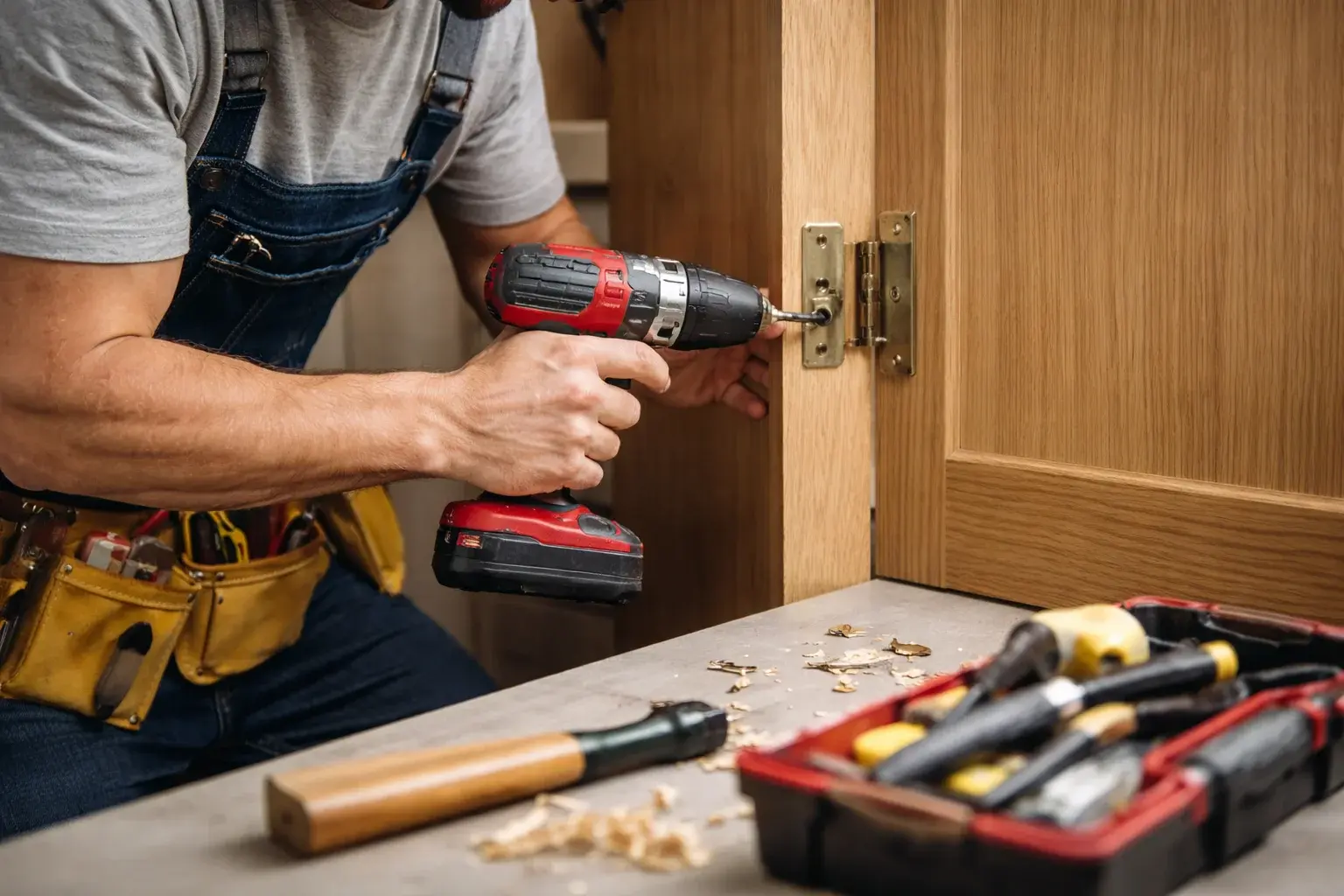
outdoor furniture assembly can be appropriate when the door sags, rubs, sticks or has uneven gaps around the opening. Check the full parts inventory, supplied fixings and safe handling requirements before agreeing ordinary non-powered furniture assembly.
Signs: the door closes poorly despite an otherwise sound visible opening or the latch, handle, hinge or ordinary running hardware no longer lines up or operates normally. Causes: local damage to an accessible component rather than an assumed structural defect or loose fixings, minor alignment drift or ordinary timber movement.
Braces and rails can need fitting before the main frame is fully tightened. Follow the supplied sequence rather than forcing the last component into place. Incorrect orientation can affect alignment, so partially assembled work should be photographed before further adjustment.
Similar bolts may have different lengths or washers. Keep hardware labelled and matched to the instruction diagram. Missing or damaged fasteners should be resolved with a suitable product-compatible replacement rather than improvising from unrelated spare screws.
Follow the product’s load, exposure and maintenance instructions. Retain spare supplied parts and keep incomplete furniture out of use. Limits: Ordinary supplied non-powered furniture only. No play structures, gas or electrical appliances, cots, bunk or loft beds, medical furniture, lift mechanisms or damaged load-bearing reconstruction.