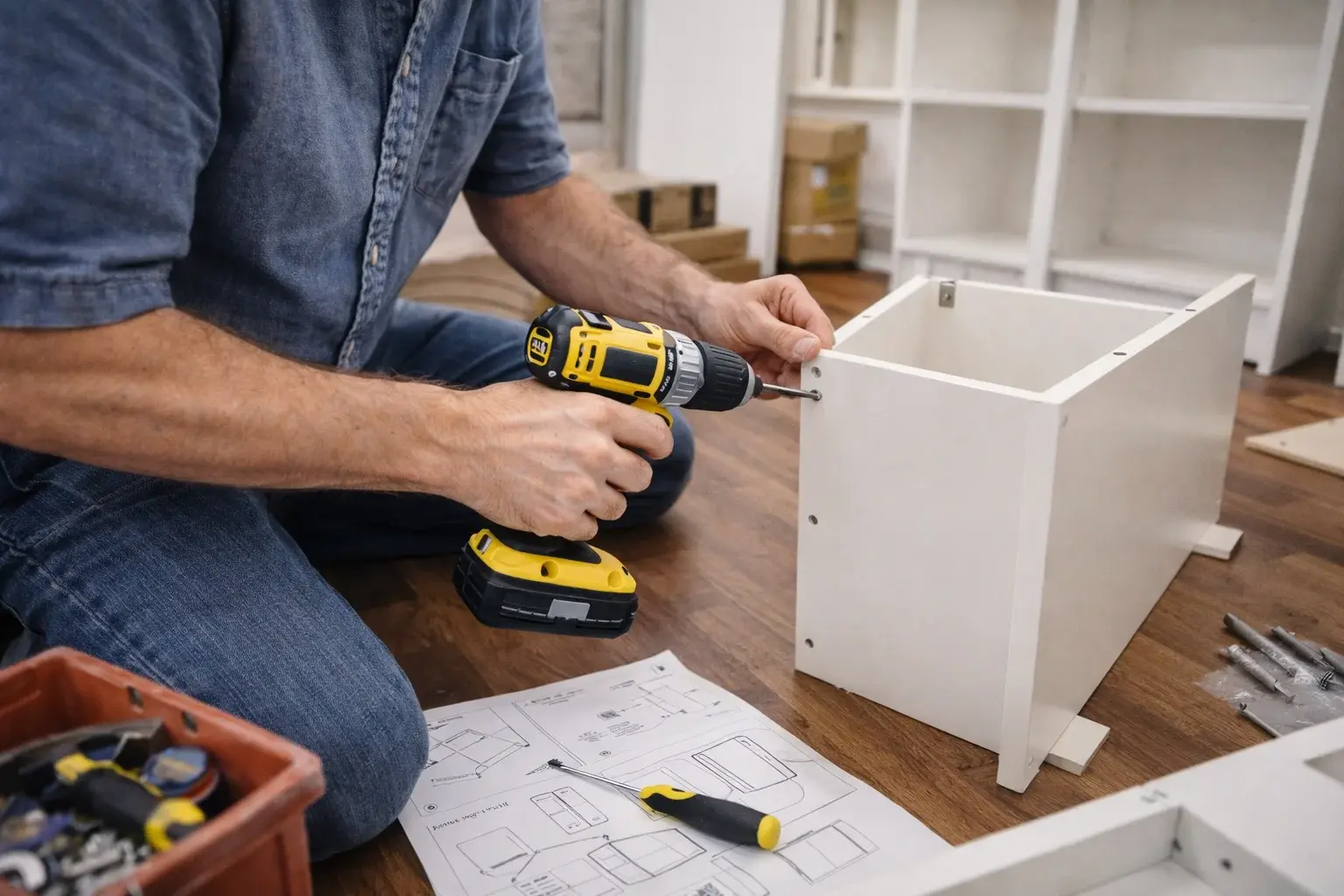
A practical outdoor furniture assembly decision starts with the affected item, its condition and the surrounding materials. Assemble compatible supplied furniture in its instructed sequence, align the accepted tables and seats and check the intended level position.
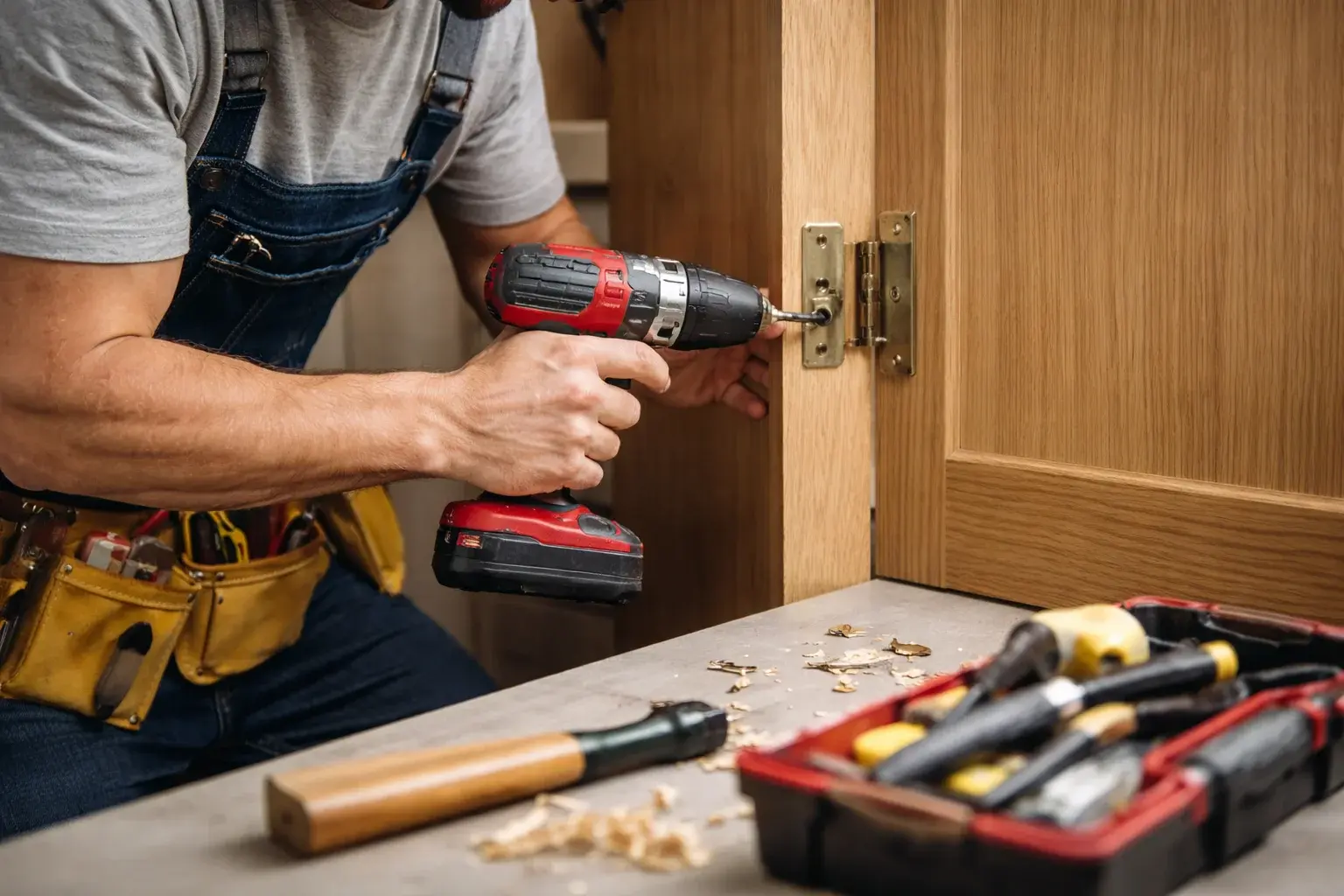
Signs: the door sags, rubs, sticks or has uneven gaps around the opening or the latch, handle, hinge or ordinary running hardware no longer lines up or operates normally. Causes: normal wear in hinges, latches or compatible mechanical hardware or loose fixings, minor alignment drift or ordinary timber movement.
Large tabletops may not pass through the same route as their cartons. Explain narrow doors, steps and the final position before unpacking. Ordinary safe handling is assessed for the actual product; powered furniture, play structures and heavy specialist installations are excluded.
Coated metal, timber and synthetic furniture surfaces can mark during assembly. Provide a clean suitable working space and keep protective packaging available where useful. The product instructions guide handling; ordinary assembly does not include restoration of delivery damage.
Follow the product’s load, exposure and maintenance instructions. Retain spare supplied parts and keep incomplete furniture out of use. Limits: Ordinary supplied non-powered furniture only. No play structures, gas or electrical appliances, cots, bunk or loft beds, medical furniture, lift mechanisms or damaged load-bearing reconstruction.