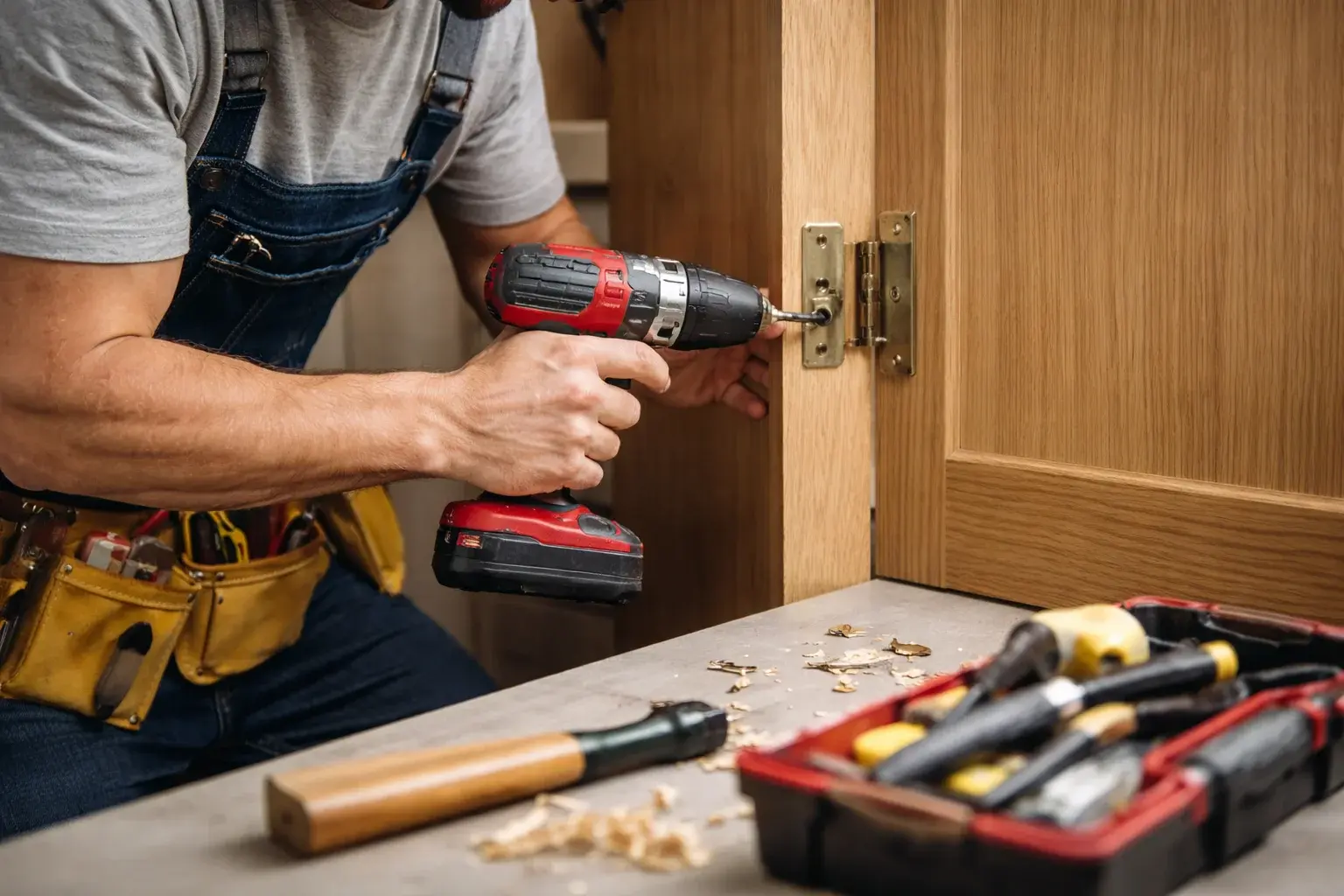
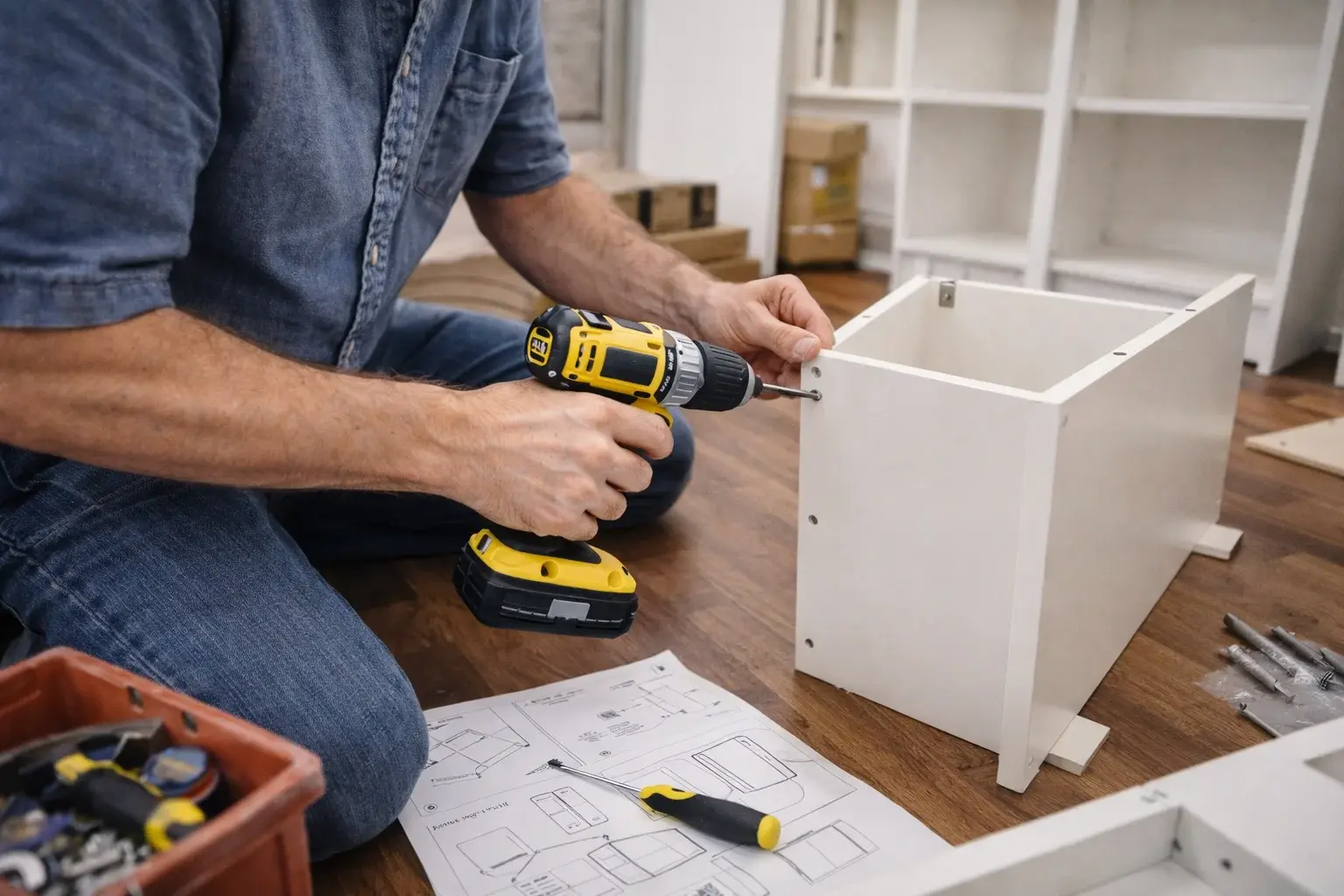
A practical wardrobe assembly decision starts with the affected item, its condition and the surrounding materials. Assemble suitable supplied components in the product sequence, align the doors and review the required restraint against the available wall support.
Signs: a bounded task needs a clear decision before work is scheduled or a visible maintenance item is worn, loose, damaged or no longer works as expected. Causes: loose compatible components or incomplete prior work or ordinary use, visible wear or local damage.
Photograph the current stage before trying to correct it. Reversed panels, damaged cam fittings or stripped holes can change whether completion is practical. Work already started may need careful disassembly, and existing damage should be identified in the enquiry.
Some wardrobes are assembled on the floor before being lifted upright. Ceiling height, the turning space and nearby furniture all matter. Send the assembly instructions and room dimensions so the workable sequence can be assessed before panels are unpacked.
The agreed service covers manufacturer-directed assembly, door alignment and suitable anti-tip fixing review. Exclusions: Bespoke fitted wardrobes, room alterations, electrics, glass modifications, unsupported anchoring.