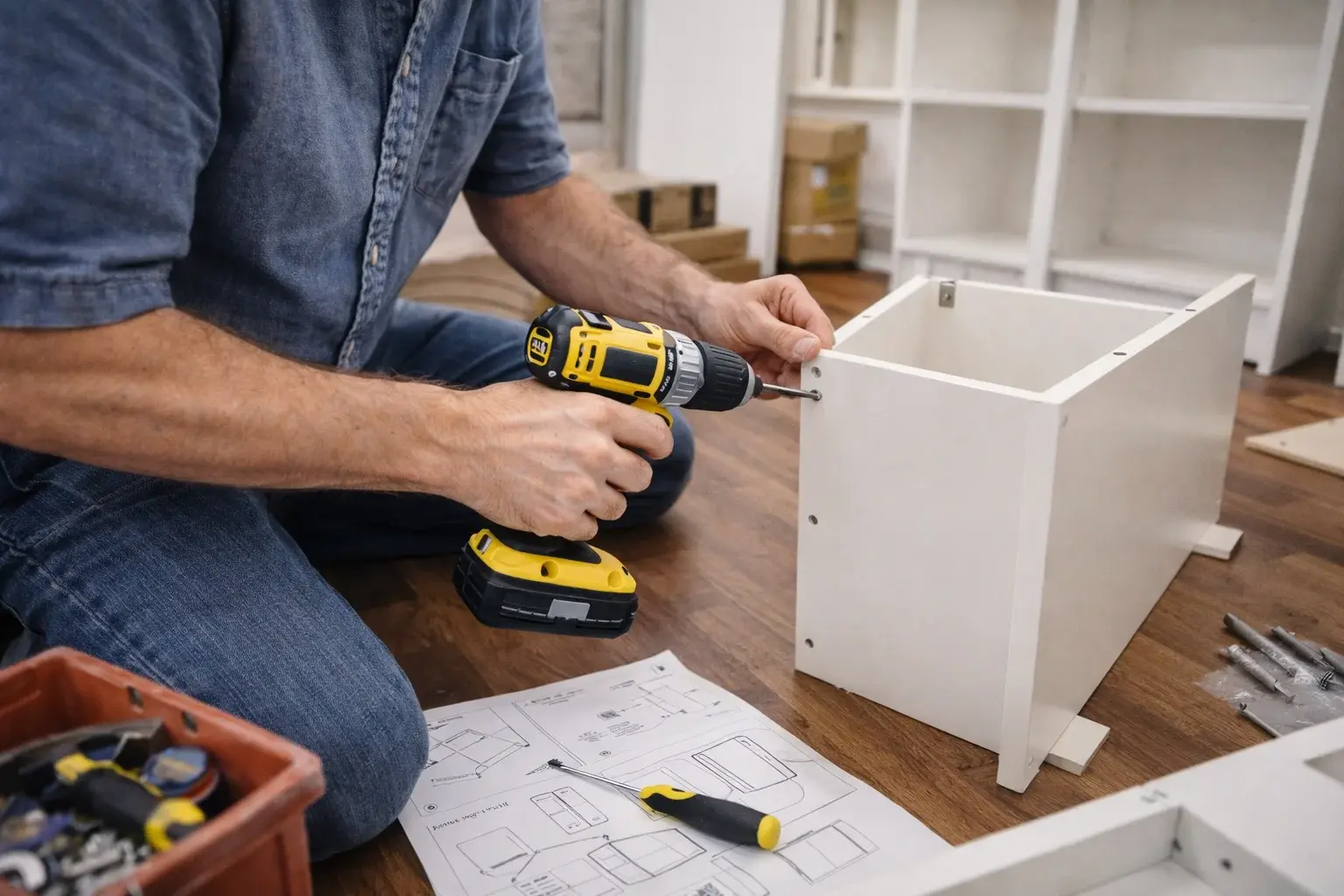
A practical wardrobe assembly decision starts with the affected item, its condition and the surrounding materials. Assemble suitable supplied components in the product sequence, align the doors and review the required restraint against the available wall support.
Signs: a visible maintenance item is worn, loose, damaged or no longer works as expected or a practical repair list needs the affected item and its condition identified. Causes: conditions that need direct review before a repair option is chosen or loose compatible components or incomplete prior work.
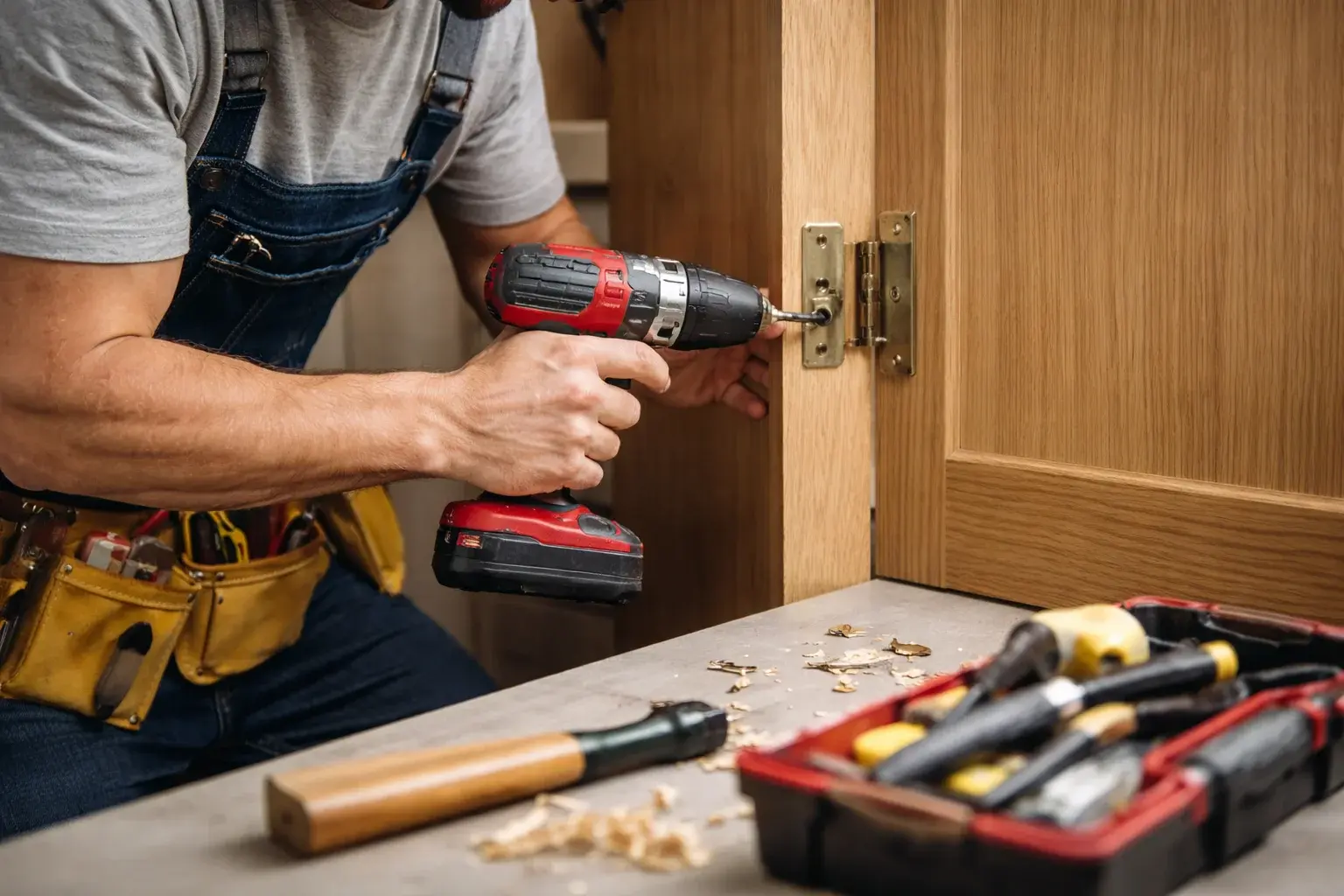
Door gaps depend on the cabinet body as well as the hinges. The frame needs to be assembled square and positioned appropriately before final adjustment. Forcing a door into alignment can disguise an earlier assembly error rather than solve it.
Skirting, room doors and nearby power points can affect the final position. Include a wide room photo with your measurements. A freestanding product should not be cut or converted into fitted cabinetry simply because the planned recess is too narrow.
The agreed service covers manufacturer-directed assembly, door alignment and suitable anti-tip fixing review. Exclusions: Bespoke fitted wardrobes, room alterations, electrics, glass modifications, unsupported anchoring.