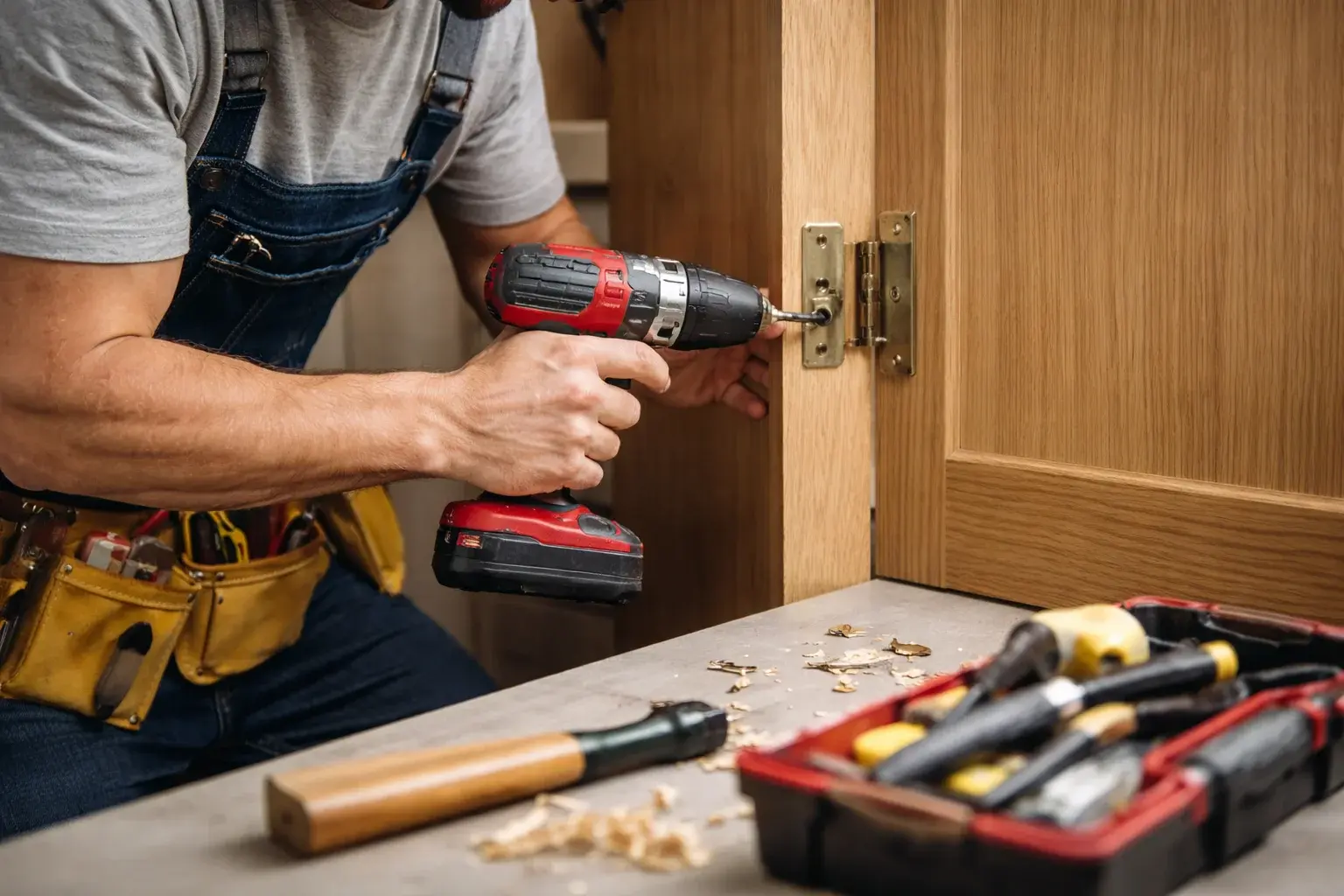
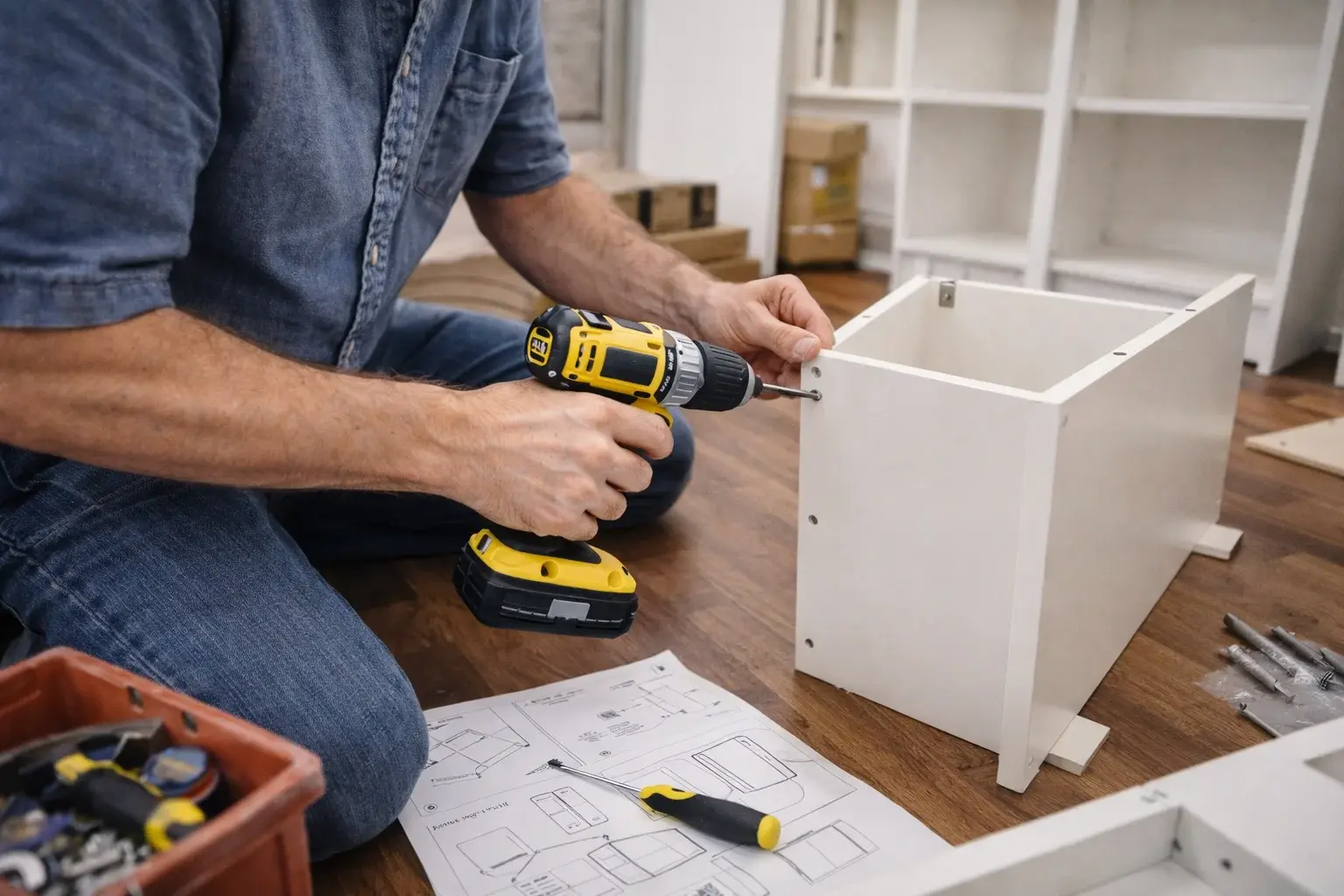
minor furniture repair can be appropriate when a supplied item, trim or fitting is loose, incomplete, damaged or needs adjustment. Loose hardware must be distinguished from a failed load-bearing component. Stability concerns need assessment before continued use.
Signs: a practical repair or compatible installation needs a clear product and access review or the component no longer sits level, opens or supports ordinary use as intended. Causes: local damage that does not establish a structural requirement or ordinary wear, loose compatible fixings or minor fitting movement.
A small screw or bolt can work loose without the surrounding furniture being damaged. Show the complete connection and any missing hardware. Tightening is appropriate only when the fastener and the material accepting it remain sound and compatible.
Keep loose hardware and send any part numbers before purchasing substitutes. Thread size, length and the connection design matter. The service can review compatible small-part work but does not promise bespoke manufacture or parts for discontinued furniture systems.
The agreed service covers assessed minor mechanical fixings and non-specialist household furniture adjustments. Exclusions: Upholstery, antiques/conservation, powered mechanisms, load-bearing reconstruction, cabinet hinges, drawers, assembly of new items.