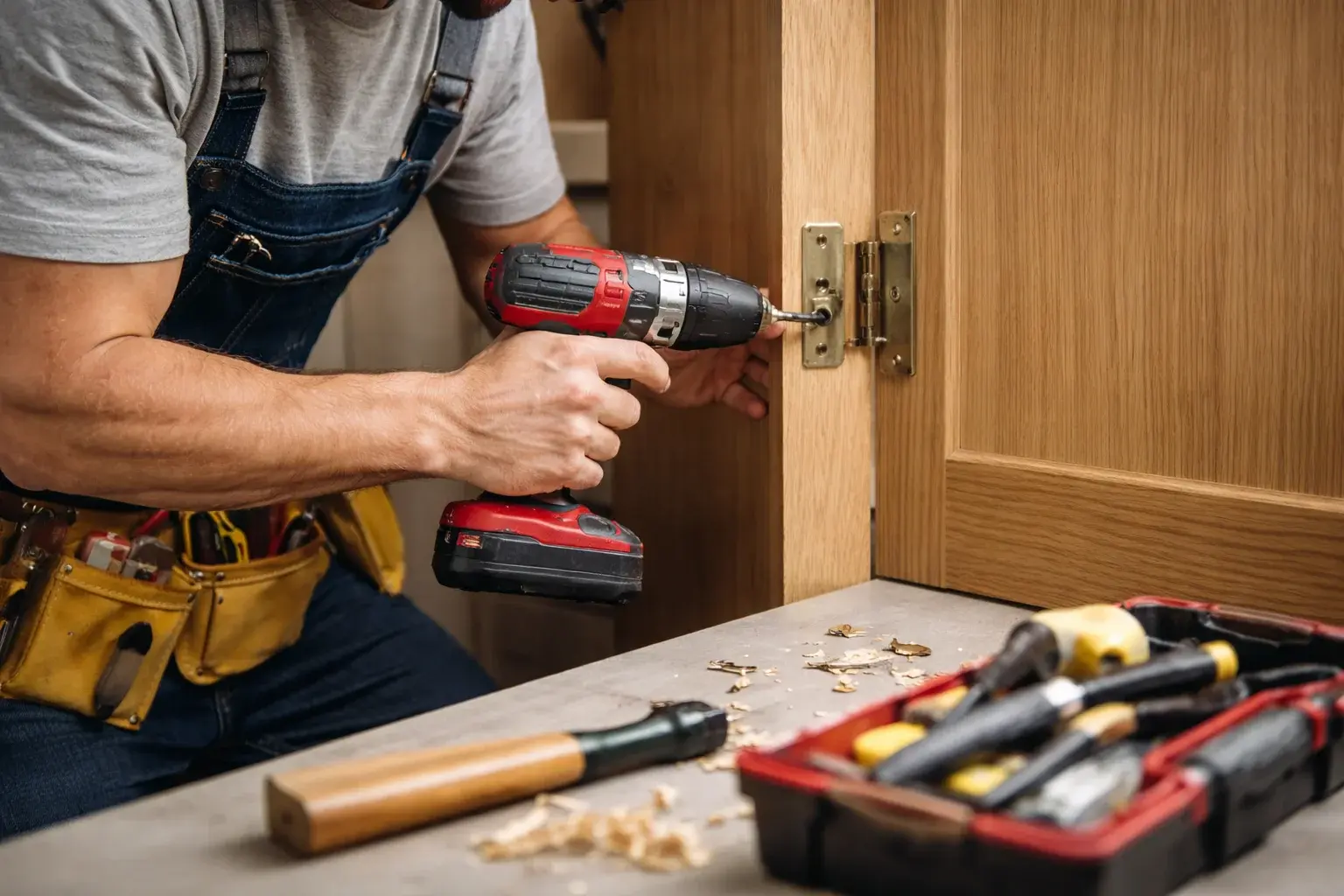
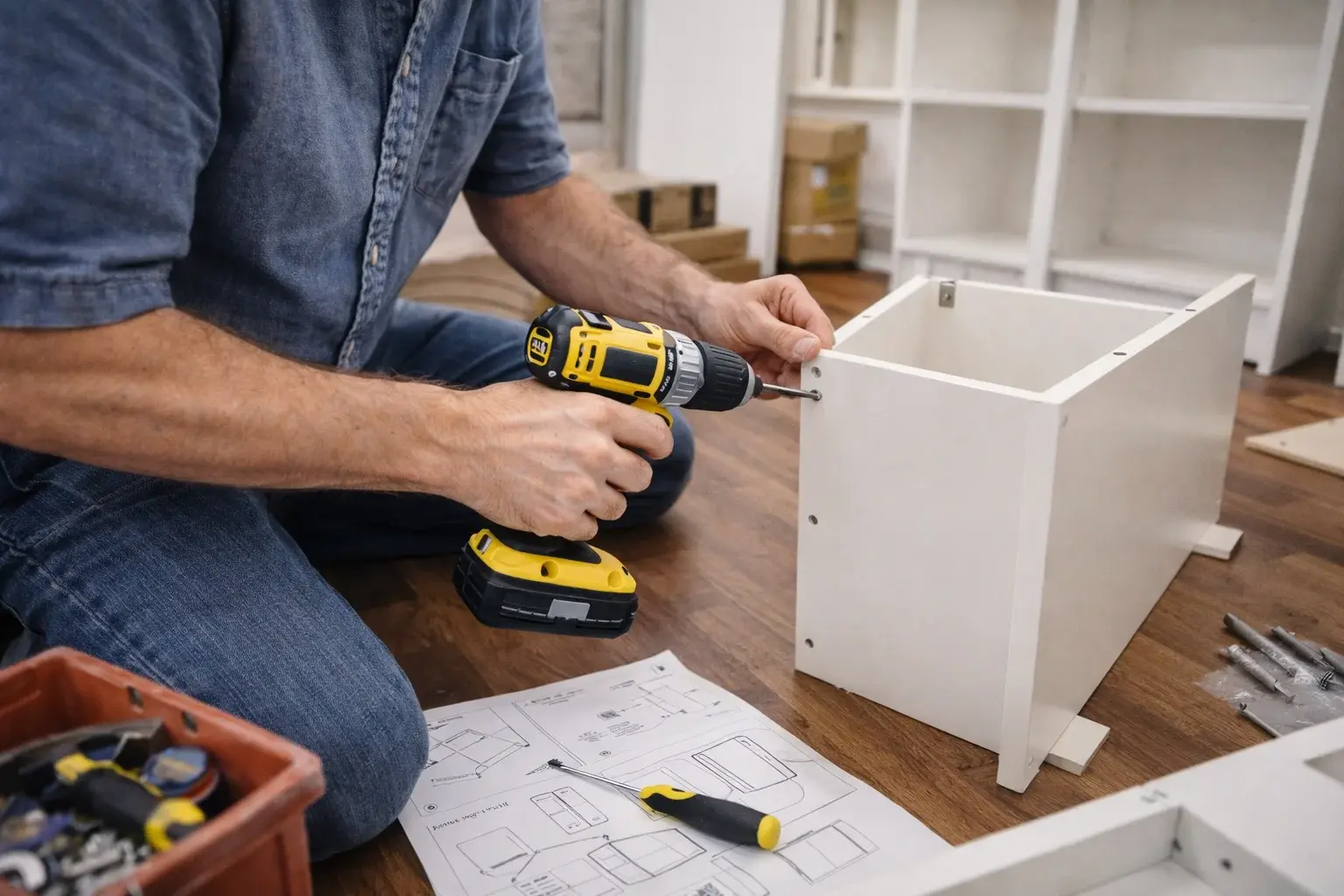
minor furniture repair can be appropriate when a supplied item, trim or fitting is loose, incomplete, damaged or needs adjustment. Loose hardware must be distinguished from a failed load-bearing component. Stability concerns need assessment before continued use.
Signs: a supplied item, trim or fitting is loose, incomplete, damaged or needs adjustment or the component no longer sits level, opens or supports ordinary use as intended. Causes: ordinary wear, loose compatible fixings or minor fitting movement or local damage that does not establish a structural requirement.
Movement at a joint may indicate more than a loose screw. Split material, pulled inserts or failed load-bearing connections can require specialist work or replacement. Stop using an unstable item and explain what moves rather than trying repeated temporary fixes.
Antiques, upholstery and conservation work need different skills and methods. Powered reclining or lifting mechanisms are also outside this scope. Identify these features at the enquiry stage so a general handyman adjustment is not mistaken for specialist restoration.
The agreed service covers assessed minor mechanical fixings and non-specialist household furniture adjustments. Exclusions: Upholstery, antiques/conservation, powered mechanisms, load-bearing reconstruction, cabinet hinges, drawers, assembly of new items.