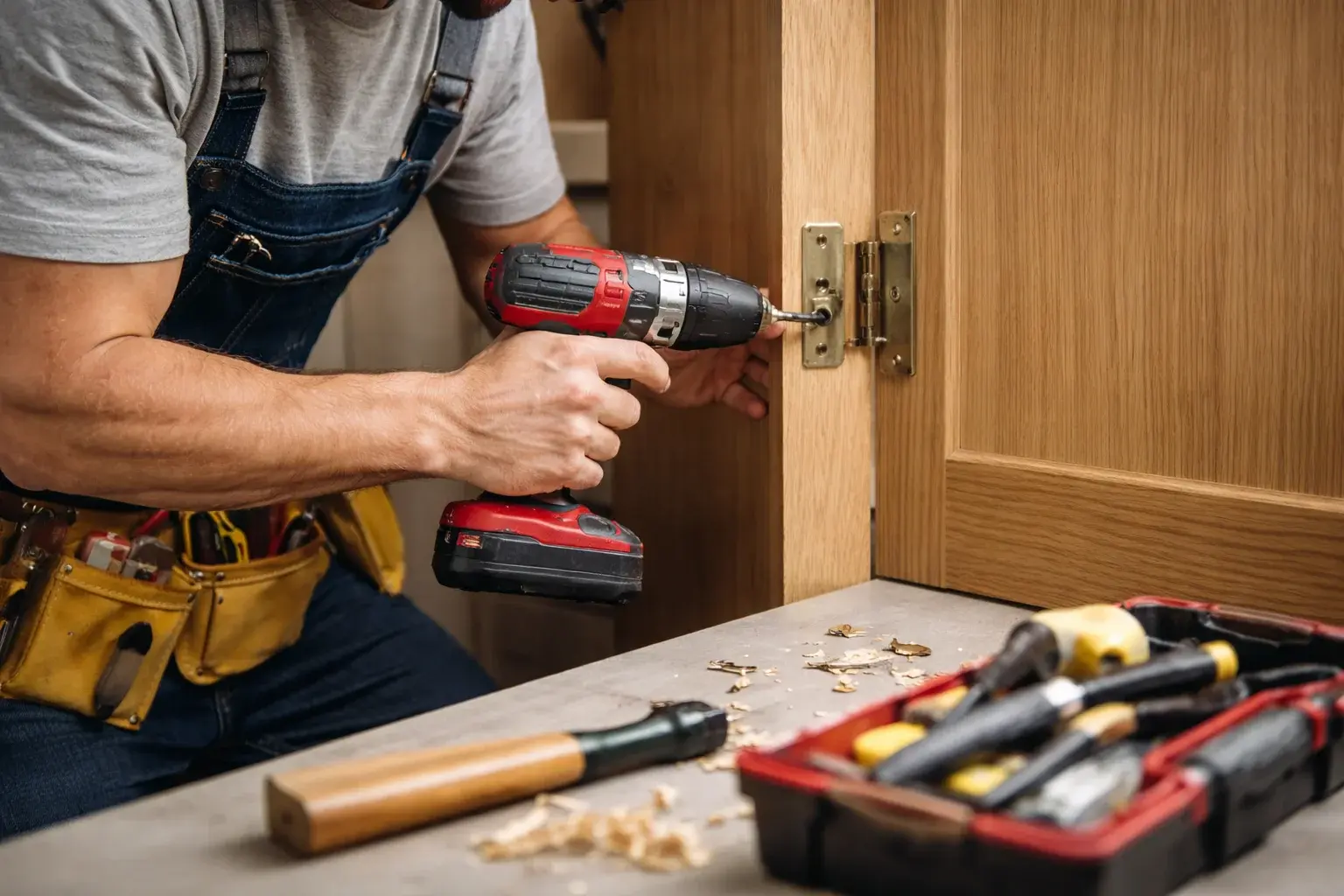
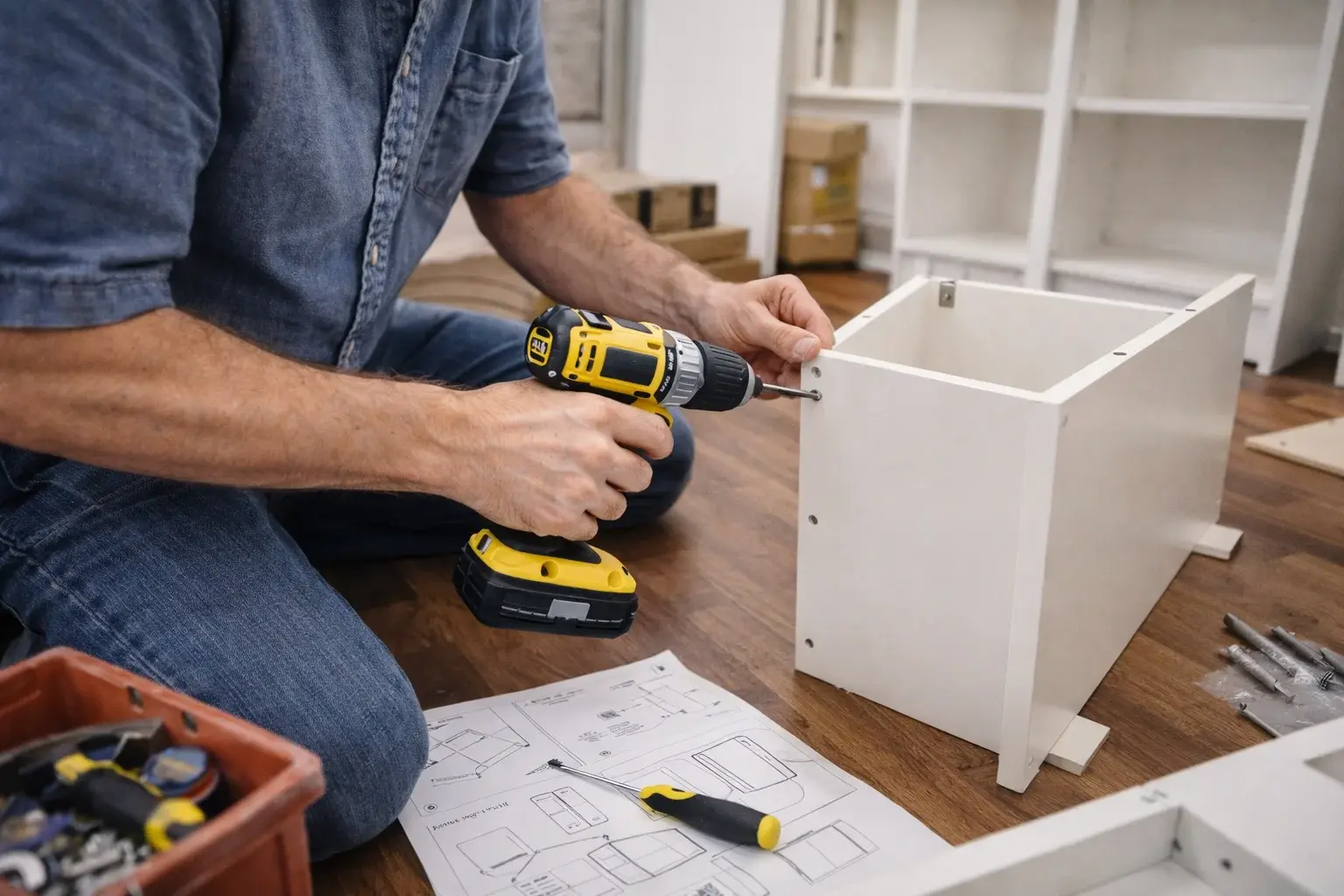
minor furniture repair can be appropriate when a supplied item, trim or fitting is loose, incomplete, damaged or needs adjustment. Loose hardware must be distinguished from a failed load-bearing component. Stability concerns need assessment before continued use.
Signs: a supplied item, trim or fitting is loose, incomplete, damaged or needs adjustment or a practical repair or compatible installation needs a clear product and access review. Causes: ordinary wear, loose compatible fixings or minor fitting movement or an incomplete assembly or a mismatched replacement component.
Antiques, upholstery and conservation work need different skills and methods. Powered reclining or lifting mechanisms are also outside this scope. Identify these features at the enquiry stage so a general handyman adjustment is not mistaken for specialist restoration.
Solid timber, veneers, composite panels and metal frames have different fastening arrangements. A product label and close photo can help identify them. A repair should suit the actual construction; a generic fixing should not be assumed to work in every material.
The agreed service covers assessed minor mechanical fixings and non-specialist household furniture adjustments. Exclusions: Upholstery, antiques/conservation, powered mechanisms, load-bearing reconstruction, cabinet hinges, drawers, assembly of new items.