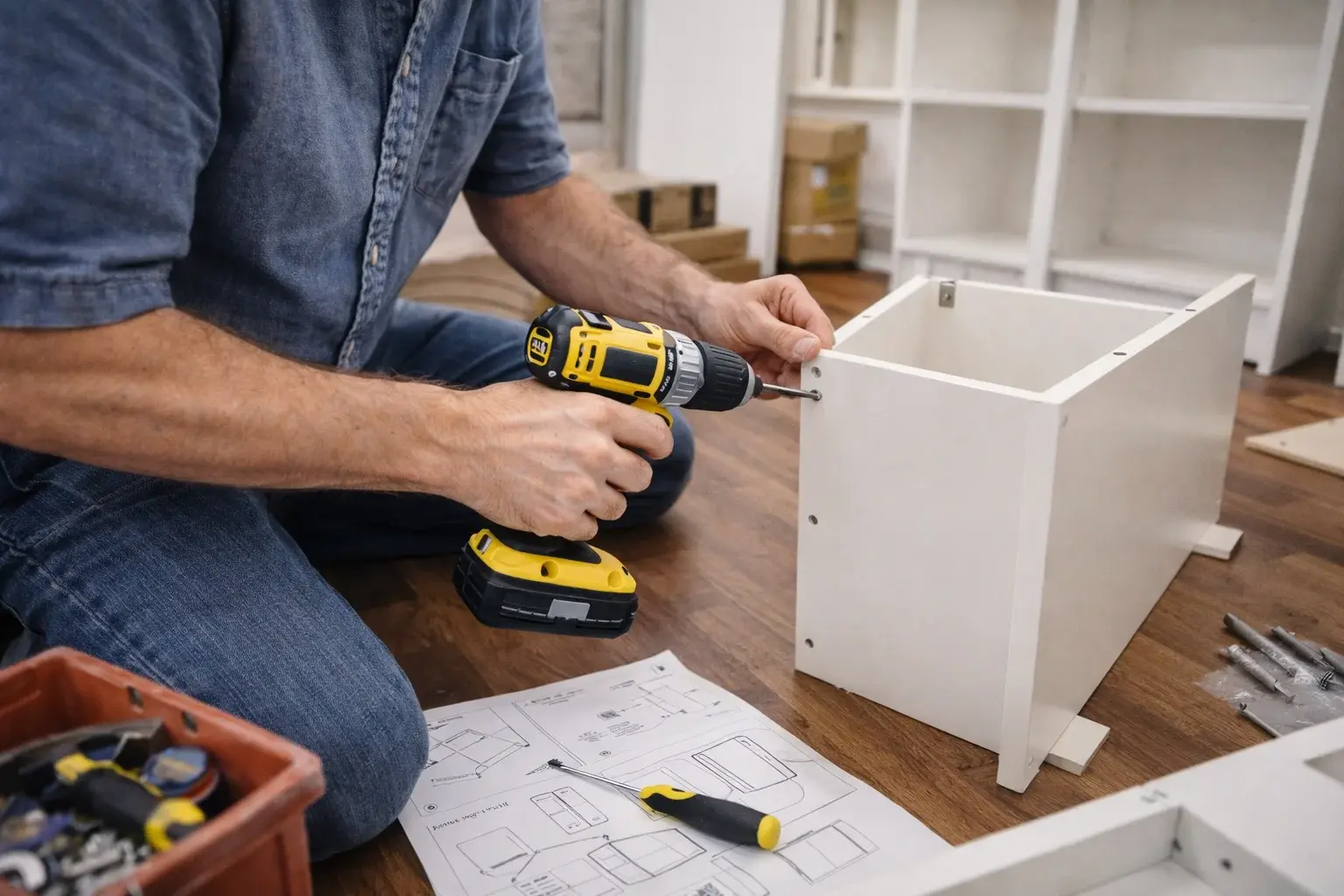
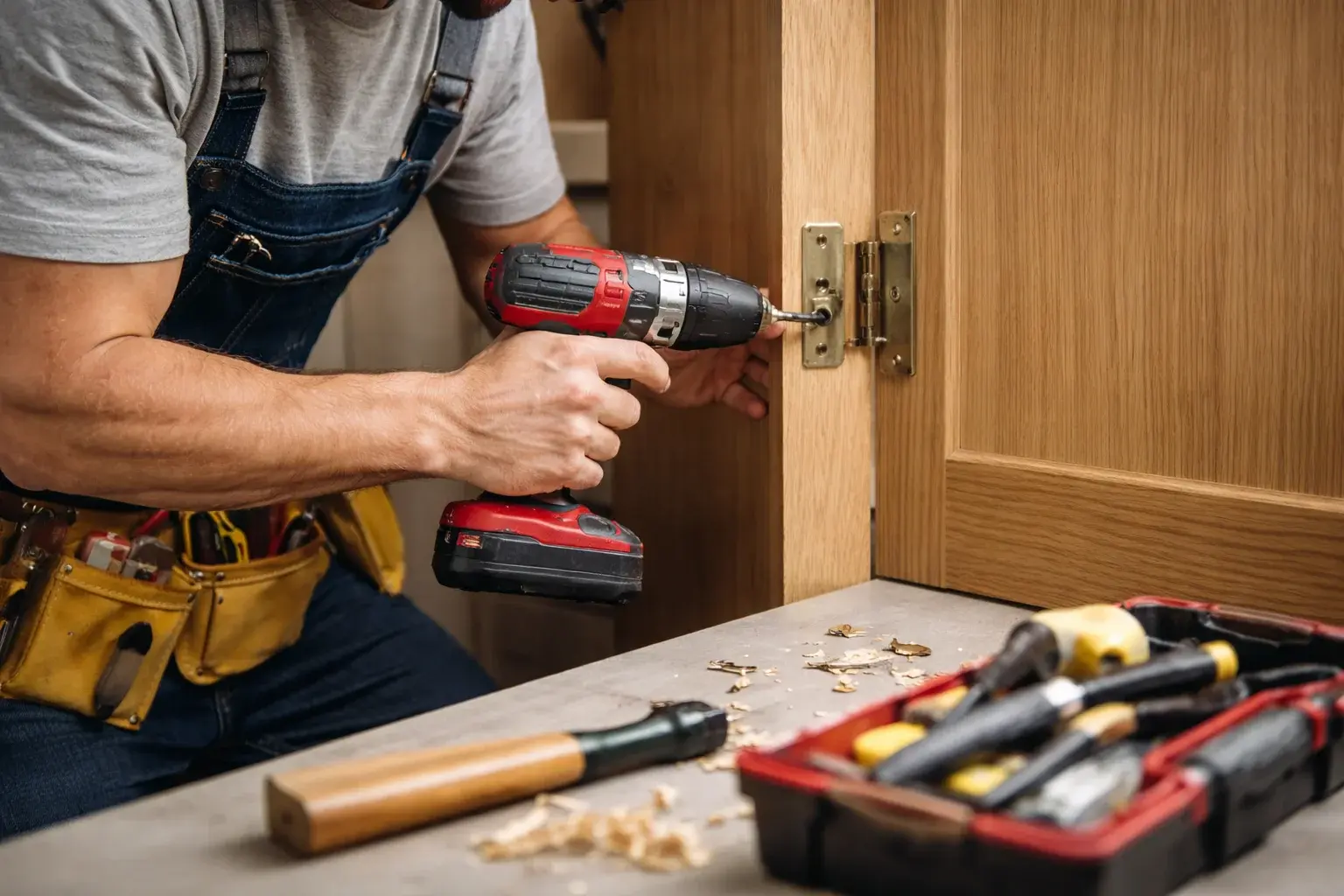
A practical minor furniture repair decision starts with the affected item, its condition and the surrounding materials. Review minor compatible fastening and adjustment work without reconstructing load-bearing furniture or undertaking specialist restoration.
Signs: the component no longer sits level, opens or supports ordinary use as intended or a supplied item, trim or fitting is loose, incomplete, damaged or needs adjustment. Causes: ordinary wear, loose compatible fixings or minor fitting movement or an incomplete assembly or a mismatched replacement component.
Solid timber, veneers, composite panels and metal frames have different fastening arrangements. A product label and close photo can help identify them. A repair should suit the actual construction; a generic fixing should not be assumed to work in every material.
Tell Fix Nik about glue, extra screws or brackets already added. Earlier work can conceal damage or affect access to the original fitting. Knowing what has changed helps decide whether another minor adjustment is practical or would merely repeat a failed approach.
The agreed service covers assessed minor mechanical fixings and non-specialist household furniture adjustments. Exclusions: Upholstery, antiques/conservation, powered mechanisms, load-bearing reconstruction, cabinet hinges, drawers, assembly of new items.