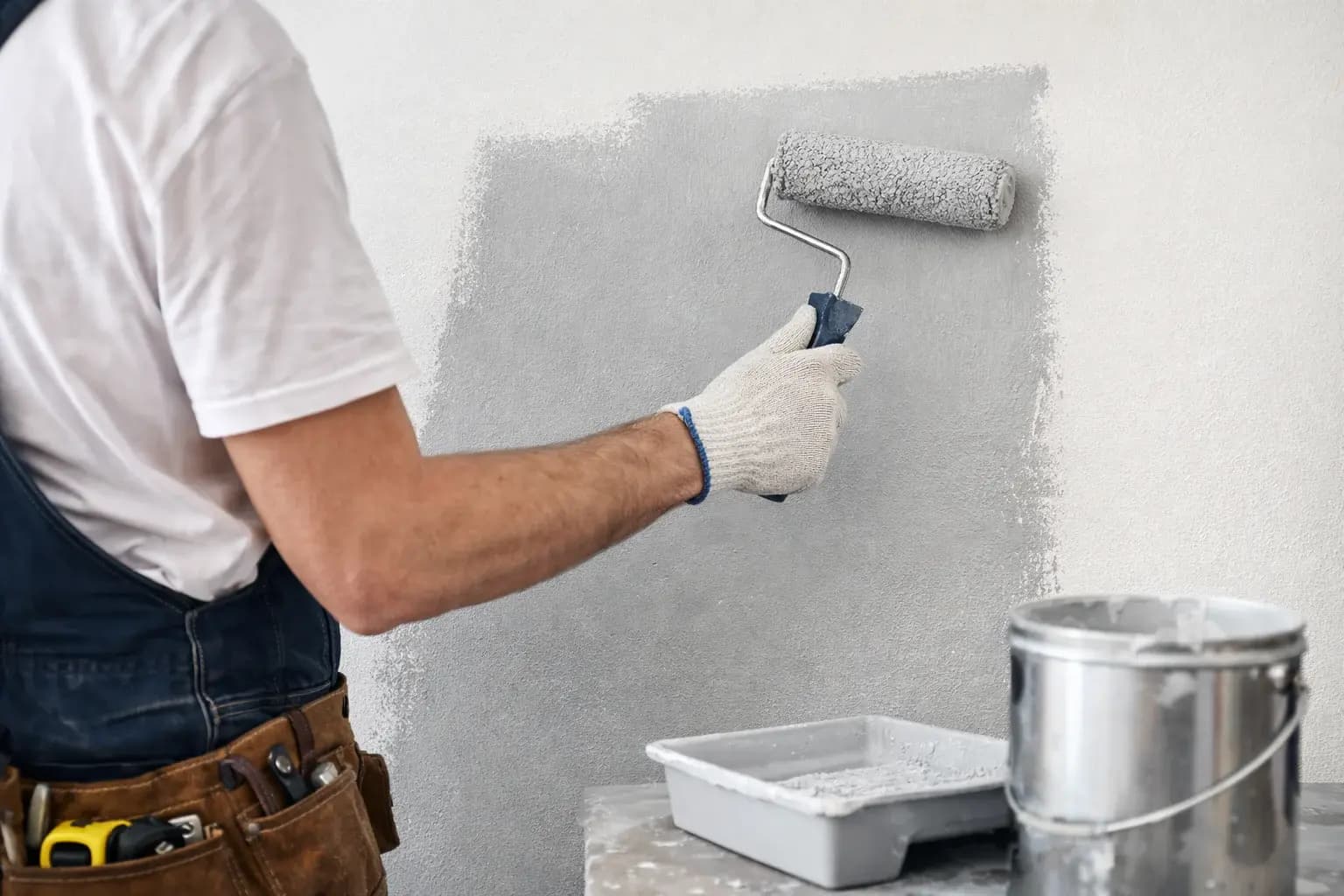
A practical ceiling painting decision starts with the affected item, its condition and the surrounding materials. Protect the room and fixed fixtures, prepare the accepted sound surface and paint the agreed ceiling plane in suitable stages.
Signs: a local repair or prior coating needs preparation before a new finish is considered or the surface is scuffed, patchy, weathered or no longer presents evenly. Causes: normal use, weather exposure or aged coating or incompatible or unknown prior finishes that need checking.
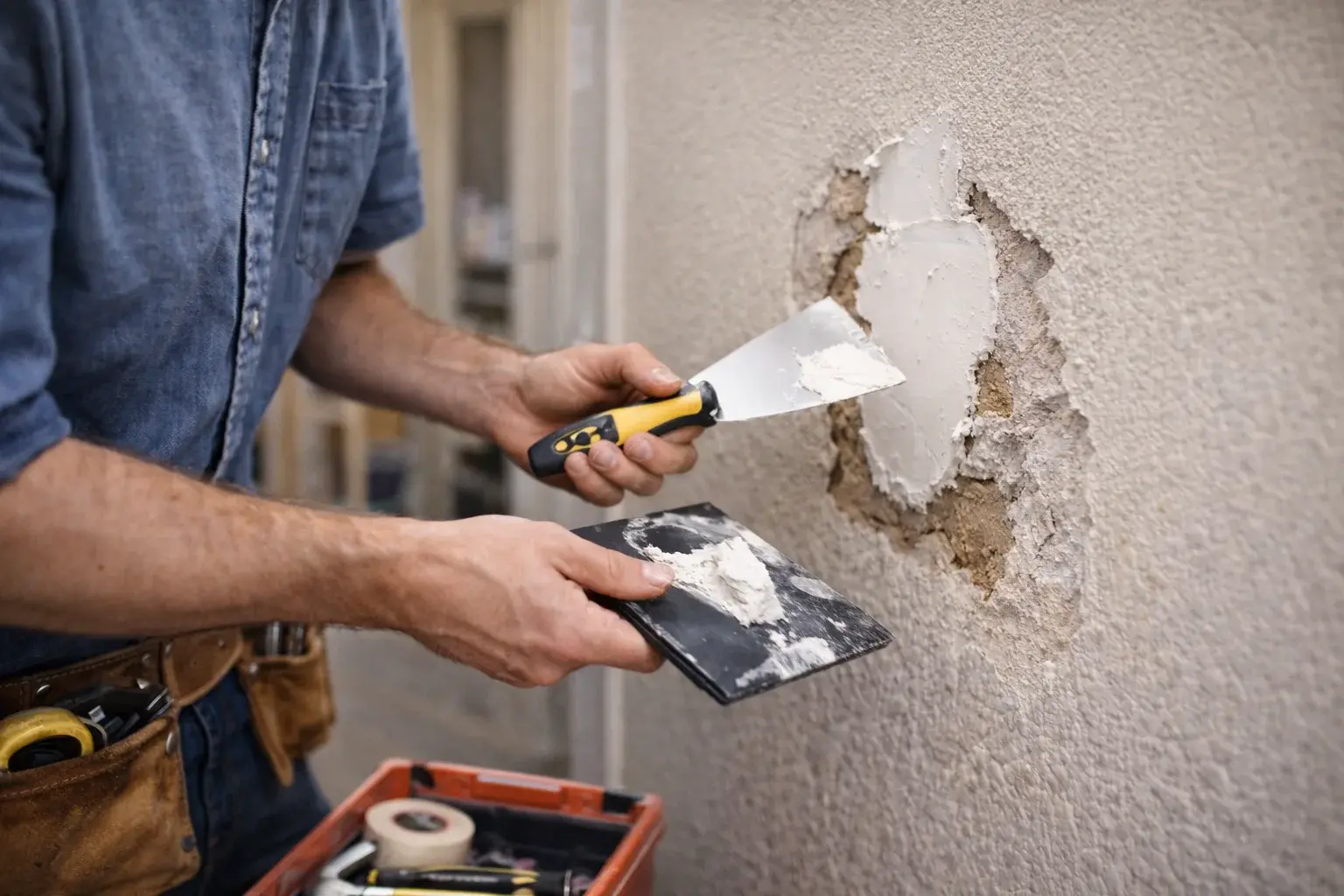
New patches can absorb paint differently from older surrounding areas. Show repaired spots so suitable preparation can be considered. Painting does not automatically include every plaster repair, and the need for sealing or further finishing should be identified before the coating stage.
The accepted ceiling must be dry and stable. Ongoing leaks, sagging, hazardous material and structural concerns need appropriate separate assessment. A stain is not diagnosed from a photograph, and a coat of paint should not be offered as a remedy for its unresolved source.
Allow the specified drying and ventilation before reopening the room. Any remaining substrate or lighting-related finish limitation should be discussed. Limits: Ordinary dry stable accessible ceilings only. No electrical fixture work, leak diagnosis, sagging ceilings, high-access specialist work or hazardous materials.