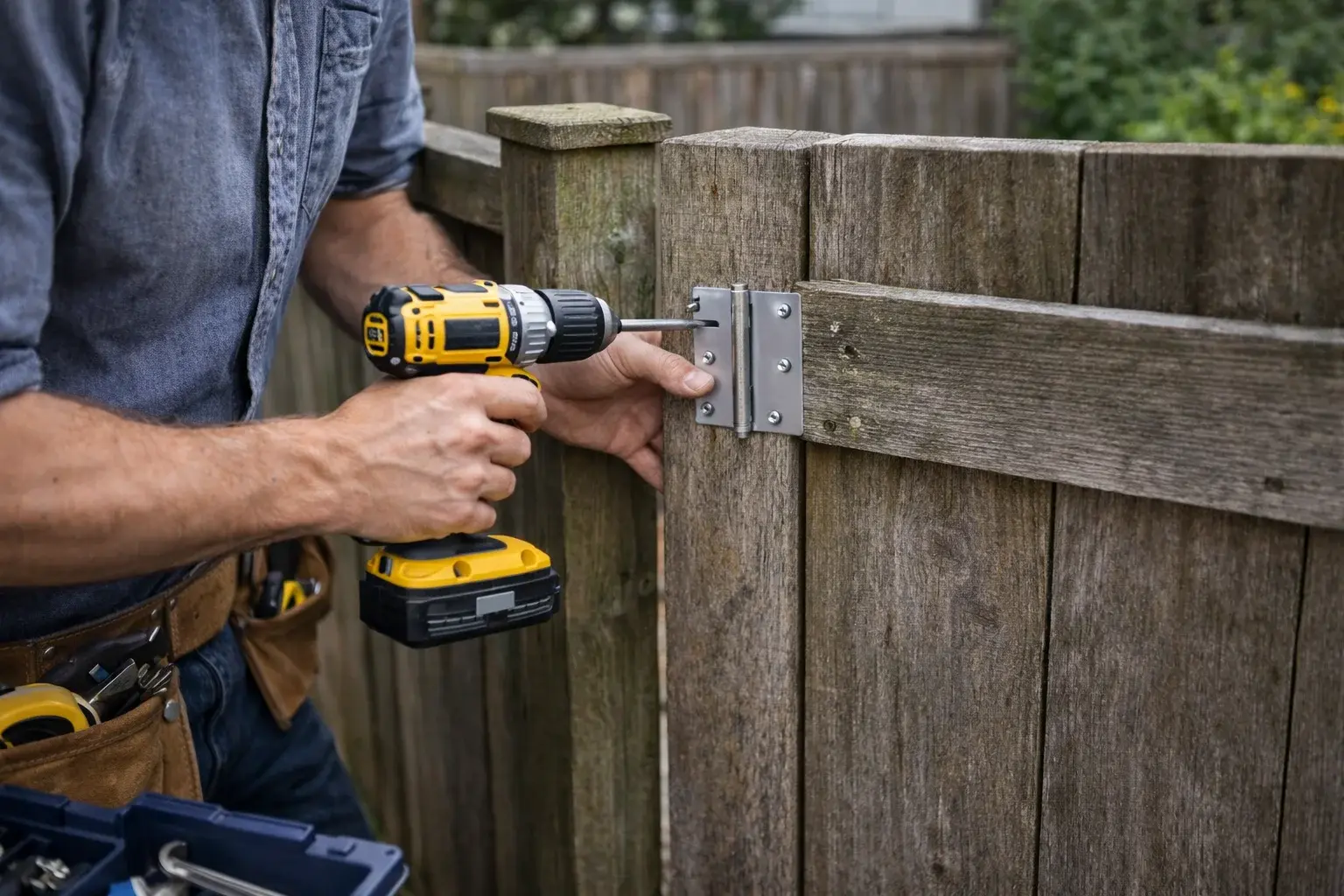
A practical fence painting decision starts with the affected item, its condition and the surrounding materials. Prepare and coat the accepted accessible timber faces using a suitable agreed fence-paint system and ordinary controlled application.
Signs: a gate does not swing, latch or sit as intended or an accessible board, rail, gate fitting or timber surface shows wear, movement or a damaged finish. Causes: weather exposure and ordinary surface deterioration or loose compatible fixings or local timber wear.
Outdoor application depends on suitable weather and timber condition. Shade and exposure can affect drying differently along a run. Scheduling should allow the selected product’s requirements rather than promise that every fence can be coated on a fixed date regardless of conditions.
Length and height help define the scope, but rails, posts and returns also matter. Show the complete run rather than one paling. The quote should identify the faces and components to be painted so a single-side price is not read as covering the whole fence.
repair a suitable local component. prepare and maintain sound accessible timber with a compatible finish. Limits: Sound accessible timber and authorised faces only. No structural stabilisation, hazardous stripping, assumed neighbour access or uncontrolled spray work.