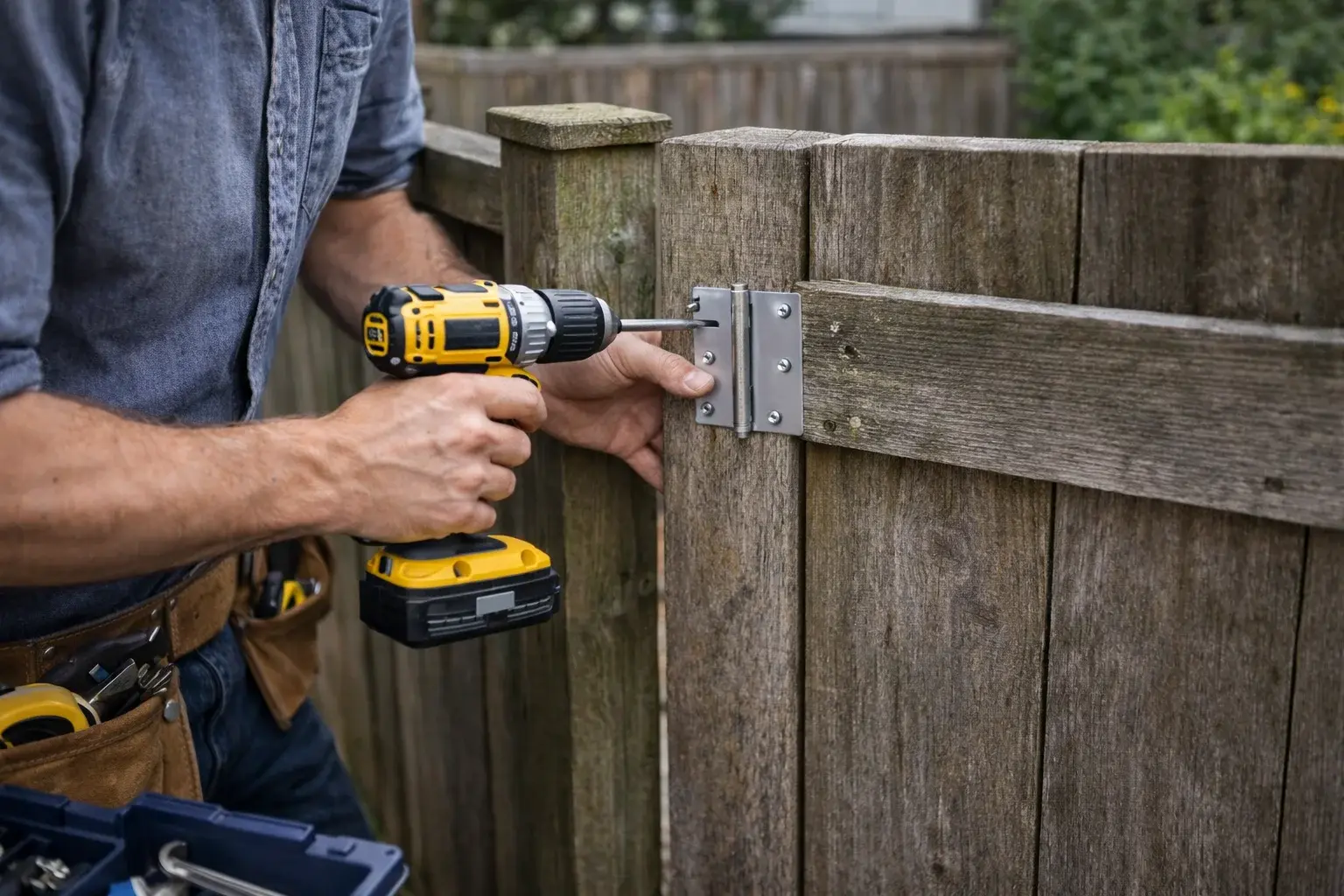
A practical fence painting decision starts with the affected item, its condition and the surrounding materials. Prepare and coat the accepted accessible timber faces using a suitable agreed fence-paint system and ordinary controlled application.
Signs: an accessible board, rail, gate fitting or timber surface shows wear, movement or a damaged finish or a gate does not swing, latch or sit as intended. Causes: weather exposure and ordinary surface deterioration or loose compatible fixings or local timber wear.
Vegetation, stored items and nearby paving can limit preparation and application. Explain what can be moved safely before the visit. The plan should protect adjacent surfaces rather than assume unrestricted spraying or permission to cut back plants on another property.
Brush and roller access around rails, posts and tight boundaries affects the work. Show narrow passages and nearby belongings. The chosen ordinary method must suit the surroundings; the service does not imply unrestricted spray application or access to every hidden face.
Prepare and coat the accepted accessible timber faces using a suitable agreed fence-paint system and ordinary controlled application. Limits: Sound accessible timber and authorised faces only. No structural stabilisation, hazardous stripping, assumed neighbour access or uncontrolled spray work.