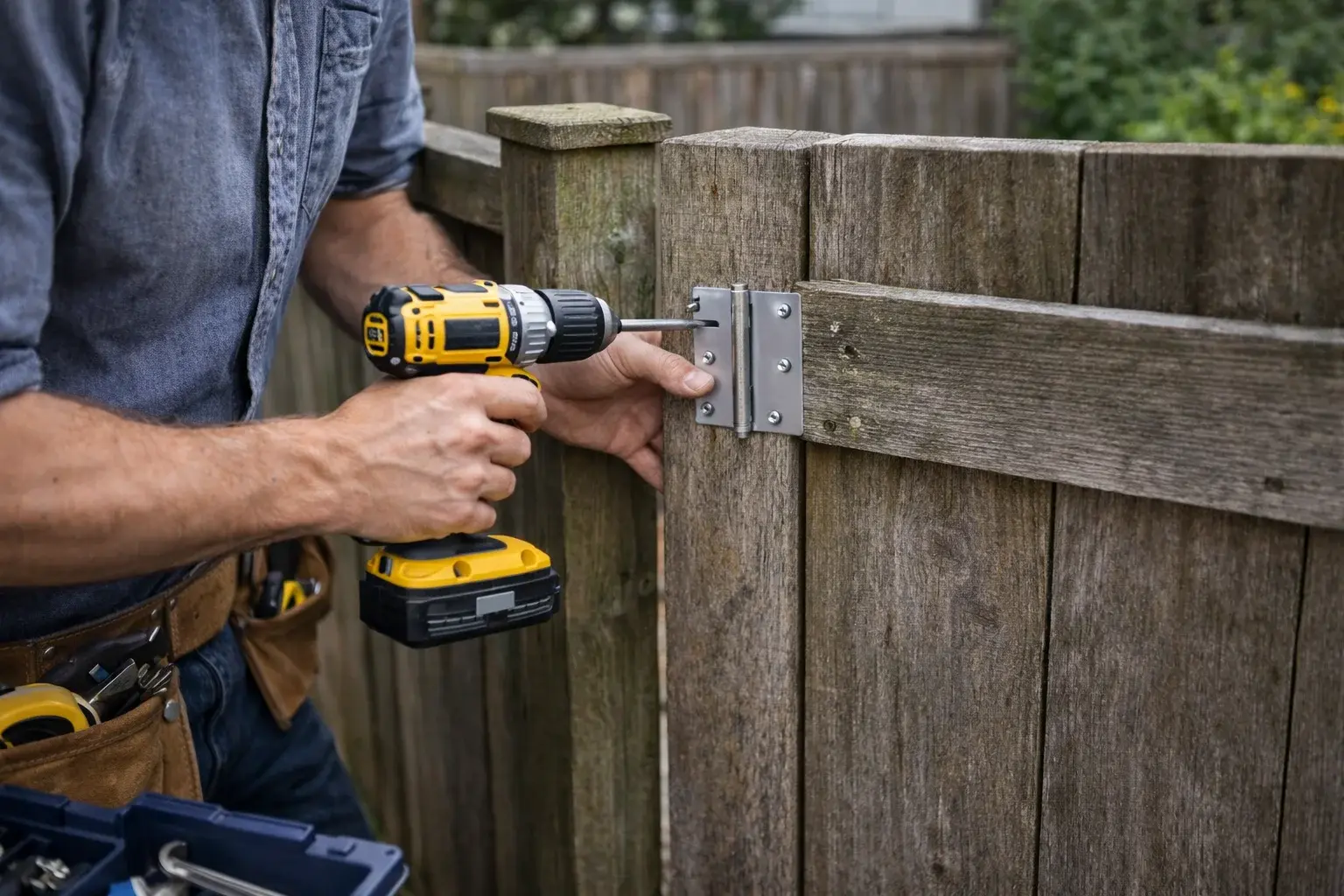
A practical fence painting decision starts with the affected item, its condition and the surrounding materials. Prepare and coat the accepted accessible timber faces using a suitable agreed fence-paint system and ordinary controlled application.
Signs: a gate does not swing, latch or sit as intended or an accessible board, rail, gate fitting or timber surface shows wear, movement or a damaged finish. Causes: an aged coating, stain or finish that needs preparation before maintenance or weather exposure and ordinary surface deterioration.
Vegetation, stored items and nearby paving can limit preparation and application. Explain what can be moved safely before the visit. The plan should protect adjacent surfaces rather than assume unrestricted spraying or permission to cut back plants on another property.
Loose, rotten or broken timber needs separate repair consideration. Paint does not restore support or stabilise a leaning fence. Show defects before the quote so ordinary painting can be distinguished from paling, post or gate work that needs its own scope.
Keep plants and belongings clear while the finish dries, and follow the product’s care requirements before contact or cleaning. Limits: Sound accessible timber and authorised faces only. No structural stabilisation, hazardous stripping, assumed neighbour access or uncontrolled spray work.