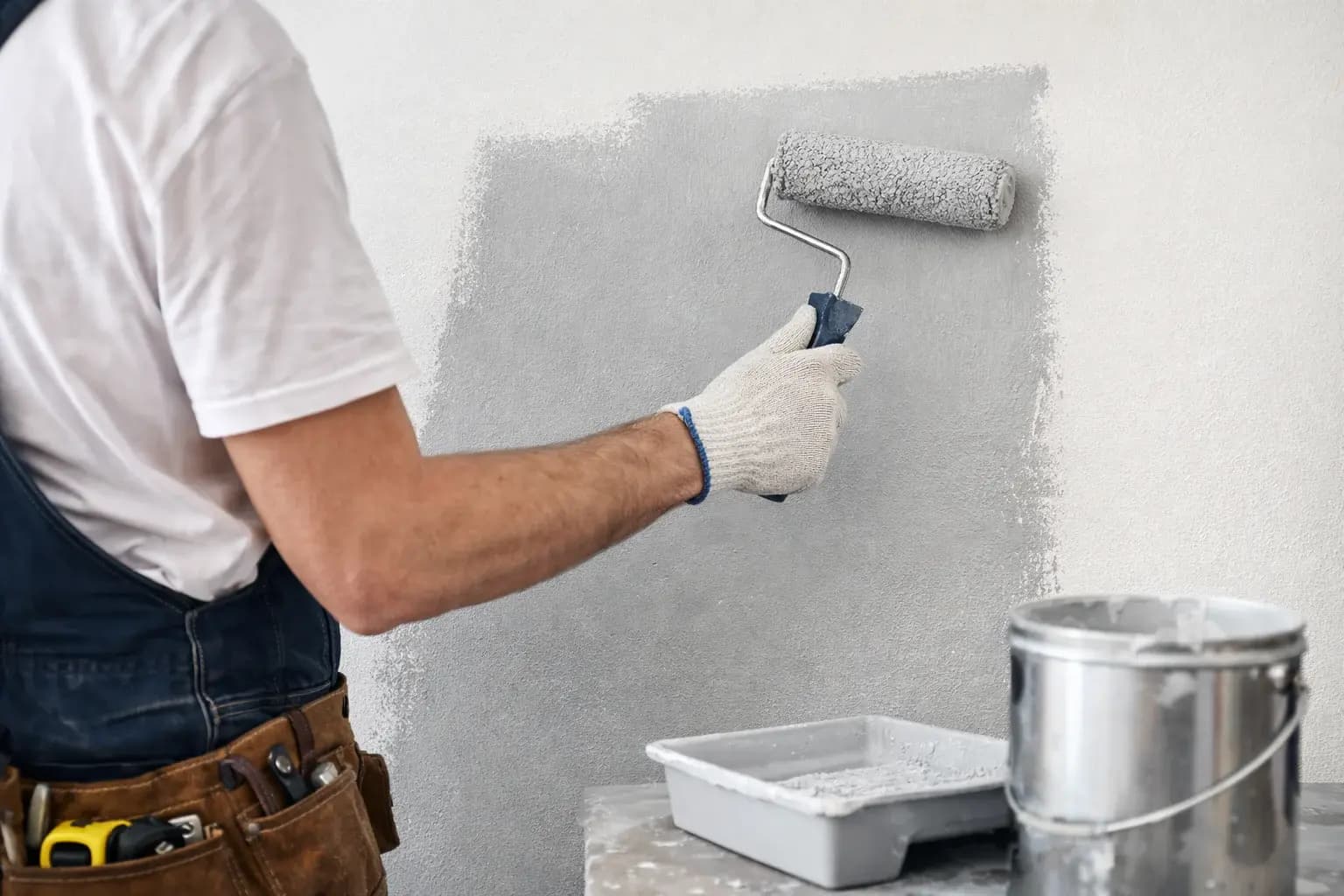
A practical interior room painting decision starts with the affected item, its condition and the surrounding materials. Protect the agreed room, prepare accepted sound surfaces and repaint complete wall areas in a planned sequence with defined trim boundaries.
Signs: the existing finish shows ordinary wear that may suit bounded maintenance or the surface is scuffed, patchy, weathered or no longer presents evenly. Causes: incompatible or unknown prior finishes that need checking or surface damage that needs preparation before finishing.
Explain which items can be moved and which must remain. Working around heavy furniture can affect protection and access to complete walls. Agree responsibility for moving belongings before the visit instead of assuming a furnished room is immediately ready for painting.
Window edges, ceilings and fixed fittings create detail work beyond rolling open walls. Show these boundaries in the room photographs. Painting around a fitting does not include electrical disconnection, plumbing changes or removal of specialist equipment.
Ventilate and allow the selected finish to dry before replacing furniture against walls. Follow product guidance for cleaning and ordinary use. Limits: Ordinary sound interior surfaces only. No specialist wet-area systems, damp remediation, asbestos, structural repair or electrical and plumbing work.